
Many people mistake The Art of War for a book teaching strategies on how to fight wars and critical battles. To the contrary, The Art of War is about how to avoid the fight. Long, drawn-out battles are expensive, slow, and very hard to control. In the first part of the opening quote, Victorious warriors win first, Sun Tzu focuses the student on preparation, situational awareness, a controllable environment, attention to relevant details, and determining the outcome before starting. The lessons in the book are about knowing the environment and having situational awareness. Do you have the latest, most accurate information? Do you have reliable sources? Are you thinking clearly? Are you controlling...

-
Book Overview & Buying
-
Table Of Contents
-
Feedback & Rating
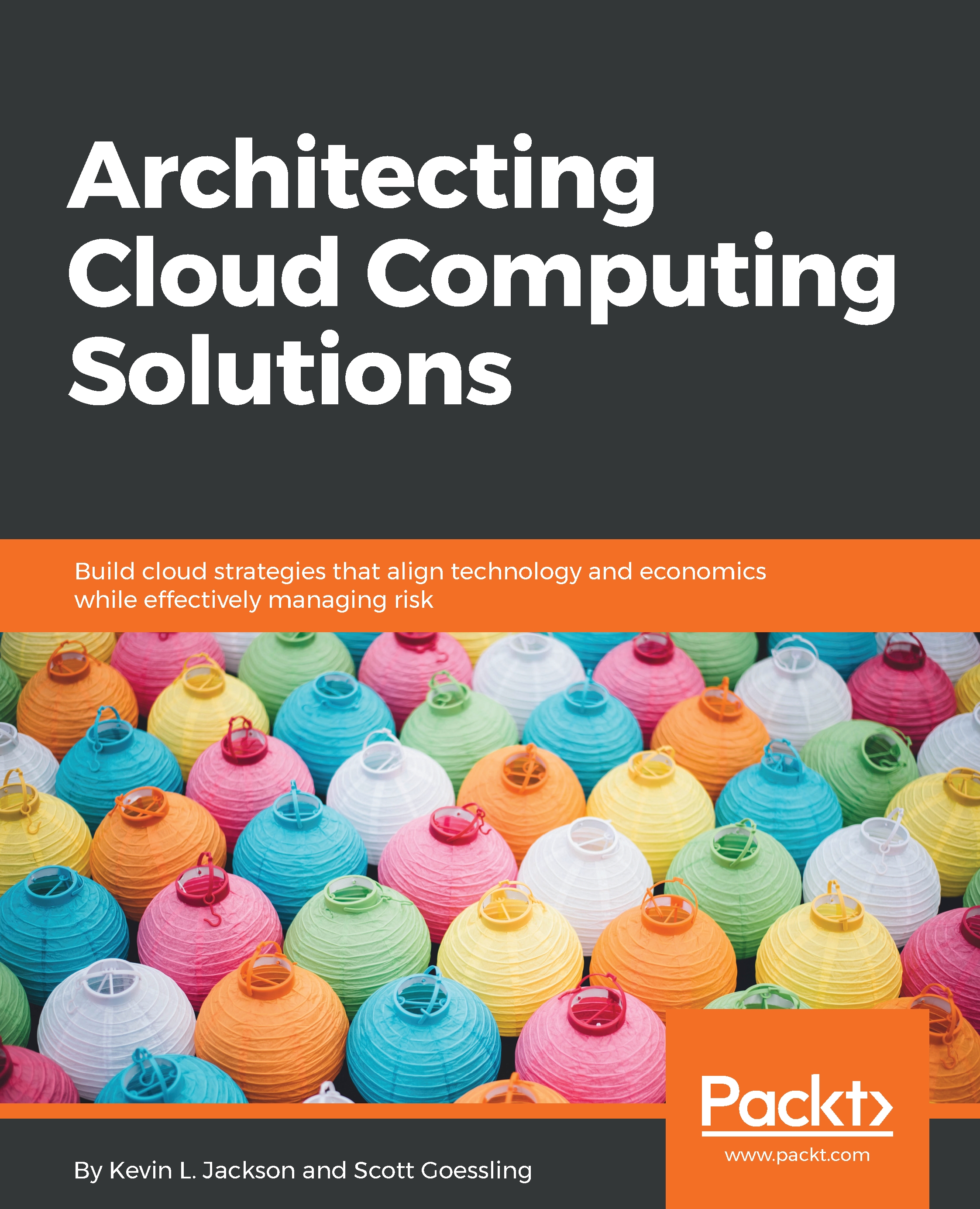
Architecting Cloud Computing Solutions
By :
Architecting Cloud Computing Solutions
By:
Overview of this book
Cloud adoption is a core component of digital
transformation. Scaling the IT environment,
making it resilient, and reducing costs are
what organizations want. Architecting Cloud
Computing Solutions presents and explains
critical cloud solution design considerations
and technology decisions required to
be made for deploying the right cloud
service and deployment models,
based on your business and
technology service requirements.
This book starts with the fundamentals
of cloud computing and its architectural
concepts. It then walks you through
cloud service models (IaaS, PaaS, and
SaaS), deployment models (public,
private, community, and hybrid)
and implementation options
(enterprise, MSP, and CSP) to explain
and describe the key considerations and
challenges organizations face during cloud
migration. Later, this book delves into how to
leverage DevOps, Cloud-Native, and serverless
architectures in your cloud environment
and presents industry best practices for
scaling your cloud environment. Finally,
this book addresses in depth how to
manage essential cloud technology
service components, such as data storage,
security controls, and disaster recovery.
By the end of this book, you will have
mastered all the design considerations and
operational trades required to adopt cloud
services, no matter which cloud service
provider you choose.
Table of Contents (24 chapters)
Preface
What is Cloud Computing?
Governance and Change Management
Design Considerations
Business Drivers, Metrics, and Use Cases
Architecture Executive Decisions
Architecting for Transition
Baseline Cloud Architectures
Solution Reference Architectures
Cloud Environment Key Tenets and Virtualization
Cloud Clients and Key Cloud Services
Operational Requirements
CSP Performance
Cloud Application Development
Data Security
Application Security
Risk Management and Business Continuity
Hands-On Lab 1 – Basic Cloud Design (Single Server)
Hands-On Lab 2 – Advanced Cloud Design Insight
Hands-On Lab 3 – Optimizing Current State (12 Months Later)
Cloud Architecture – Lessons Learned
Epilogue
Other Books You May Enjoy
Customer Reviews