Sign In Start Free Trial
Account

Add to playlist

Create a Playlist

Modal Close icon
You need to login to use this feature.
  • Book Overview & Buying The KCNA Book
  • Table Of Contents Toc
  • Feedback & Rating feedback
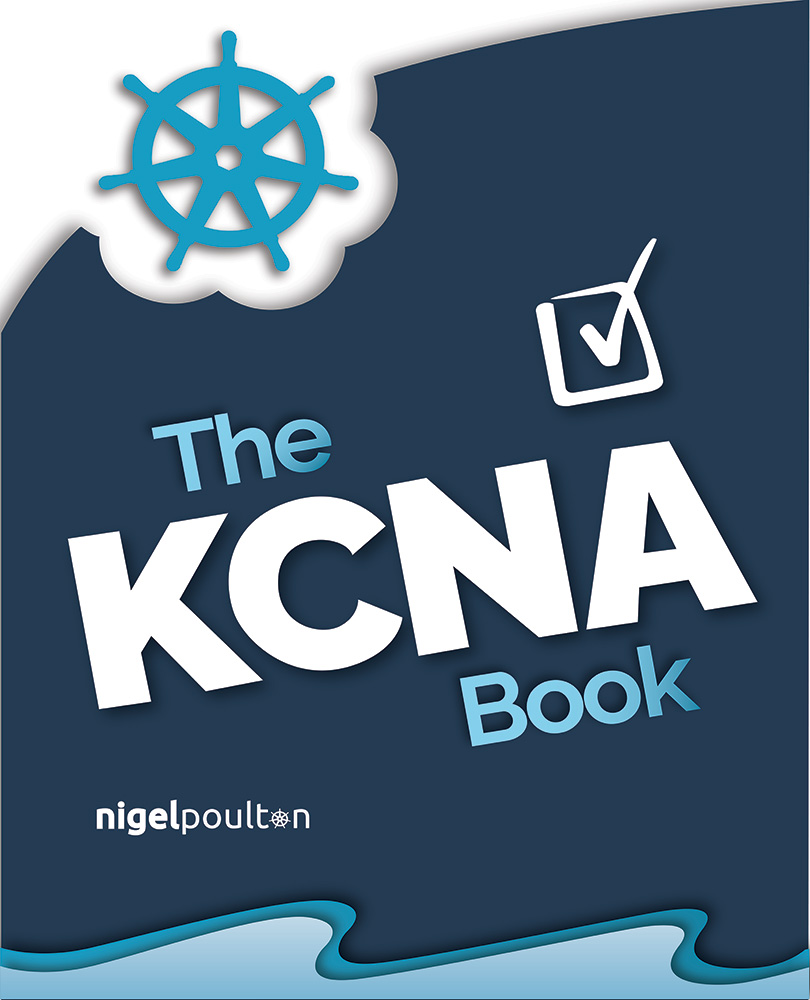
The KCNA Book

The KCNA Book

By : Nigel Poulton
close
close
The KCNA Book

The KCNA Book

By: Nigel Poulton

Overview of this book

There is a huge benefit in building small, specialized, single-purpose apps that can self-heal, auto scale, and update regularly without needing downtime. Kubernetes and cloud-native technologies come in handy in building such apps. Possessing the knowledge and skills to leverage Kubernetes can positively enhance possibilities in favor of architects who specialize in cloud-native microservices applications. ‘The KCNA Book’ is designed to help those working in technology with a passion to become certified in the Kubernetes and Cloud-Native Associate Exam. You will learn about containerization, microservices, and cloud-native architecture. You will learn about Kubernetes fundamentals and container orchestration. The book also sheds light on cloud-native application delivery and observability. It focuses on the KCNA exam domains and competencies, which can be applied to the sample test included in the book. Put your knowledge to the test and enhance your skills with the all-encompassing topic coverage. Upon completion, you will begin your journey to get the best roles, projects, and organizations with this exam-oriented book.
Table of Contents (12 chapters)
close
close
9
8: Sample test
2
Appendix B: Sample Test answers

The Kubernetes API and API server

If you’re new to the concept of APIs, you should think of the Kubernetes API as a catalog listing every possible Kubernetes object and their properties. This catalog (API) is accessed via the API server.

For example, Kubernetes defines a lot of objects such as pods, deployments, replicasets, statefulsets, cronjobs, services, ingresses, network policies, and more. All of these are defined in the API, along with all of their properties that can be used to configure them. When you deploy an object, such as a deployment, you define it in a declarative manifest that you send to the API server where it’s authenticated, authorised, and scheduled to the cluster.

If you try to deploy an object that isn’t defined in the API, the operation will fail. Also, if you try and configure a property of an object that no longer exists, it will fail.

The Kubernetes API is divided into named groups to make it easier to understand, navigate, and expand...

Visually different images
CONTINUE READING
83
Tech Concepts
36
Programming languages
73
Tech Tools
Icon Unlimited access to the largest independent learning library in tech of over 8,000 expert-authored tech books and videos.
Icon Innovative learning tools, including AI book assistants, code context explainers, and text-to-speech.
Icon 50+ new titles added per month and exclusive early access to books as they are being written.
The KCNA Book
notes
bookmark Notes and Bookmarks search Search in title playlist Add to playlist font-size Font size

Change the font size

margin-width Margin width

Change margin width

day-mode Day/Sepia/Night Modes

Change background colour

Close icon Search
Country selected

Close icon Your notes and bookmarks

Confirmation

Modal Close icon
claim successful

Buy this book with your credits?

Modal Close icon
Are you sure you want to buy this book with one of your credits?
Close
YES, BUY

Submit Your Feedback

Modal Close icon
Modal Close icon
Modal Close icon