Sign In Start Free Trial
Account

Add to playlist

Create a Playlist

Modal Close icon
You need to login to use this feature.
  • Book Overview & Buying Nagios Core Administration Cookbook
  • Table Of Contents Toc
  • Feedback & Rating feedback
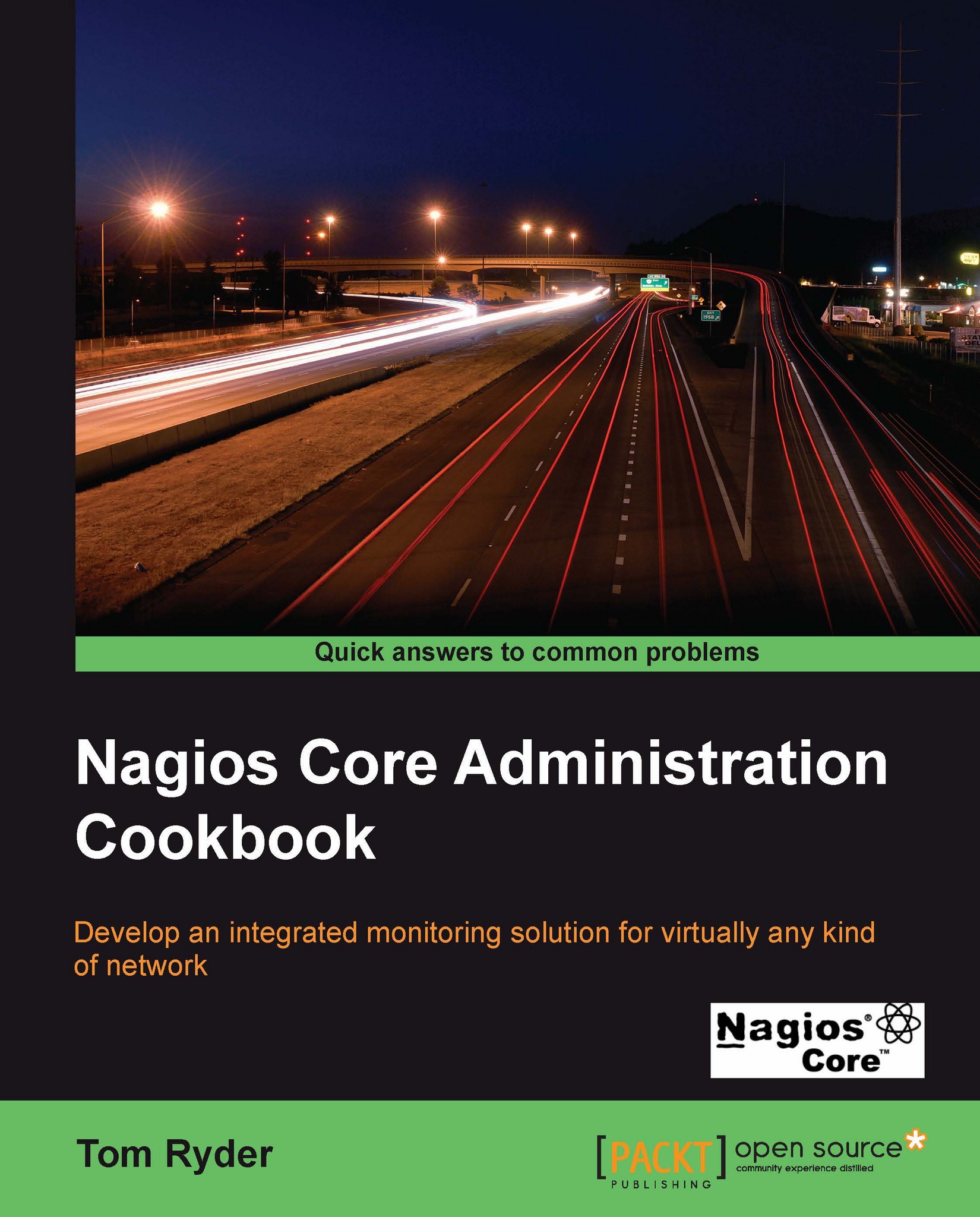
Nagios Core Administration Cookbook

Nagios Core Administration Cookbook

By : Tom Ryder
4.6 (9)
close
close
Nagios Core Administration Cookbook

Nagios Core Administration Cookbook

4.6 (9)
By: Tom Ryder

Overview of this book

Network monitoring requires significantly more than just pinging hosts. This cookbook will help you to comprehensively test your networks' major functions on a regular basis."Nagios Core Administration Cookbook" will show you how to use Nagios Core as a monitoring framework that understands the layers and subtleties of the network for intelligent monitoring and notification behaviour. Nagios Core Administration Guide introduces the reader to methods of extending Nagios Core into a network monitoring solution. The book begins by covering the basic structure of hosts, services, and contacts and then goes on to discuss advanced usage of checks and notifications, and configuring intelligent behaviour with network paths and dependencies. The cookbook emphasizes using Nagios Core as an extensible monitoring framework. By the end of the book, you will learn that Nagios Core is capable of doing much more than pinging a host or to check if websites respond.
Table of Contents (18 chapters)
close
close
Nagios Core Administration Cookbook
Credits
About the Author
About the Reviewers
www.PacktPub.com
Preface
1
Index

Using an alternative check command for hosts


In this recipe, we'll learn how to deal with a slightly tricky case in network monitoring—monitoring a server that doesn't respond to PING, but still provides some network service that requires checking.

It's good practice to allow PING where you can, as it's one of the stipulations in RFC 1122 and a very useful diagnostic tool not just for monitoring, but also for troubleshooting. However, sometimes servers that are accessed only by a few people might be configured not to respond to these messages, perhaps for reasons of secrecy. It's quite common for domestic routers to be configured this way.

Another very common reason for this problem, and the example we'll address here, is checking servers that are behind an IPv4 NAT firewall. It's not possible to address the host directly via an RFC1918 address, such as 192.168.1.20, from the public Internet. Pinging the public interface of the router therefore doesn't tell us whether the host for which it...

Visually different images
CONTINUE READING
83
Tech Concepts
36
Programming languages
73
Tech Tools
Icon Unlimited access to the largest independent learning library in tech of over 8,000 expert-authored tech books and videos.
Icon Innovative learning tools, including AI book assistants, code context explainers, and text-to-speech.
Icon 50+ new titles added per month and exclusive early access to books as they are being written.
Nagios Core Administration Cookbook
notes
bookmark Notes and Bookmarks search Search in title playlist Add to playlist font-size Font size

Change the font size

margin-width Margin width

Change margin width

day-mode Day/Sepia/Night Modes

Change background colour

Close icon Search
Country selected

Close icon Your notes and bookmarks

Confirmation

Modal Close icon
claim successful

Buy this book with your credits?

Modal Close icon
Are you sure you want to buy this book with one of your credits?
Close
YES, BUY

Submit Your Feedback

Modal Close icon
Modal Close icon
Modal Close icon