Sign In Start Free Trial
Account

Add to playlist

Create a Playlist

Modal Close icon
You need to login to use this feature.
  • Book Overview & Buying Practical Machine Learning Cookbook
  • Table Of Contents Toc
Practical Machine Learning Cookbook

Practical Machine Learning Cookbook

By : Atul Tripathi
3 (1)
close
close
Practical Machine Learning Cookbook

Practical Machine Learning Cookbook

3 (1)
By: Atul Tripathi

Overview of this book

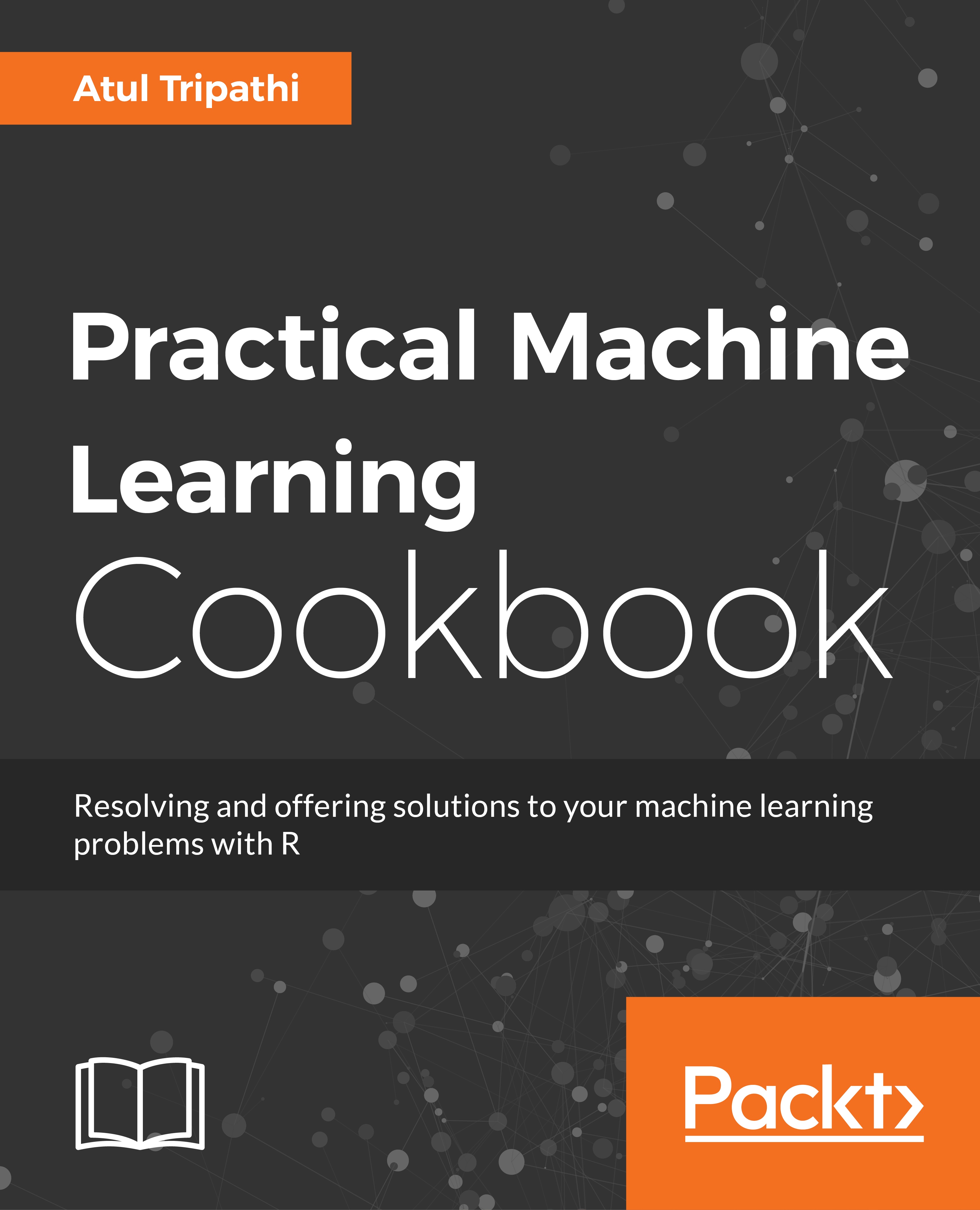
Machine learning has become the new black. The challenge in today’s world is the explosion of data from existing legacy data and incoming new structured and unstructured data. The complexity of discovering, understanding, performing analysis, and predicting outcomes on the data using machine learning algorithms is a challenge. This cookbook will help solve everyday challenges you face as a data scientist. The application of various data science techniques and on multiple data sets based on real-world challenges you face will help you appreciate a variety of techniques used in various situations. The first half of the book provides recipes on fairly complex machine-learning systems, where you’ll learn to explore new areas of applications of machine learning and improve its efficiency. That includes recipes on classifications, neural networks, unsupervised and supervised learning, deep learning, reinforcement learning, and more. The second half of the book focuses on three different machine learning case studies, all based on real-world data, and offers solutions and solves specific machine-learning issues in each one.
Table of Contents (15 chapters)
close
close
12
12. Case Study - Exploring World Bank Data
13
13. Case Study - Pricing Reinsurance Contracts
14
14. Case Study - Forecast of Electricity Consumption

Discriminant function analysis - geological measurements on brines from wells


Let us assume that a study of ancient artifacts that have been collected from mines needs to be carried out. Rock samples have been collected from the mines. On the collected rock samples geochemical measurements have been carried out. A similar study has been carried out on the collected artifacts. In order to separate the samples into the mine from which they were excavated, DFA can be used as a function. The function can then be applied to the artifacts to predict which mine was the source of each artifact.

Getting ready

In order to perform discriminant function analysis we shall be using a dataset collected from mines.

Step 1 - collecting and describing data

The dataset on data analysis in geology titled BRINE shall be used. This can be obtained from http://www.kgs.ku.edu/Mathgeo/Books/Stat/ASCII/BRINE.TXT . The dataset is in a standard form, with rows corresponding to samples and columns corresponding to variables...

CONTINUE READING
83
Tech Concepts
36
Programming languages
73
Tech Tools
Icon Unlimited access to the largest independent learning library in tech of over 8,000 expert-authored tech books and videos.
Icon Innovative learning tools, including AI book assistants, code context explainers, and text-to-speech.
Icon 50+ new titles added per month and exclusive early access to books as they are being written.
Practical Machine Learning Cookbook
notes
bookmark Notes and Bookmarks search Search in title playlist Add to playlist download Download options font-size Font size

Change the font size

margin-width Margin width

Change margin width

day-mode Day/Sepia/Night Modes

Change background colour

Close icon Search
Country selected

Close icon Your notes and bookmarks

Confirmation

Modal Close icon
claim successful

Buy this book with your credits?

Modal Close icon
Are you sure you want to buy this book with one of your credits?
Close
YES, BUY

Submit Your Feedback

Modal Close icon
Modal Close icon
Modal Close icon