Sign In Start Free Trial
Account

Add to playlist

Create a Playlist

Modal Close icon
You need to login to use this feature.
  • Book Overview & Buying PySpark Cookbook
  • Table Of Contents Toc
  • Feedback & Rating feedback
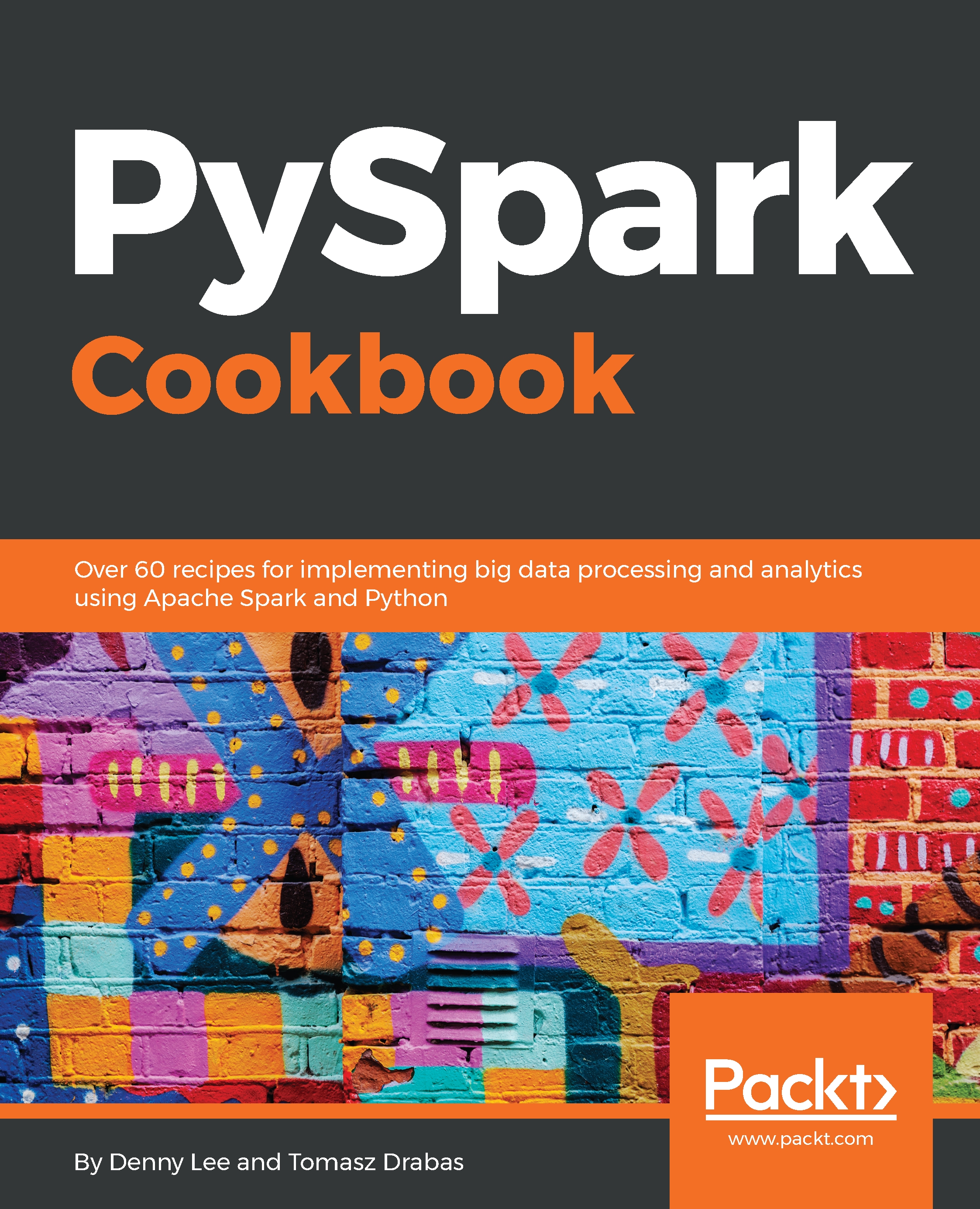
PySpark Cookbook

PySpark Cookbook

By : Lee, Drabas
1.7 (3)
close
close
PySpark Cookbook

PySpark Cookbook

1.7 (3)
By: Lee, Drabas

Overview of this book

Apache Spark is an open source framework for efficient cluster computing with a strong interface for data parallelism and fault tolerance. The PySpark Cookbook presents effective and time-saving recipes for leveraging the power of Python and putting it to use in the Spark ecosystem. You’ll start by learning the Apache Spark architecture and how to set up a Python environment for Spark. You’ll then get familiar with the modules available in PySpark and start using them effortlessly. In addition to this, you’ll discover how to abstract data with RDDs and DataFrames, and understand the streaming capabilities of PySpark. You’ll then move on to using ML and MLlib in order to solve any problems related to the machine learning capabilities of PySpark and use GraphFrames to solve graph-processing problems. Finally, you will explore how to deploy your applications to the cloud using the spark-submit command. By the end of this book, you will be able to use the Python API for Apache Spark to solve any problems associated with building data-intensive applications.
Table of Contents (9 chapters)
close
close

Creating DataFrames


A Spark DataFrame is an immutable collection of data distributed within a cluster. The data inside a DataFrame is organized into named columns that can be compared to tables in a relational database.

In this recipe, we will learn how to create Spark DataFrames.

Getting ready

To execute this recipe, you need to have a working Spark 2.3 environment. If you do not have one, you might want to go back to Chapter 1Installing and Configuring Spark, and follow the recipes you find there. 

All the code that you will need for this chapter can be found in the GitHub repository we set up for the book: http://bit.ly/2ArlBck; go to Chapter 3 and open the 3. Abstracting data with DataFrames.ipynb notebook. 

There are no other requirements.

How to do it...

There are many ways to create a DataFrame, but the simplest way is to create an RDD and convert it into a DataFrame:

sample_data = sc.parallelize([
      (1, 'MacBook Pro', 2015, '15"', '16GB', '512GB SSD'
        , 13.75, 9.48, 0.61, 4...
Visually different images
CONTINUE READING
83
Tech Concepts
36
Programming languages
73
Tech Tools
Icon Unlimited access to the largest independent learning library in tech of over 8,000 expert-authored tech books and videos.
Icon Innovative learning tools, including AI book assistants, code context explainers, and text-to-speech.
Icon 50+ new titles added per month and exclusive early access to books as they are being written.
PySpark Cookbook
notes
bookmark Notes and Bookmarks search Search in title playlist Add to playlist download Download options font-size Font size

Change the font size

margin-width Margin width

Change margin width

day-mode Day/Sepia/Night Modes

Change background colour

Close icon Search
Country selected

Close icon Your notes and bookmarks

Confirmation

Modal Close icon
claim successful

Buy this book with your credits?

Modal Close icon
Are you sure you want to buy this book with one of your credits?
Close
YES, BUY

Submit Your Feedback

Modal Close icon
Modal Close icon
Modal Close icon