Sign In Start Free Trial
Account

Add to playlist

Create a Playlist

Modal Close icon
You need to login to use this feature.
  • Book Overview & Buying Data Engineering with Alteryx
  • Table Of Contents Toc
  • Feedback & Rating feedback
Data Engineering with Alteryx

Data Engineering with Alteryx

By : Paul Houghton
4.8 (11)
close
close
Data Engineering with Alteryx

Data Engineering with Alteryx

4.8 (11)
By: Paul Houghton

Overview of this book

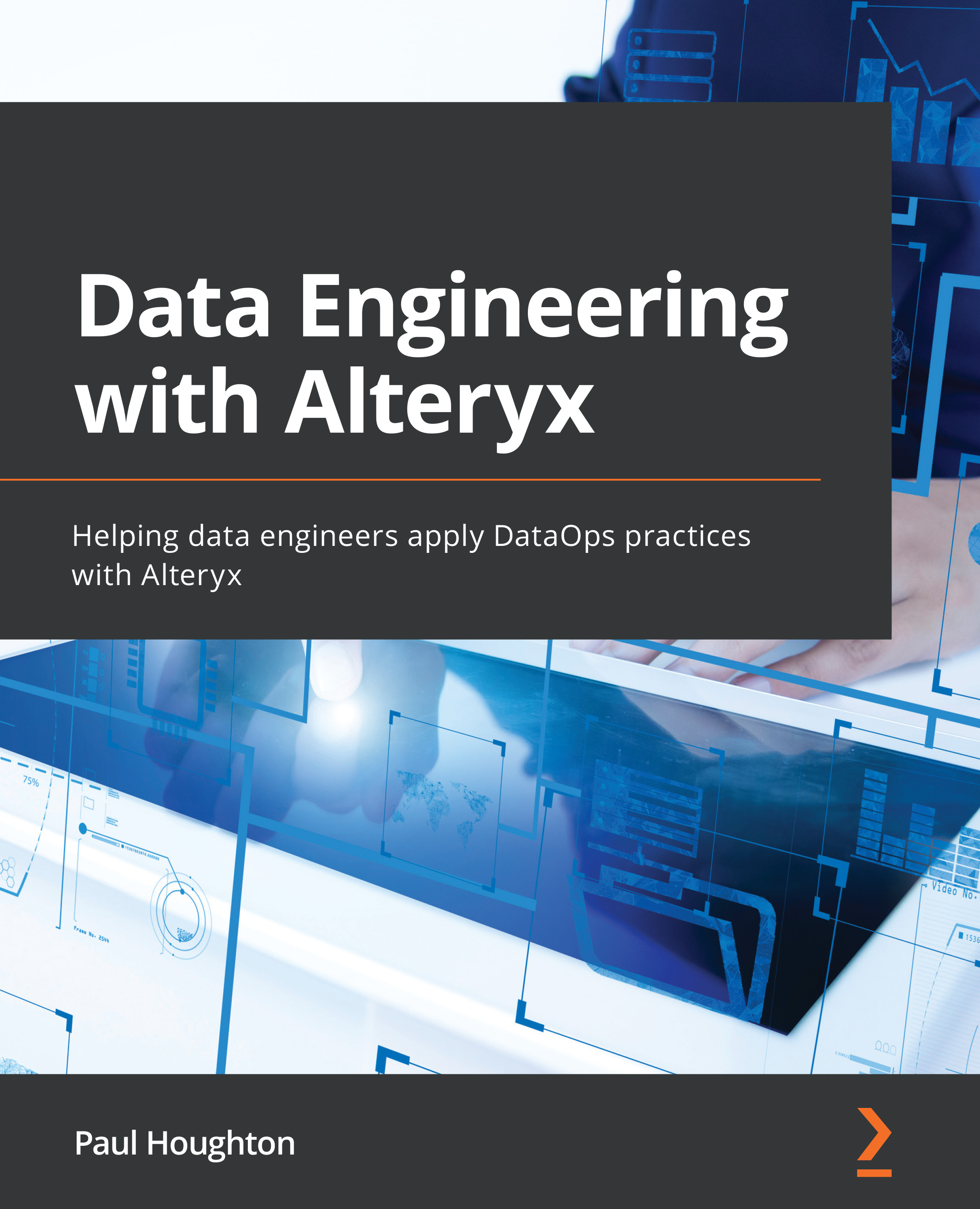
Alteryx is a GUI-based development platform for data analytic applications. Data Engineering with Alteryx will help you leverage Alteryx’s code-free aspects which increase development speed while still enabling you to make the most of the code-based skills you have. This book will teach you the principles of DataOps and how they can be used with the Alteryx software stack. You’ll build data pipelines with Alteryx Designer and incorporate the error handling and data validation needed for reliable datasets. Next, you’ll take the data pipeline from raw data, transform it into a robust dataset, and publish it to Alteryx Server following a continuous integration process. By the end of this Alteryx book, you’ll be able to build systems for validating datasets, monitoring workflow performance, managing access, and promoting the use of your data sources.
Table of Contents (18 chapters)
close
close
1
Part 1: Introduction
5
Part 2: Functional Steps in DataOps
11
Part 3: Governance of DataOps

Summary

In this chapter, we learned how to perform advanced analysis on our dataset. We took the skills learned in Chapter 7, Extracting Value, and extended our analysis to acquire a more in-depth understanding of the data. We started with spatial analysis and learned how to create spatial objects before finding the relationships between the geographic information that appear in your data.

Next, we learned the different methods for creating ML models with Alteryx. We found how to develop black-box and guided models for quickly beginning a data science project. We then saw the different methods for gaining control over the data science process using the R-based tools and taking complete control with the R or Python tools.

This chapter also concludes Part 2, Functional Steps in DataOps. First, we learned how to build a data pipeline and apply the DataOps method to create workflows. Then, we learned how to access raw datasets and process them into valuable final datasets. We have...

Visually different images
CONTINUE READING
83
Tech Concepts
36
Programming languages
73
Tech Tools
Icon Unlimited access to the largest independent learning library in tech of over 8,000 expert-authored tech books and videos.
Icon Innovative learning tools, including AI book assistants, code context explainers, and text-to-speech.
Icon 50+ new titles added per month and exclusive early access to books as they are being written.
Data Engineering with Alteryx
notes
bookmark Notes and Bookmarks search Search in title playlist Add to playlist download Download options font-size Font size

Change the font size

margin-width Margin width

Change margin width

day-mode Day/Sepia/Night Modes

Change background colour

Close icon Search
Country selected

Close icon Your notes and bookmarks

Confirmation

Modal Close icon
claim successful

Buy this book with your credits?

Modal Close icon
Are you sure you want to buy this book with one of your credits?
Close
YES, BUY

Submit Your Feedback

Modal Close icon
Modal Close icon
Modal Close icon