
Sign In Start Free Trial
Account

Add to playlist

Create a Playlist

Modal Close icon
You need to login to use this feature.
  • Book Overview & Buying Go Systems Programming
  • Table Of Contents Toc
Go Systems Programming

Go Systems Programming

3.4 (8)
close
close
Go Systems Programming

Go Systems Programming

3.4 (8)

Overview of this book

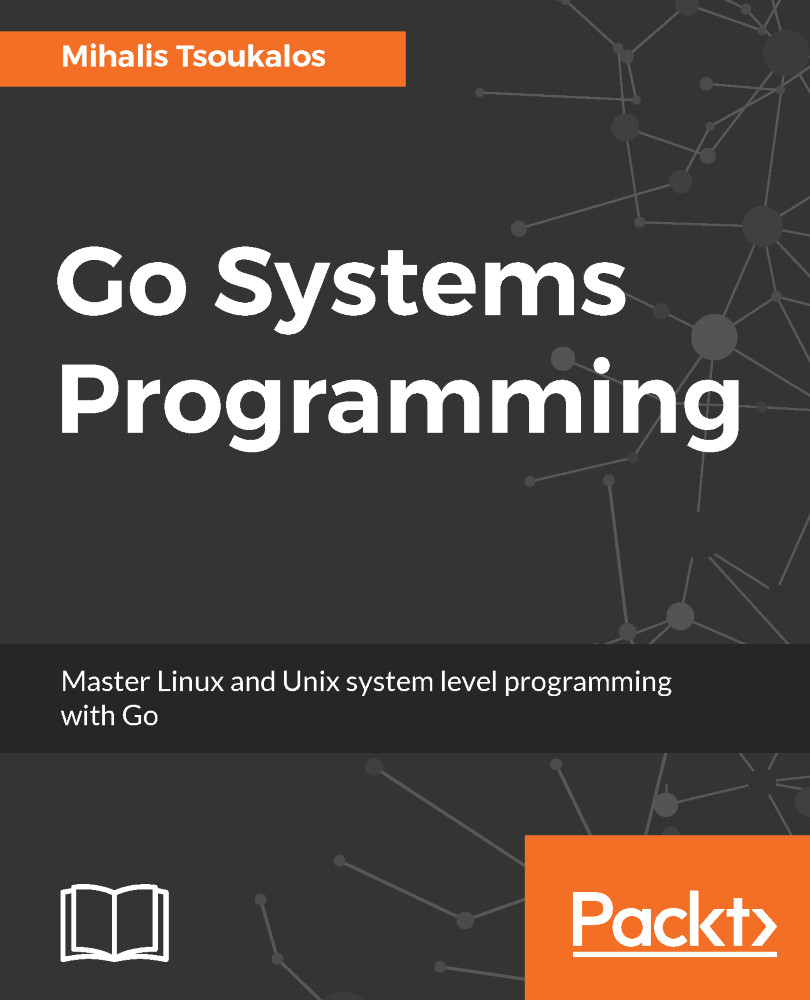
Go is the new systems programming language for Linux and Unix systems. It is also the language in which some of the most prominent cloud-level systems have been written, such as Docker. Where C programmers used to rule, Go programmers are in demand to write highly optimized systems programming code. Created by some of the original designers of C and Unix, Go expands the systems programmers toolkit and adds a mature, clear programming language. Traditional system applications become easier to write since pointers are not relevant and garbage collection has taken away the most problematic area for low-level systems code: memory management. This book opens up the world of high-performance Unix system applications to the beginning Go programmer. It does not get stuck on single systems or even system types, but tries to expand the original teachings from Unix system level programming to all types of servers, the cloud, and the web.
Table of Contents (13 chapters)
close
close

Getting Started with Go and Unix Systems Programming

An operating system is the kind of software that allows you to communicate with the hardware, which means that you cannot use your hardware without an operating system. Unix is an operating system with many variants that have many things in common including their programming interface.

The Unix operating system was mainly programmed in C and not entirely in the assembly language, which makes it portable to other computer architectures without having to rewrite everything from scratch. It is important to understand that even if you are developing a Go program on a Unix machine, at the end of the day, your code will be translated to C functions and system calls because this is the only way to directly communicate with the Unix kernel. The main benefits you get from writing Go code instead of C code are smaller programs with less silly bugs. You will learn more about this in Chapter 3, Advanced Go Features.

As this book will use Go, you will need to have a version of Go installed on your Unix machine. The good news is that there is a port of the Go programming language for almost all modern Unix systems including macOS, Linux, and FreeBSD. There is also a Windows port of Go, but this book will not deal with Microsoft Windows.

Although there is a good chance that your Unix variant has a package for Go, you can also get Go from https://golang.org/dl/.

In this chapter, you will learn the following topics:

  • Systems programming
  • The advantages and disadvantages of Go
  • The states of a Unix process
  • Two Go tools: gofmt and godoc
  • The features of the latest Go version (1.8)
Visually different images
CONTINUE READING
83
Tech Concepts
36
Programming languages
73
Tech Tools
Icon Unlimited access to the largest independent learning library in tech of over 8,000 expert-authored tech books and videos.
Icon Innovative learning tools, including AI book assistants, code context explainers, and text-to-speech.
Icon 50+ new titles added per month and exclusive early access to books as they are being written.
Go Systems Programming
notes
bookmark Notes and Bookmarks search Search in title playlist Add to playlist download Download options font-size Font size

Change the font size

margin-width Margin width

Change margin width

day-mode Day/Sepia/Night Modes

Change background colour

Close icon Search
Country selected

Close icon Your notes and bookmarks

Confirmation

Modal Close icon
claim successful

Buy this book with your credits?

Modal Close icon
Are you sure you want to buy this book with one of your credits?
Close
YES, BUY

Submit Your Feedback

Modal Close icon
Modal Close icon
Modal Close icon