


-
Book Overview & Buying
-
Table Of Contents

-
Feedback & Rating

Functional Kotlin


Functional Kotlin
Overview of this book
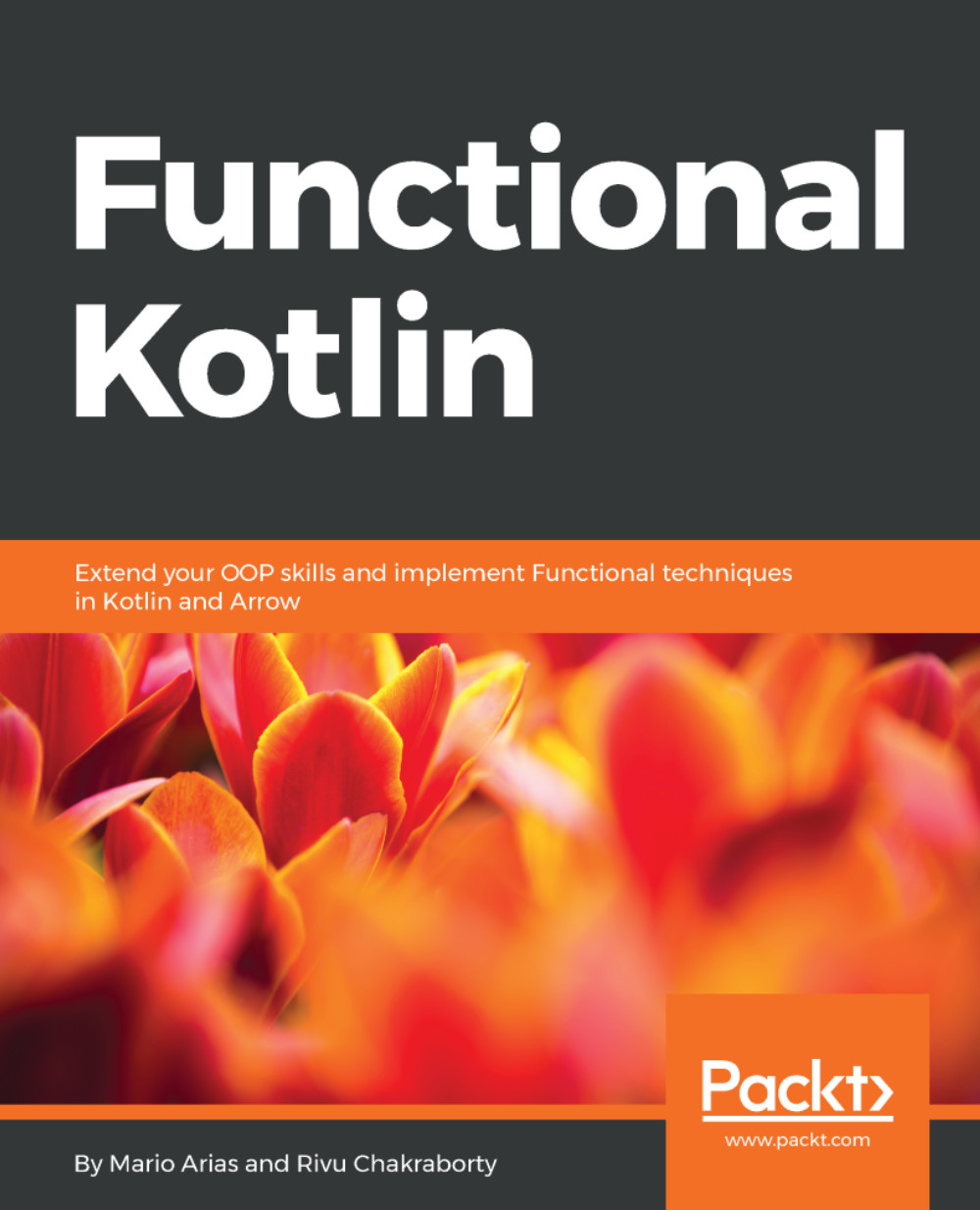
Functional programming makes your application faster, improves performance, and increases your productivity. Kotlin supports many of the popular and advanced functional features of functional languages. This book will cover the A-Z of functional programming in Kotlin. This book bridges the language gap for Kotlin developers by showing you how to create and consume functional constructs in Kotlin. We also bridge the domain gap by showing how functional constructs can be applied in business scenarios. We’ll take you through lambdas, pattern matching, immutability, and help you develop a deep understanding of the concepts and practices of functional programming. If you want learn to address problems using Recursion, Koltin has support for it as well. You’ll also learn how to use the funKtionale library to perform currying and lazy programming and more. Finally, you’ll learn functional design patterns and techniques that will make you a better programmer.By the end of the book, you will be more confident in your functional programming skills and will be able to apply them while programming in Kotlin.
Table of Contents (16 chapters)
Preface


 Free Chapter
Kotlin – Data Types, Objects, and Classes
Getting Started with Functional Programming
Immutability - It's Important
Functions, Function Types, and Side Effects
More on Functions
Delegates in Kotlin
Asynchronous Programming with Coroutines
Collections and Data Operations in Kotlin
Functional Programming and Reactive Programming
Functors, Applicatives, and Monads
Working with Streams in Kotlin

Getting Started with Arrow
Kotlin's Quick Start
Other Books You May Enjoy
Customer Reviews



