


-
Book Overview & Buying
-
Table Of Contents

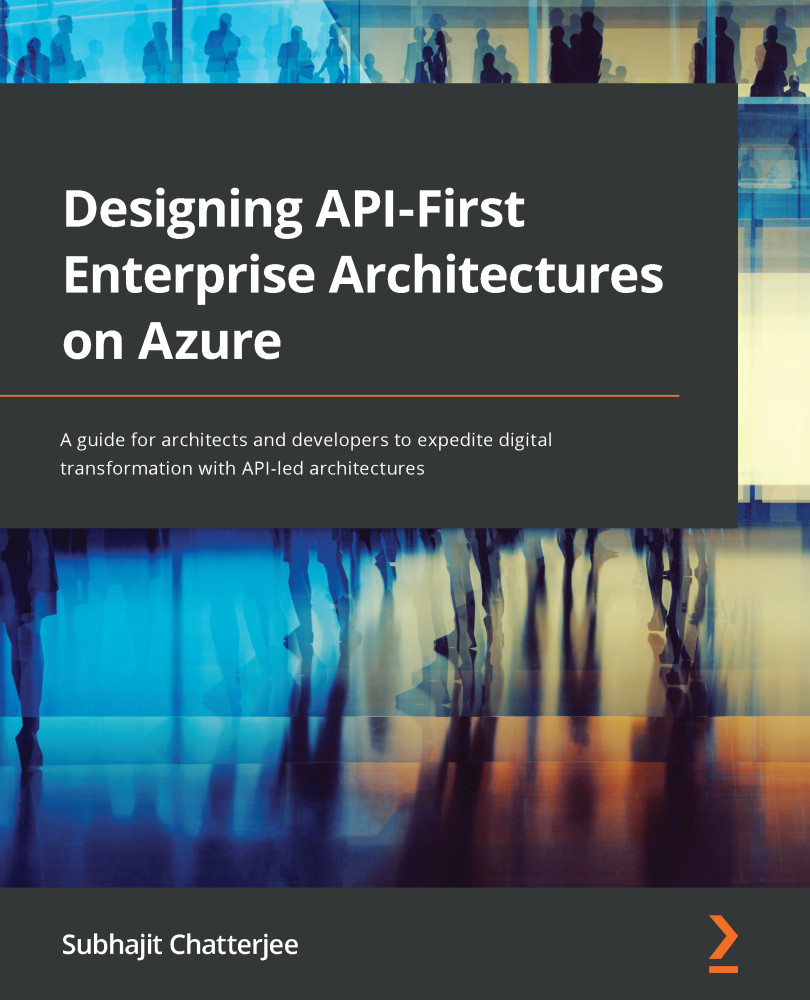
Designing API-First Enterprise Architectures on Azure
By :


Designing API-First Enterprise Architectures on Azure
By:
Overview of this book
API-centric architectures are foundational to delivering omnichannel experiences for an enterprise. With this book, developers will learn techniques to design loosely coupled, cloud-based, business-tier interfaces that can be consumed by a variety of client applications.
Using real-world examples and case studies, the book helps you get to grips with the cloudbased design and implementation of reliable and resilient API-centric solutions. Starting with the evolution of enterprise applications, you'll learn how API-based integration architectures drive digital transformation. You'll then learn about the important principles and practices that apply to cloud-based API architectures and advance to exploring the different architecture styles and their implementation in Azure. This book is written from a practitioner's point of view, so you'll discover ideas and practices that have worked successfully in various customer scenarios.
By the end of this book, you'll be able to architect, design, deploy, and monetize your API solutions in the Azure cloud while implementing best practices and industry standards.
Table of Contents (14 chapters)
Preface


Section 1: API-Led Architecture in the Digital Economy
 Free Chapter
Chapter 1: Evolution of Enterprise Solution Architectures

Chapter 2: APIs as Digital Connectors
Section 2: Build Reliable API-Centric Solutions
Chapter 3: Architecture Principles and API Styles
Chapter 4: Assuring the Quality of the API Service (or Product)
Chapter 5: RESTful APIs – the New Web
Chapter 6: API Design Practices
Chapter 7: Accelerating through DevOps Essentials
Section 3: Deliver Business Value for a Modern Enterprise
Chapter 8: API-Centric Enterprise Integrations
Chapter 9: APIs as a Monetized Product
Other Books You May Enjoy


