


-
Book Overview & Buying
-
Table Of Contents

Software Architecture with Kotlin
By :


Software Architecture with Kotlin
By:
Overview of this book
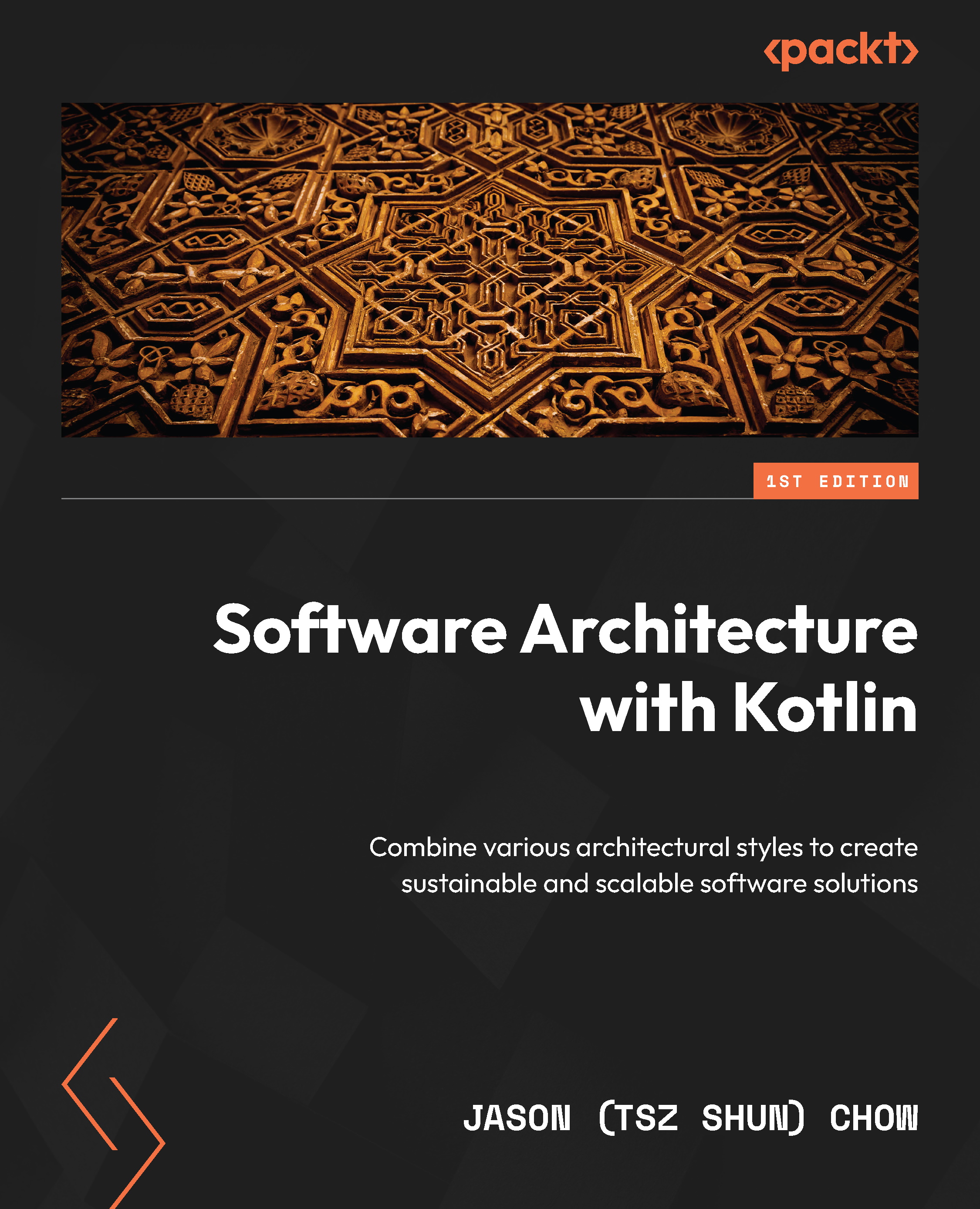
Software Architecture with Kotlin explores the various styles of software architecture with a focus on using the Kotlin programming language. The author draws on their 20+ years of industry experience in developing large-scale enterprise distributed systems to help you grasp the principles, practices, and patterns that shape the architectural landscape of modern software systems.
The book establishes a strong foundation in software architecture, explaining key concepts such as architectural qualities and principles, before teaching you how architectural decisions impact the quality of a system, such as scalability, reliability, and extendability. The chapters address modern architecture topics such as microservices, serverless, and event-driven architectures, providing insights into the challenges and trade-offs involved in adopting these architectural styles. You’ll also discover practical tools that’ll help you make informed decisions and mitigate risks. All architectural patterns in this book are demonstrated using Kotlin.
By the end of this book, you’ll have gained practical expertise by using real-world examples, along with a solid understanding of Kotlin, to become a more proficient and impactful software architect.
Table of Contents (18 chapters)
Preface


 Free Chapter
Chapter 1: The Essence of Software Architecture
Chapter 2: Principles of Software Architecture
Chapter 3: Polymorphism and Alternatives
Chapter 4: Peer-to-Peer and Client-Server Architecture
Chapter 5: Exploring MVC, MVP, and MVVM
Chapter 6: Microservices, Serverless, and Microfrontends
Chapter 7: Modular and Layered Architectures

Chapter 8: Domain-Driven Design (DDD)
Chapter 9: Event Sourcing and CQRS
Chapter 10: Idempotency, Replication, and Recovery Models
Chapter 11: Auditing and Monitoring Models
Chapter 12: Performance and Scalability
Chapter 13: Testing
Chapter 14: Security
Chapter 15: Beyond Architecture
Index


