Sign In Start Free Trial
Account

Add to playlist

Create a Playlist

Modal Close icon
You need to login to use this feature.
  • Book Overview & Buying Get Your Hands Dirty on Clean Architecture
  • Table Of Contents Toc
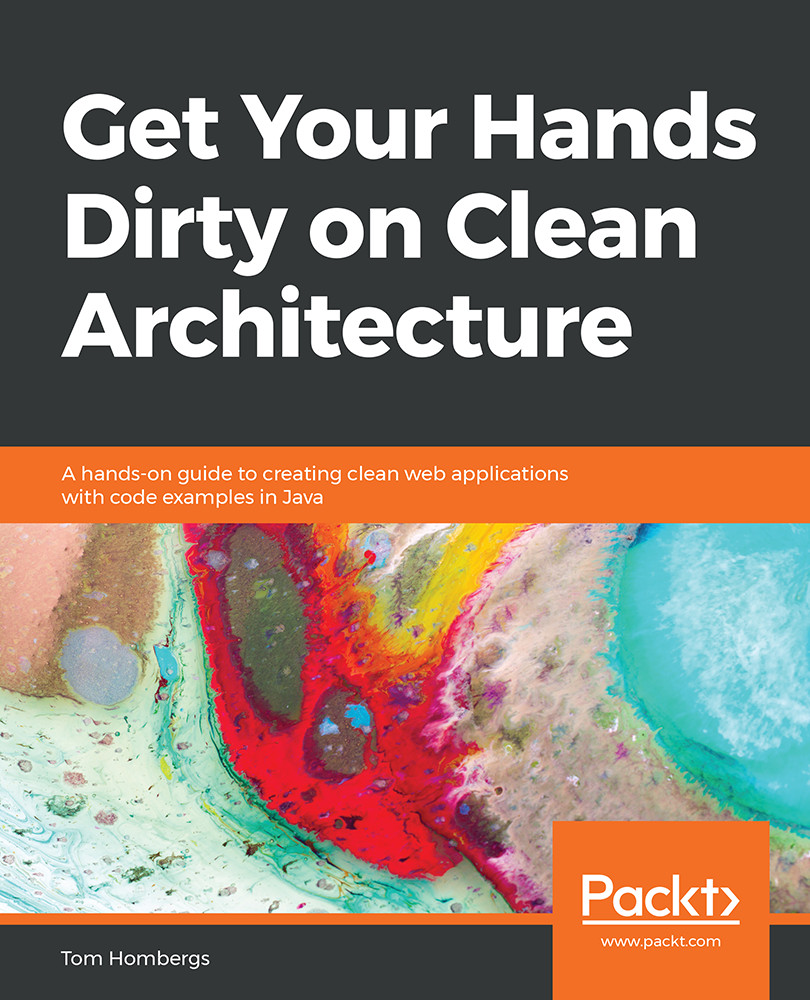
Get Your Hands Dirty on Clean Architecture

Get Your Hands Dirty on Clean Architecture

By : Tom Hombergs
4.2 (18)
close
close
Get Your Hands Dirty on Clean Architecture

Get Your Hands Dirty on Clean Architecture

4.2 (18)
By: Tom Hombergs

Overview of this book

Building for maintainability is key to keeping development costs low and processes easy. The second edition of Get Your Hands Dirty on Clean Architecture is here to equip you with the essential skills and knowledge to build maintainable software. With this comprehensive guide, you’ll explore the drawbacks of conventional layered architecture and the advantages of domain-centric styles such as Robert C. Martin's Clean Architecture and Alistair Cockburn's Hexagonal Architecture. Then, you’ll dive into hands-on explanations on how to convert hexagonal architecture into actual code. You'll learn in detail about different mapping strategies between the layers of hexagonal architecture and discover how to assemble the architectural elements into an application. Additionally, you’ll understand how to enforce architecture boundaries, which shortcuts produce what types of technical debt, and how, sometimes, it is a good idea to willingly take on those debts. By the end of this second edition, you'll be armed with a deep understanding of the hexagonal architecture style and be ready to create maintainable web applications that save money and time.
Table of Contents (13 chapters)
close
close

How Much Testing is Enough?

A question many project teams I have been part of couldn't answer is how much testing we should do. Is it enough if our tests cover 80% of our lines of code? Should it be higher than that?

Line coverage is a bad metric to measure test success. Any goal other than 100% is completely meaningless because important parts of the codebase might not be covered at all. And even at 100%, we still can't be sure that every bug has been squashed.

I suggest measuring test success by how comfortable we feel to ship the software. If we trust the tests enough to ship after having executed them, we are good. The more often we ship, the more trust we can have in our tests. If we only ship twice a year, no one will trust the tests because they will only prove themselves twice a year.

This requires a leap of faith the first couple of times we ship, but if we make it a priority to fix and learn from bugs in production, we are on the right track.

For each production bug, we should...

CONTINUE READING
83
Tech Concepts
36
Programming languages
73
Tech Tools
Icon Unlimited access to the largest independent learning library in tech of over 8,000 expert-authored tech books and videos.
Icon Innovative learning tools, including AI book assistants, code context explainers, and text-to-speech.
Icon 50+ new titles added per month and exclusive early access to books as they are being written.
Get Your Hands Dirty on Clean Architecture
notes
bookmark Notes and Bookmarks search Search in title playlist Add to playlist font-size Font size

Change the font size

margin-width Margin width

Change margin width

day-mode Day/Sepia/Night Modes

Change background colour

Close icon Search
Country selected

Close icon Your notes and bookmarks

Confirmation

Modal Close icon
claim successful

Buy this book with your credits?

Modal Close icon
Are you sure you want to buy this book with one of your credits?
Close
YES, BUY

Submit Your Feedback

Modal Close icon
Modal Close icon
Modal Close icon