


-
Book Overview & Buying
-
Table Of Contents

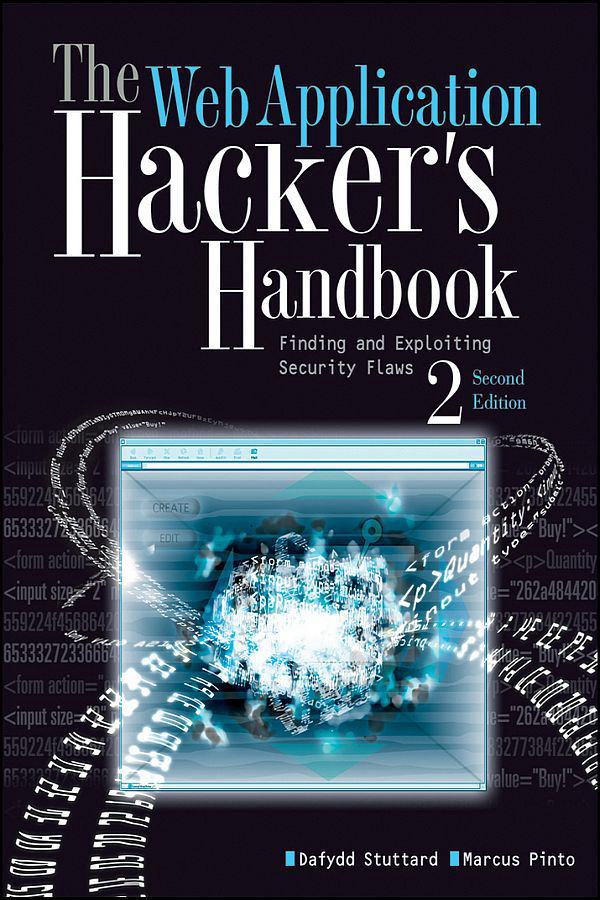
The Web Application Hacker's Handbook
By :


The Web Application Hacker's Handbook
By:
Overview of this book
Web applications are the front door to most organizations, exposing them to attacks that may disclose personal information, execute fraudulent transactions, or compromise ordinary users. This practical book has been completely updated and revised to discuss the latest step-by-step techniques for attacking and defending the range of ever-evolving web applications. Youíll explore the various new technologies employed in web applications that have appeared since the first edition and review the new attack techniques that have been developed, particularly in relation to the client side.
The book starts with the current state of web application security and the trends that indicate how it is likely to evolve soon. Youíll examine the core security problem affecting web applications and the defence mechanisms that applications implement to address this problem, and youíll also explore the key technologies used in todayís web application. Next, youíll carry out tasks for breaking into web applications and for executing a comprehensive attack. As you progress, youíll learn to find vulnerabilities in an application's source code and review the tools that can help when you hack web applications. Youíll also study a detailed methodology for performing a comprehensive and deep attack against a specific target.
By the end of this book, youíll be able to discover security flaws in web applications and how to deal with them.
Table of Contents (32 chapters)


Title

Copyright
About the Authors
About the Technical Editor
MDSec: The Authors’ Company
Credits
Acknowledgments
Introduction
Chapter 1: Web Application (In)security
Chapter 2: Core Defense Mechanisms
Chapter 3: Web Application Technologies
Chapter 4: Mapping the Application
Chapter 5: Bypassing Client-Side Controls
Chapter 6: Attacking Authentication

Chapter 7: Attacking Session Management
Chapter 8: Attacking Access Controls
Chapter 9: Attacking Data Stores
Chapter 10: Attacking Back-End Components
Chapter 11: Attacking Application Logic
Chapter 12: Attacking Users: Cross-Site Scripting
Chapter 13: Attacking Users: Other Techniques
Chapter 14: Automating Customized Attacks
Chapter 15: Exploiting Information Disclosure
Chapter 16: Attacking Native Compiled Applications
Chapter 17: Attacking Application Architecture
Chapter 18: Attacking the Application Server
Chapter 19: Finding Vulnerabilities in Source Code
Chapter 20: A Web Application Hacker's Toolkit
Chapter 21: A Web Application Hacker's Methodology
Index
End User License Agreement


