


-
Book Overview & Buying
-
Table Of Contents

Incident Response for Windows
By :


Incident Response for Windows
By:
Overview of this book
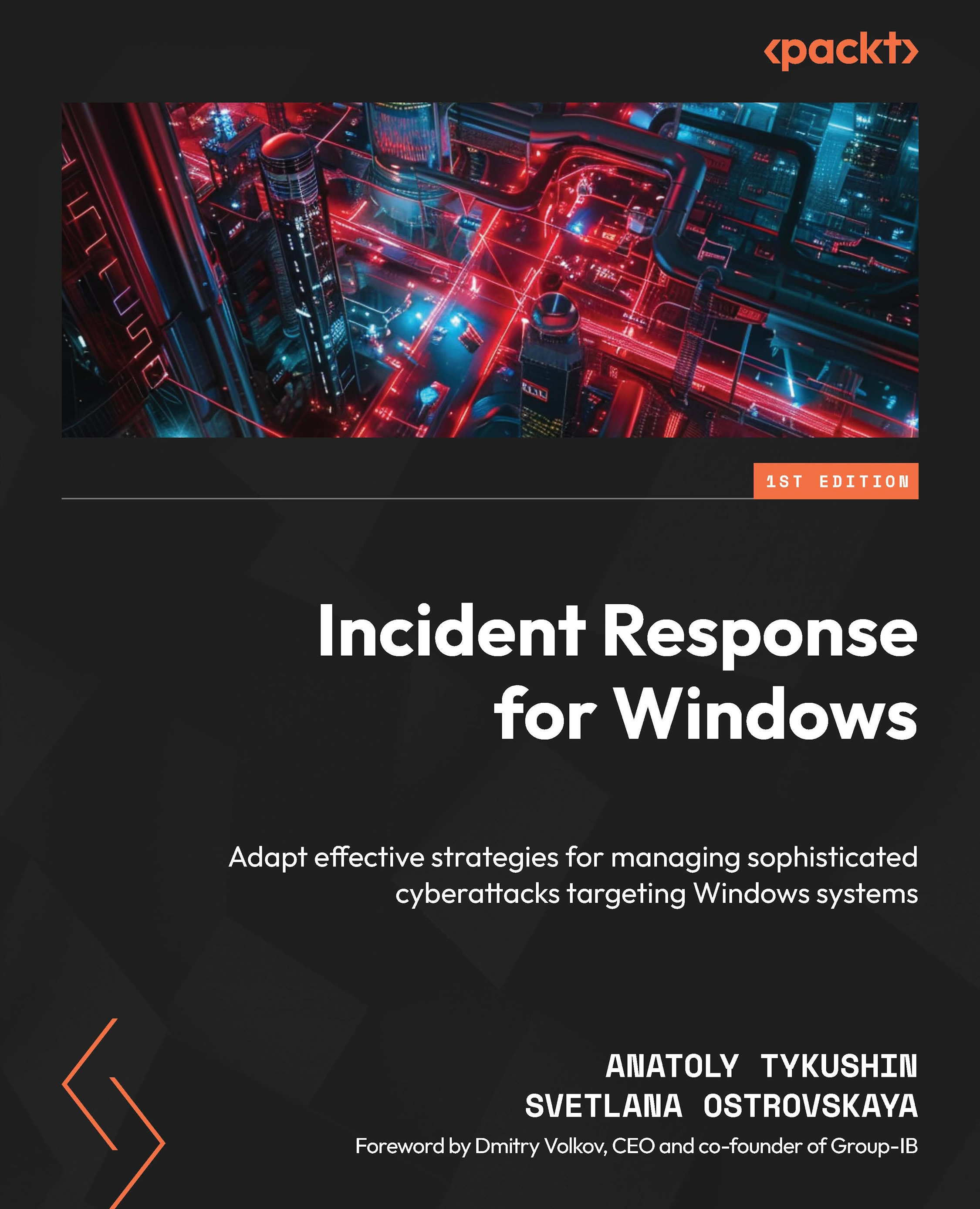
Cybersecurity threats are constantly evolving, posing serious risks to organizations. Incident Response for Windows, by cybersecurity experts Anatoly Tykushin and Svetlana Ostrovskaya, provides a practical hands-on guide to mitigating threats in Windows environments, drawing from their real-world experience in incident response and digital forensics.
Designed for cybersecurity professionals, IT administrators, and digital forensics practitioners, the book covers the stages of modern cyberattacks, including reconnaissance, infiltration, network propagation, and data exfiltration. It takes a step-by-step approach to incident response, from preparation and detection to containment, eradication, and recovery. You will also explore Windows endpoint forensic evidence and essential tools for gaining visibility into Windows infrastructure. The final chapters focus on threat hunting and proactive strategies to identify cyber incidents before they escalate.
By the end of this book, you will gain expertise in forensic evidence collection, threat hunting, containment, eradication, and recovery, equipping them to detect, analyze, and respond to cyber threats while strengthening your organization's security posture
Table of Contents (20 chapters)
Preface


Part 1: Understanding the Threat Landscape and Attack Life Cycle
 Free Chapter
Chapter 1: Introduction to the Threat Landscape
Chapter 2: Understanding the Attack Life Cycle
Part 2: Incident Response Procedures and Endpoint Forensic Evidence Collection
Chapter 3: Phases of an Efficient Incident Response on Windows Infrastructure
Chapter 4: Endpoint Forensic Evidence Collection
Part 3: Incident Analysis and Threat Hunting on Windows Systems
Chapter 5: Gaining Access to the Network
Chapter 6: Establishing a Foothold
Chapter 7: Network and Key Assets Discovery
Chapter 8: Network Propagation
Chapter 9: Data Collection and Exfiltration
Chapter 10: Impact

Chapter 11: Threat Hunting and Analysis of TTPs
Part 4: Incident Investigation Management and Reporting
Chapter 12: Incident Containment, Eradication, and Recovery
Chapter 13: Incident Investigation Closure and Reporting
Index


