
Sign In Start Free Trial
Account

Add to playlist

Create a Playlist

Modal Close icon
You need to login to use this feature.
  • Book Overview & Buying Learning Robotics using Python
  • Table Of Contents Toc
  • Feedback & Rating feedback
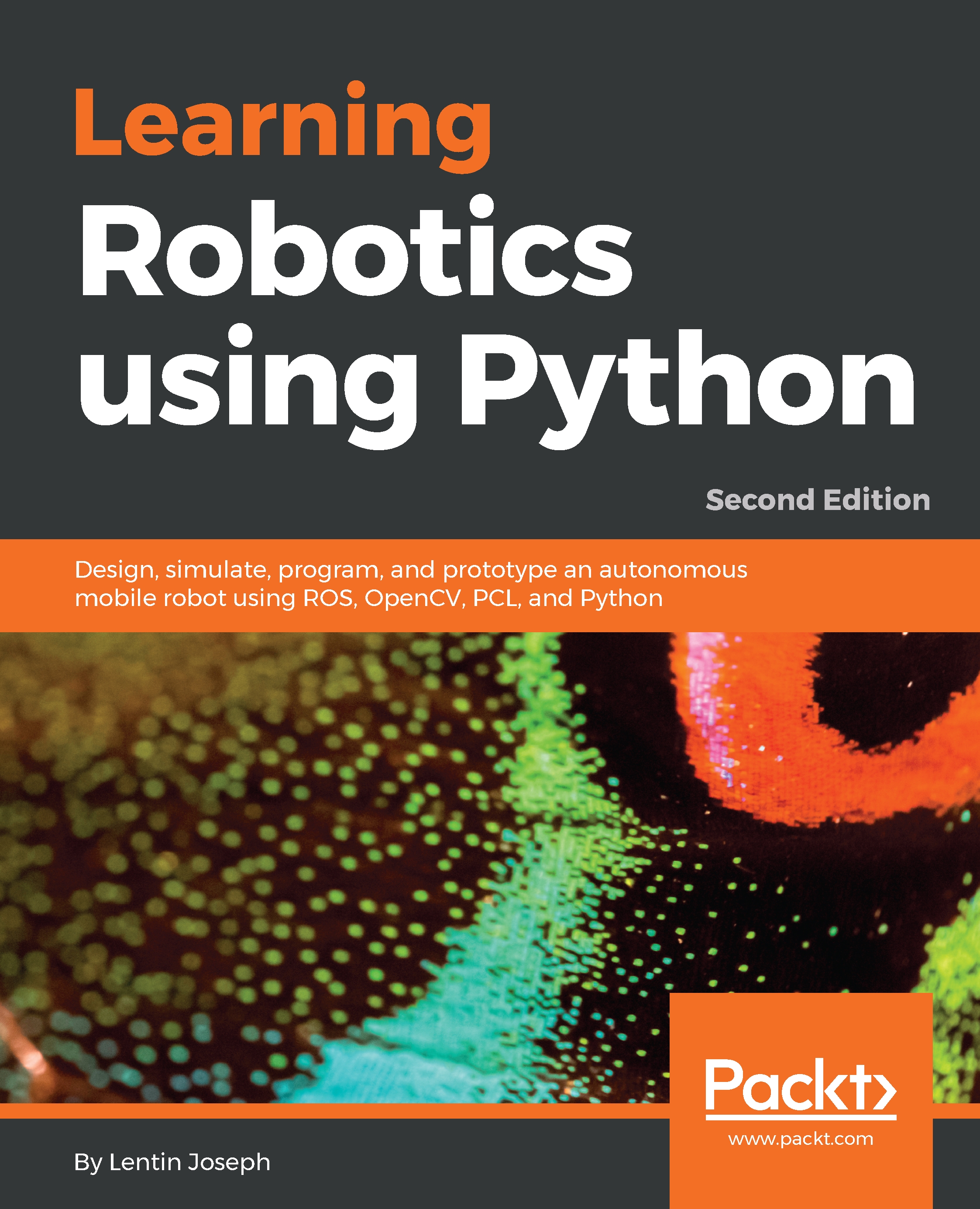
Learning Robotics using Python

Learning Robotics using Python - Second Edition

By : Lentin Joseph
3.1 (8)
close
close
Learning Robotics using Python

Learning Robotics using Python

3.1 (8)
By: Lentin Joseph

Overview of this book

Robot Operating System (ROS) is one of the most popular robotics software frameworks in research and industry. It has various features for implementing different capabilities in a robot without implementing them from scratch. This book starts by showing you the fundamentals of ROS so you understand the basics of differential robots. Then, you'll learn about robot modeling and how to design and simulate it using ROS. Moving on, we'll design robot hardware and interfacing actuators. Then, you'll learn to configure and program depth sensors and LIDARs using ROS. Finally, you'll create a GUI for your robot using the Qt framework. By the end of this tutorial, you'll have a clear idea of how to integrate and assemble everything into a robot and how to bundle the software package.
Table of Contents (12 chapters)
close
close

Preface

Learning Robotics using Python contains nine chapters that explain how to build an autonomous mobile robot from scratch and program it using Python. The robot mentioning in this book is a service robot that can be used to serve food in home, hotels, and restaurant. From the beginning to end, the book discusses step-by-step procedures of building of this robot. The book starts with the basics concepts of robotics and then moves to the 3D modeling and simulation of the robot. After successful simulation of the robot, it discusses the hardware components required to build the robot prototype.

The software part of this robot is mainly implemented using Python programming language and software frameworks, such as Robot Operating System (ROS) and OpenCV. You can see the application of python from the designing of a robot to creating robot user interface. The Gazebo simulator is used to simulate the robot and machine vision libraries, such as OpenCV, OpenNI, and PCL, is for processing the 2D and 3D image data. Each chapter is presented with adequate theory for understanding the application part. The book is reviewed by the experts in this field and it is the result of their handwork and passion in robotics.

Visually different images
CONTINUE READING
83
Tech Concepts
36
Programming languages
73
Tech Tools
Icon Unlimited access to the largest independent learning library in tech of over 8,000 expert-authored tech books and videos.
Icon Innovative learning tools, including AI book assistants, code context explainers, and text-to-speech.
Icon 50+ new titles added per month and exclusive early access to books as they are being written.
Learning Robotics using Python
notes
bookmark Notes and Bookmarks search Search in title playlist Add to playlist download Download options font-size Font size

Change the font size

margin-width Margin width

Change margin width

day-mode Day/Sepia/Night Modes

Change background colour

Close icon Search
Country selected

Close icon Your notes and bookmarks

Confirmation

Modal Close icon
claim successful

Buy this book with your credits?

Modal Close icon
Are you sure you want to buy this book with one of your credits?
Close
YES, BUY

Submit Your Feedback

Modal Close icon
Modal Close icon
Modal Close icon