


-
Book Overview & Buying
-
Table Of Contents

-
Feedback & Rating

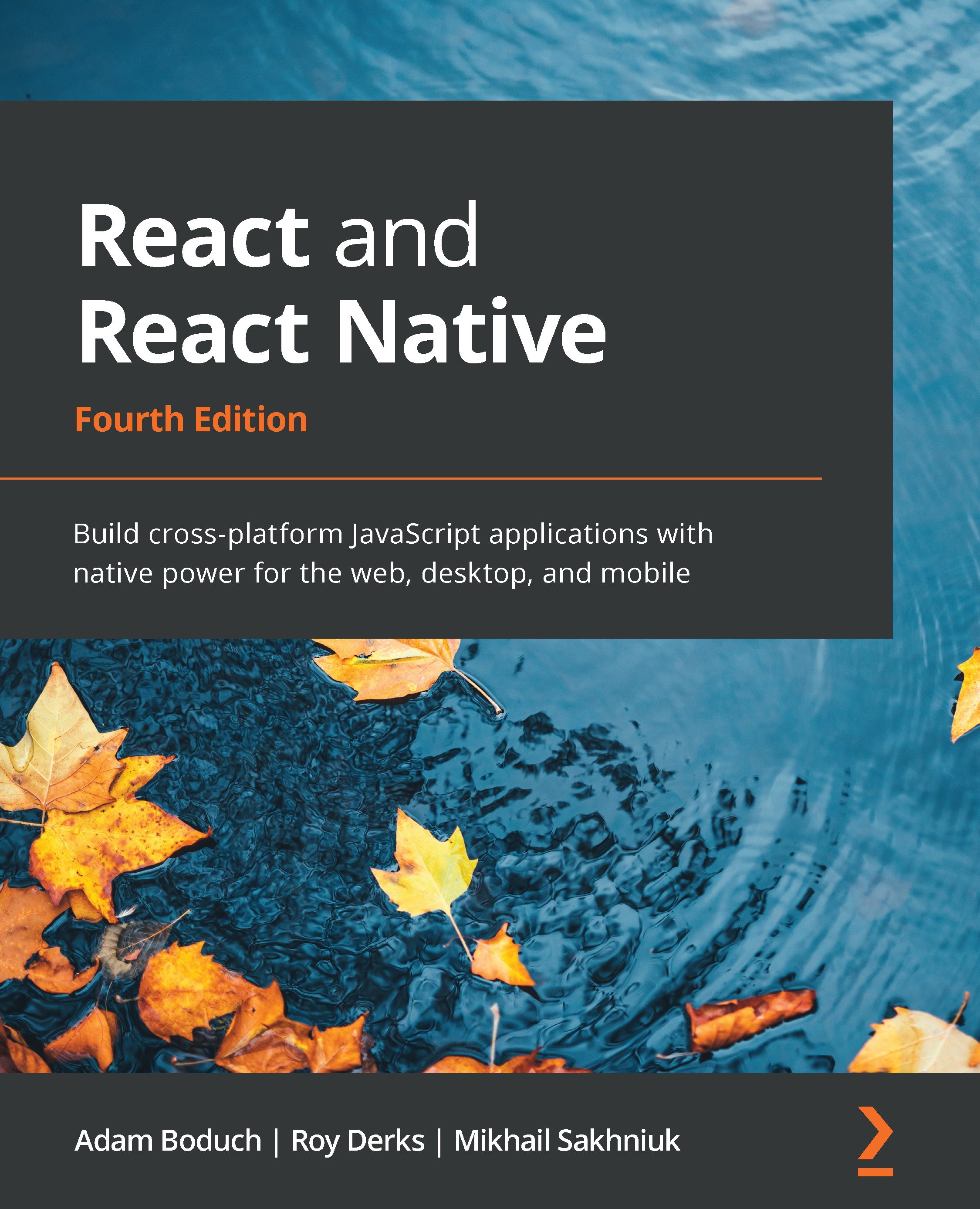
React and React Native - Fourth Edition
By :


React and React Native
By:
Overview of this book
Over the years, React and React Native has proven itself among JavaScript developers as a popular choice for a complete and practical guide to the React ecosystem. This fourth edition comes with the latest features, enhancements, and fixes to align with React 18, while also being compatible with React Native. It includes new chapters covering critical features and concepts in modern cross-platform app development with React.
From the basics of React to popular components such as Hooks, GraphQL, and NativeBase, this definitive guide will help you become a professional React developer in a step-by-step manner. You'll begin by learning about the essential building blocks of React components. As you advance through the chapters, you'll work with higher-level functionalities in application development and then put your knowledge to work by developing user interface components for the web and native platforms. In the concluding chapters, you'll learn how to bring your application together with robust data architecture.
By the end of this book, you'll be able to build React applications for the web and React Native applications for multiple mobile platforms.
Table of Contents (36 chapters)
Preface


Part 1 – React
 Free Chapter
Chapter 1: Why React?
Chapter 2: Rendering with JSX
Chapter 3: Component Properties, State, and Context
Chapter 4: Getting Started with Hooks
Chapter 5: Event Handling, the React Way
Chapter 6: Crafting Reusable Components
Chapter 7: The React Component Life Cycle
Chapter 8: Validating Component Properties
Chapter 9: Handling Navigation with Routes
Chapter 10: Code Splitting Using Lazy Components and Suspense

Chapter 11: Server-Side React Components
Chapter 12: User Interface Framework Components
Chapter 13: High-Performance State Updates
Part 2 – React Native
Chapter 14: Why React Native?
Chapter 15: React Native under the Hood
Chapter 16: Kick-Starting React Native Projects
Chapter 17: Building Responsive Layouts with Flexbox
Chapter 18: Navigating Between Screens
Chapter 19: Rendering Item Lists
Chapter 20: Showing Progress
Chapter 21: Geolocation and Maps
Chapter 22: Collecting User Input
Chapter 23: Displaying Modal Screens
Chapter 24: Responding to User Gestures
Chapter 25: Using Animations
Chapter 26: Controlling Image Display
Chapter 27: Going Offline
Chapter 28: Selecting Native UI Components Using NativeBase
Part 3 – React Architecture
Chapter 29: Handling Application State
Chapter 30: Why GraphQL?
Chapter 31: Building a GraphQL React App
Other Books You May Enjoy
Customer Reviews



