Sign In Start Free Trial
Account

Add to playlist

Create a Playlist

Modal Close icon
You need to login to use this feature.
  • Book Overview & Buying Distributed Computing in Java 9
  • Table Of Contents Toc
  • Feedback & Rating feedback
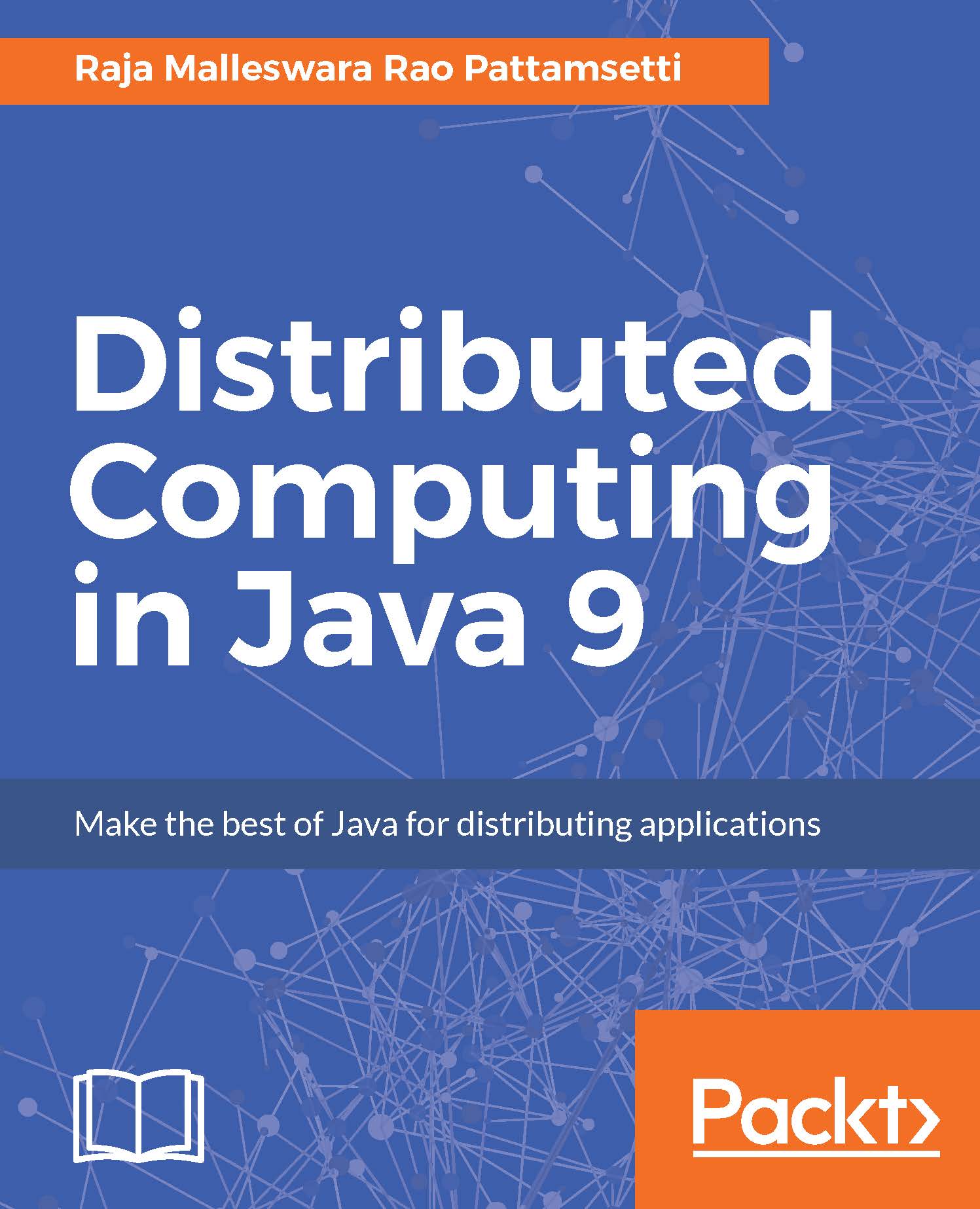
Distributed Computing in Java 9

Distributed Computing in Java 9

close
close
Distributed Computing in Java 9

Distributed Computing in Java 9

Overview of this book

Distributed computing is the concept with which a bigger computation process is accomplished by splitting it into multiple smaller logical activities and performed by diverse systems, resulting in maximized performance in lower infrastructure investment. This book will teach you how to improve the performance of traditional applications through the usage of parallelism and optimized resource utilization in Java 9. After a brief introduction to the fundamentals of distributed and parallel computing, the book moves on to explain different ways of communicating with remote systems/objects in a distributed architecture. You will learn about asynchronous messaging with enterprise integration and related patterns, and how to handle large amount of data using HPC and implement distributed computing for databases. Moving on, it explains how to deploy distributed applications on different cloud platforms and self-contained application development. You will also learn about big data technologies and understand how they contribute to distributed computing. The book concludes with the detailed coverage of testing, debugging, troubleshooting, and security aspects of distributed applications so the programs you build are robust, efficient, and secure.

Table of Contents (11 chapters)
close
close
2
Communication between Distributed Applications
3
RMI, CORBA, and JavaSpaces

Commanding parallel system architectures

In the last few years, multiple varieties of computing models provisioning great processing performance have been developed. They are classified depending on the memory allocated to their processors and how their alignment is designed. Some of the important parallel systems are as follows:

  • MPP
  • SMP
  • CC-NUMA
  • Distributed systems
  • Clusters

Let's get into a little more detail about each of these system architectures and review some of their important performance characteristics.

MPP

MPP, as the name suggests, is a huge parallel processing system developed in a shared nothing architecture. Such systems usually contain a large number of processing nodes that are integrated with a high...

Visually different images
CONTINUE READING
83
Tech Concepts
36
Programming languages
73
Tech Tools
Icon Unlimited access to the largest independent learning library in tech of over 8,000 expert-authored tech books and videos.
Icon Innovative learning tools, including AI book assistants, code context explainers, and text-to-speech.
Icon 50+ new titles added per month and exclusive early access to books as they are being written.
Distributed Computing in Java 9
notes
bookmark Notes and Bookmarks search Search in title playlist Add to playlist download Download options font-size Font size

Change the font size

margin-width Margin width

Change margin width

day-mode Day/Sepia/Night Modes

Change background colour

Close icon Search
Country selected

Close icon Your notes and bookmarks

Confirmation

Modal Close icon
claim successful

Buy this book with your credits?

Modal Close icon
Are you sure you want to buy this book with one of your credits?
Close
YES, BUY

Submit Your Feedback

Modal Close icon
Modal Close icon
Modal Close icon