Sign In Start Free Trial
Account

Add to playlist

Create a Playlist

Modal Close icon
You need to login to use this feature.
  • Book Overview & Buying Implementing DevOps with Microsoft Azure
  • Table Of Contents Toc
  • Feedback & Rating feedback
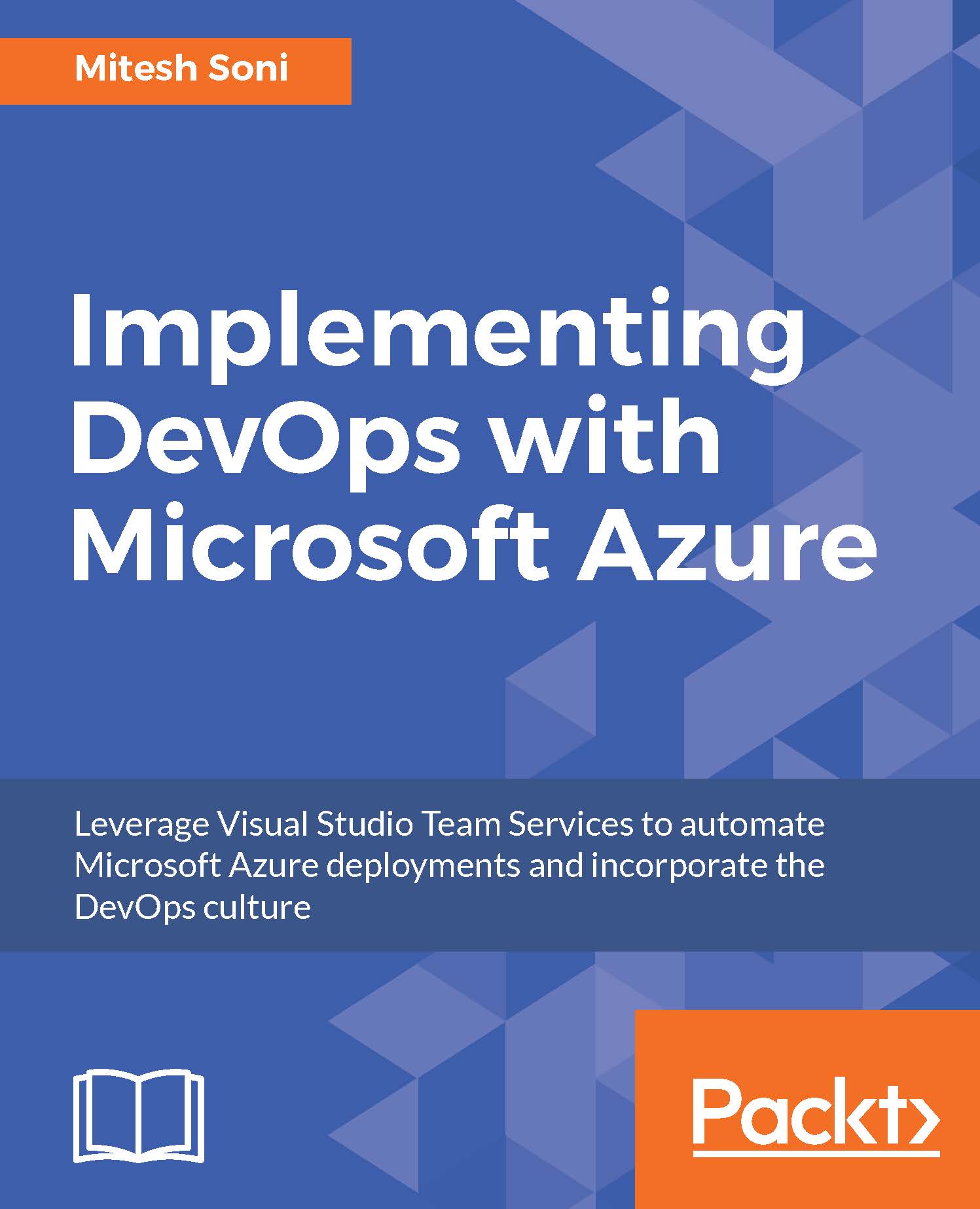
Implementing DevOps with Microsoft Azure

Implementing DevOps with Microsoft Azure

By : Mitesh Soni
4.1 (7)
close
close
Implementing DevOps with Microsoft Azure

Implementing DevOps with Microsoft Azure

4.1 (7)
By: Mitesh Soni

Overview of this book

This book will teach you all about the Visual Studio Team Services and Microsoft Azure PaaS offerings that support Continuous Integration, Continuous Delivery, Continuous Deployment, and execution in the cloud with high availability, disaster recovery, and security. You will first be given a tour of all the concepts and tools that Microsoft Azure has to offer and how these can be used in situations to cultivate the DevOps culture. You’ll be taught how to use and manage Visual Studio Team Services (VSTS) and about the structure of the sample application used throughout the book. You will become familiar with the nitty gritty of Continuous Integration and Continuous Development with VSTS and Microsoft Azure Apps. You will not only learn how to create App service environments, but also how to compare Azure Web Apps and App Service Environments to deploy web applications in a more secure environment. Once you have completed Continuous Integration and created the Platform for application deployment, you will learn more about the final stepping stone in achieving end-to-end automation using approval-based Continuous Delivery and Deployment. You will then learn about Continuous Monitoring, using the monitoring and notification options provided by Microsoft Azure and Visual Studio Team Services.
Table of Contents (9 chapters)
close
close
8
More from the Author

Creating and configuring ASEs


Let's create an ASE with following:

  • Front end pool with two P2 compute resources
  • Worker pool 1 with two P1 compute resources
  • Worker pool 2 with zero P2 compute resources
  • Worker pool 3 with zero P3 compute resources
  • Single IP address to be used for IP SSL
  • VNet with 512 addresses using an RFC 1918 private address space; subnet with 256 addresses

To create an ASE follow, these steps:

  1. In the left sidebar, find App Service Environments.

Note

If it is not available, then click on More services and filter App Service Environments. Click on the star icon to bring that link on the left sidebar.

  1. Click on +Add. Enter Name for the ASEs, select Subscription, and select Resource Group (we already created the eTutorialsWorld resource group) by clicking on Use existing:
  1. Click on Virtual Network and on Create New. Enter name for the Virtual Network and select a Location. Click on OK:

Once we have configured VNet with the proper location, we can go back to the pane where other details of...

Visually different images
CONTINUE READING
83
Tech Concepts
36
Programming languages
73
Tech Tools
Icon Unlimited access to the largest independent learning library in tech of over 8,000 expert-authored tech books and videos.
Icon Innovative learning tools, including AI book assistants, code context explainers, and text-to-speech.
Icon 50+ new titles added per month and exclusive early access to books as they are being written.
Implementing DevOps with Microsoft Azure
notes
bookmark Notes and Bookmarks search Search in title playlist Add to playlist download Download options font-size Font size

Change the font size

margin-width Margin width

Change margin width

day-mode Day/Sepia/Night Modes

Change background colour

Close icon Search
Country selected

Close icon Your notes and bookmarks

Confirmation

Modal Close icon
claim successful

Buy this book with your credits?

Modal Close icon
Are you sure you want to buy this book with one of your credits?
Close
YES, BUY

Submit Your Feedback

Modal Close icon
Modal Close icon
Modal Close icon