


-
Book Overview & Buying
-
Table Of Contents

The Ultimate Docker Container Book - Fourth Edition
By :


The Ultimate Docker Container Book
By:
Overview of this book
Containers have become the foundation of modern software platforms, transforming how applications are built, shipped, secured, and operated. However, as systems grow more distributed and regulated, using containers effectively requires more than basic commands; it requires architectural understanding, security awareness, and operational discipline.
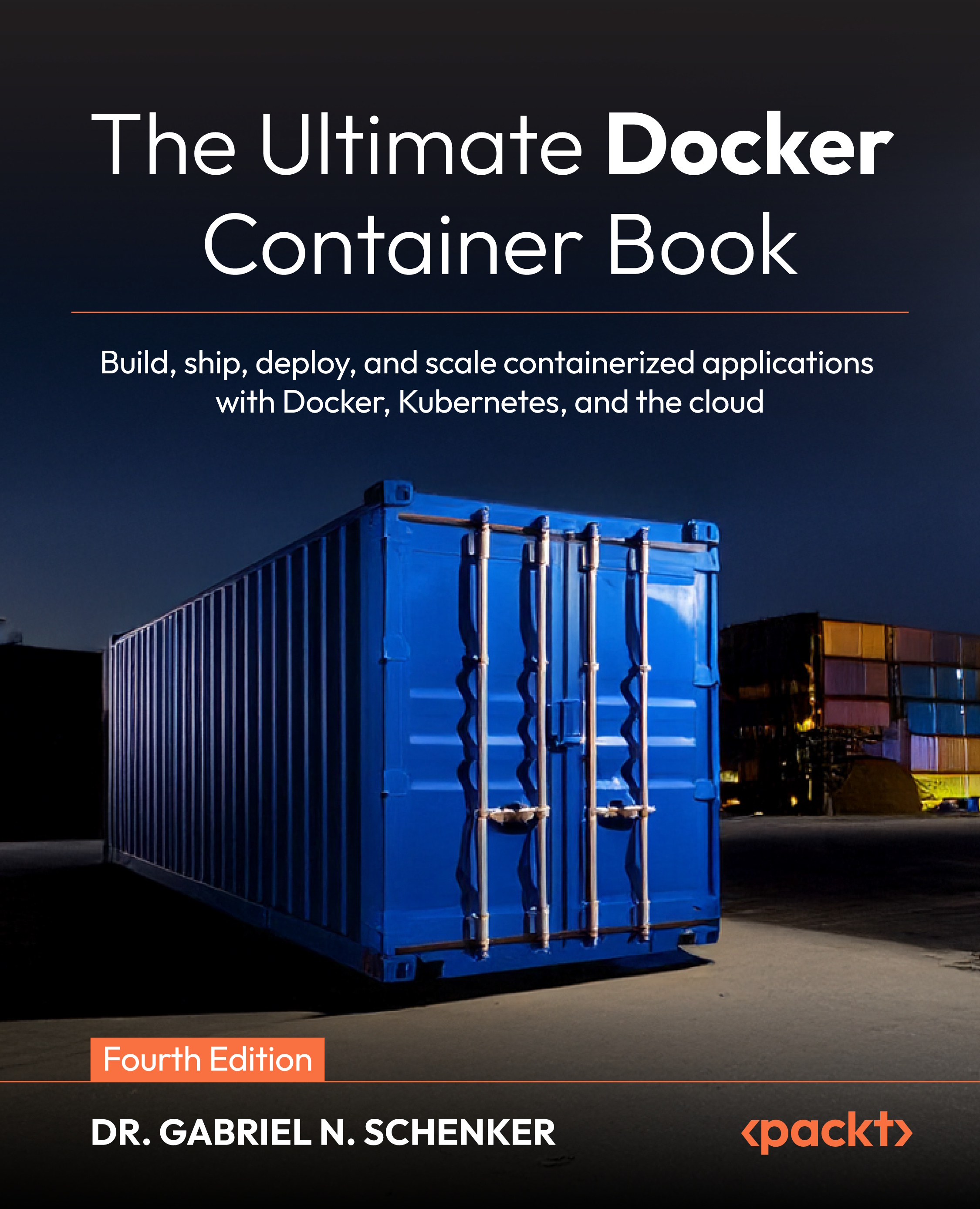
The Ultimate Docker Container Book, Fourth Edition, takes you from container fundamentals to running production-grade platforms. Starting from first principles, the book explains how containers reduce friction in the software supply chain and progressively introduces images, networking, state management, testing, and debugging. You will learn how to design and operate distributed applications, manage multi-service systems, and apply orchestration using Kubernetes. This fourth edition places a stronger emphasis on security, governance, and compliance, reflecting real-world enterprise requirements. It also explores AI and automation in DevOps, showing how modern teams can enhance delivery and operations responsibly.
Whether you are a developer, DevOps engineer, platform engineer, or software architect, this book equips you with the skills and understanding needed to build secure, scalable, and future-ready container platforms.
Table of Contents (27 chapters)
Preface


Chapter 1: What Are Containers and Why Should I Use Them?
Chapter 2: Setting Up a Working Environment
Part 2: Containerization Fundamentals
Chapter 3: Mastering Containers
Chapter 4: Creating and Managing Container Images
Chapter 5: Data Volumes and Configuration
Chapter 6: Debugging Code Running in Containers
Chapter 7: Testing Applications Running in Containers
Chapter 8: Increasing Productivity with Docker Tips and Tricks
Part 3: Orchestration Fundamentals
Chapter 9: Learning about Distributed Application Architecture
Chapter 10: Using Single-Host Networking
Chapter 11: Managing Containers with Docker Compose
Chapter 12: Shipping Logs and Monitoring Containers
Chapter 13: Securing Containers
Chapter 14: Introducing Container Orchestration
Part 4: Docker, Kubernetes, and the Cloud
Chapter 15: Introducing Kubernetes
Chapter 16: Deploying, Updating, and Securing an Application with Kubernetes
Chapter 17: Running a Containerized Application in the Cloud

Chapter 18: Monitoring and Troubleshooting an Application Running in Production
Chapter 19: AI and Automation in DevOps
Chapter 20: Real-World Containerization Patterns
Chapter 21: Unlock Your Exclusive Benefits
Index


