


-
Book Overview & Buying
-
Table Of Contents

Solutions Architect's Interview
By :


Solutions Architect's Interview
By:
Overview of this book
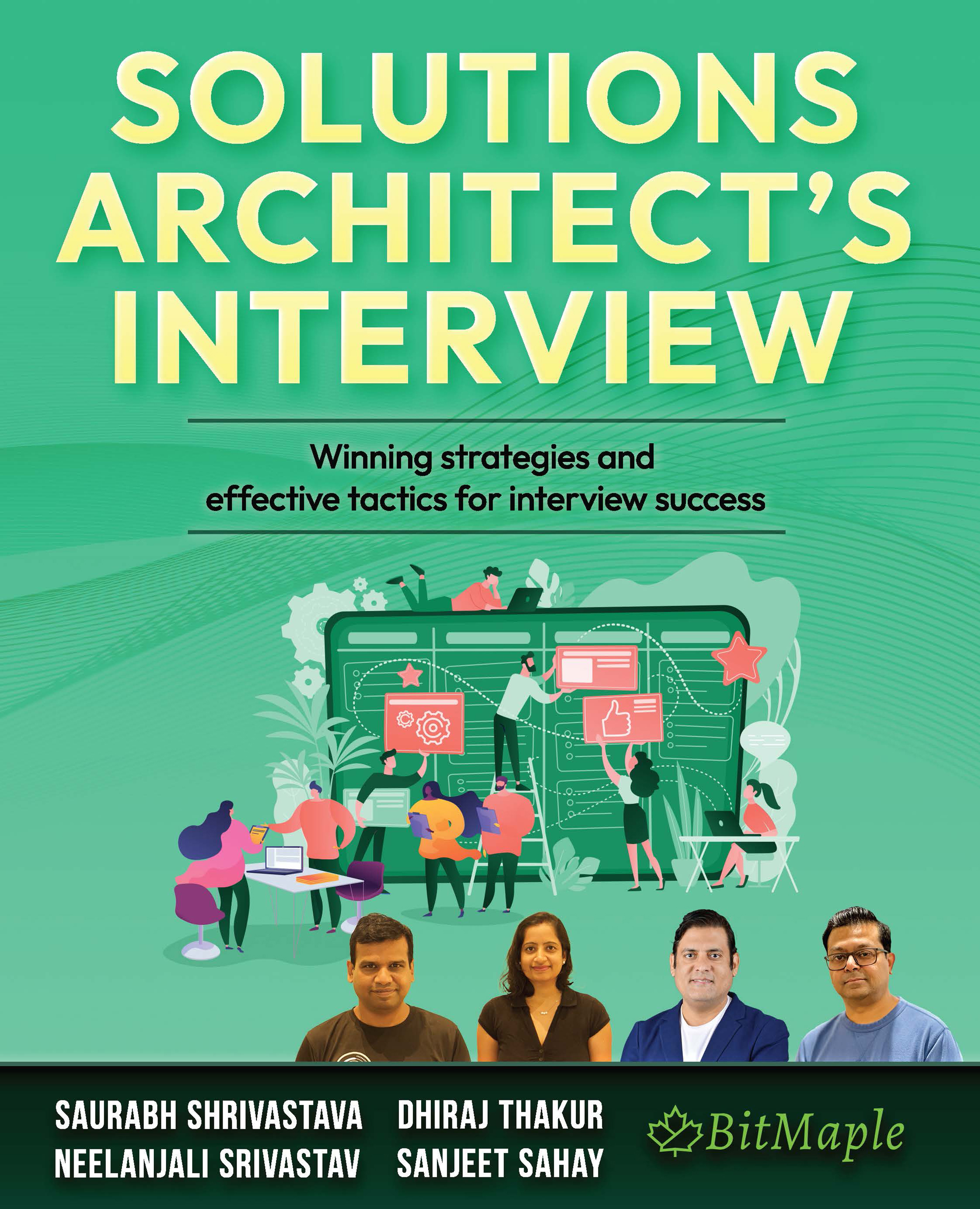
The Solutions Architect role sits at the intersection of technology, business strategy, and communication. Excelling in it takes more than technical expertise—it demands architectural thinking, leadership, and problem-solving skills. This book guides you in achieving this balance, walking you through every stage of becoming a Solutions Architect.
It begins by unpacking what the role truly involves and then progresses into the nuances of interview preparation across multiple domains. You’ll learn how to structure your responses to scenario-based questions, highlight both your technical proficiency and soft skills, and position yourself as a strategic problem solver. Each chapter offers practical exercises, frameworks, and real interview examples that help you build the confidence and insight to stand out. The final chapter guides you through your first 90 days as a new Solutions Architect, aligning with business goals, understanding organizational architecture, and building credibility.
By the end of this book, you’ll have the technical, behavioral, and strategic foundation to ace your interviews and thrive in any Solutions Architect role.
Table of Contents (19 chapters)
Preface


 Free Chapter
Part 1: Solutions Architect Role and Interview
Chapter 1 - Solutions Architect Role and Responsibilities
Chapter 2 - Cracking the Technical Interview
Chapter 3 - Cracking Behavioral Interview and Soft Skills
Part 2: Specialist Solution Architect Role and Interview
Chapter 4 - Cracking the Application Architect Interview
Chapter 5 - Cracking the DevOps Architect Interview
Chapter 6 - Cracking the Infrastructure Solutions Architect Interview
Chapter 7 - Cracking the Network Solutions Architect Interview
Chapter 8 - Cracking the Big Data Solutions Architect Interview
Chapter 9 - Cracking the Database Solutions Architect Interview
Chapter 10 - Cracking ML and Gen AI Solutions Architect Interview

Chapter 11 - Cracking the Security Solutions Architect Interview
Part 3: Industry Solutions Architect Role and Interview
Chapter 12 - Cracking the Industry Solutions Architect Interview
Part 4: Starting in a new role
Chapter 13 - Starting in a Solutions Architect Role in a New Organization
Other books you may enjoy


