


-
Book Overview & Buying
-
Table Of Contents

Solutions Architect's Handbook - Third Edition
By :


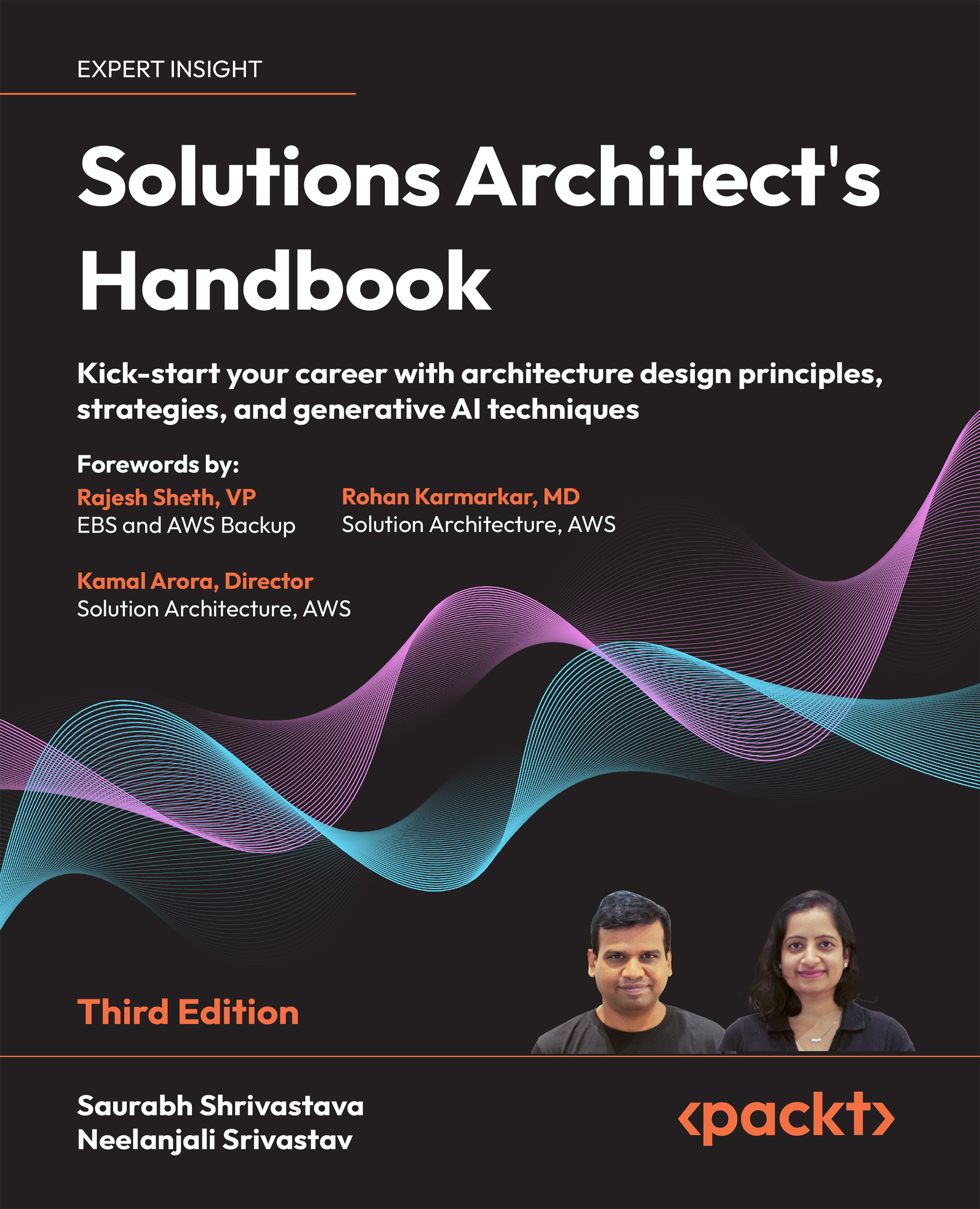
Solutions Architect's Handbook
By:
Overview of this book
Build a strong foundation in solution architecture and excel in your career with the Solutions Architect’s Handbook. Authored by seasoned AWS technology leaders Saurabh Shrivastav and Neelanjali Srivastav, this book goes beyond traditional certification guides, offering in-depth insights and advanced techniques to meet the specific needs and challenges of solutions architects today.
This edition introduces exciting new features that keep you at the forefront of this evolving field. From large language models and generative AI to deep learning innovations, these cutting-edge advancements are shaping the future of technology. Key topics such as cloud-native architecture, data engineering architecture, cloud optimization, mainframe modernization, and building cost-efficient, secure architectures remain essential today. This book covers both emerging and foundational technologies, guiding you through solution architecture design with key principles and providing the knowledge you need to succeed as a Solutions Architect. It also sharpens your soft skills, providing career-accelerating techniques to stay ahead.
By the end of this book, you will be able to harness cutting-edge technologies, apply practical insights from real-world scenarios, and enhance your solution architecture skills with the Solutions Architect's Handbook.
Table of Contents (20 chapters)
Preface


 Free Chapter
Solutions Architects in Organizations
Principles of Solution Architecture Design

Cloud Migration and Cloud Architecture Design
Solution Architecture Design Patterns
Cloud-Native Architecture Design Patterns
Performance Considerations
Security Considerations
Architectural Reliability Considerations
Operational Excellence Considerations
Cost Considerations
DevOps and Solution Architecture Framework
Data Engineering for Solution Architecture
Machine Learning Architecture
Generative AI Architecture
Rearchitecting Legacy Systems
Solution Architecture Document
Learning Soft Skills to Become a Better Solutions Architect
Other Books You May Enjoy
Index


