


-
Book Overview & Buying
-
Table Of Contents

-
Feedback & Rating

Cracking the Kubernetes Interview
By :


Cracking the Kubernetes Interview
By:
Overview of this book
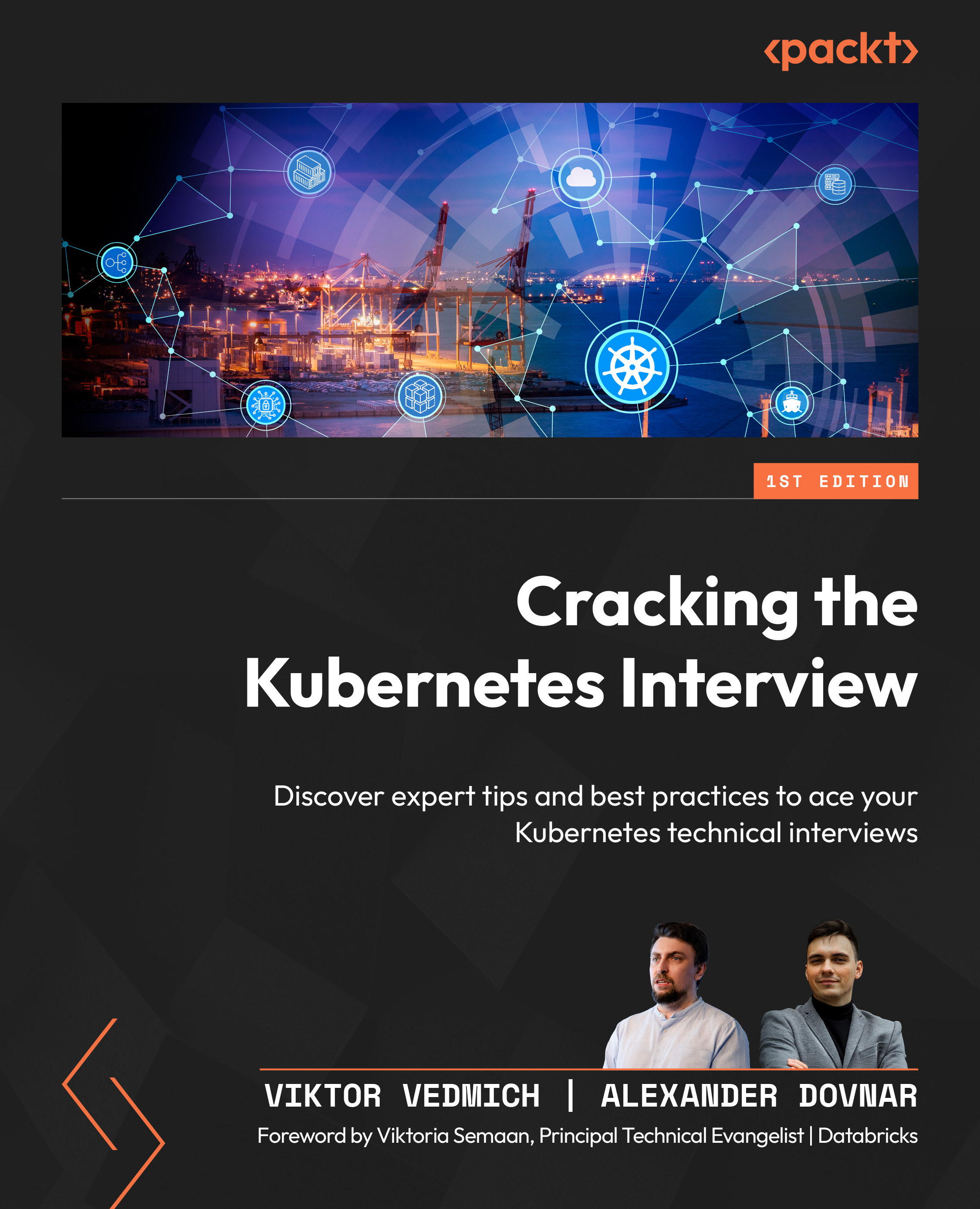
In the high-stakes world of cloud-native technologies, Kubernetes technical interviews are notoriously challenging, and theory-heavy resources leave candidates unprepared for real-world scenarios. This guide by Viktor Vedmich and Alexander Dovnar, two seasoned professionals with decades of combined experience in DevOps, AWS, and Kubernetes architecture, bridges that gap to help you unlock actionable strategies and insights to excel in even the toughest interviews.
Beginning with core concepts such as Pods and Services, the book guides you through scaling, networking, GitOps, and deployment strategies. You’ll explore advanced topics, including security, observability, monitoring, and troubleshooting, all framed in the context of real-world interviews. Each chapter includes practical scenarios and authentic questions that test both your understanding and problem-solving skills. Rather than relying on rote memorization, this guide helps you develop the depth and confidence expected of top-tier Kubernetes professionals.
By the end of this hands-on journey, you'll be ready to take on roles from junior DevOps engineer to senior architect, equipped with the practical expertise needed to stand out in today’s competitive hiring process.
Table of Contents (27 chapters)
Preface


Understanding Kubernetes from Containers to Orchestration
Kubernetes Key Components and Their Functions
Part 2: Schedulers, Workloads, and Scaling
Exploring Kubernetes Basics
Principles of Scaling: Horizontal vs Vertical
Autoscaling in Action
Part 3: Networking, Services, and Security
Essentials of Kubernetes Networking
Kubernetes Network Architecture: Services and Ingresses
Storage: Persistence and CSI Drivers
Security Best Practices in Kubernetes and RBAC

Part 4: Deployment, Application Management, and GitOps
Real-World Deployment Scenarios and Continuous Deployment
Understanding GitOps: Principles and Practices
Part 5: Reliability, Monitoring, and Maintenance
Custom Resource Definitions and Operators
Ensuring High Availability and Reliability
Monitoring Best Practices
Backup, Maintenance, and Disaster Recovery in Kubernetes
Part 6: Troubleshooting and Best Practices
Real-World Troubleshooting Scenarios
Common Mistakes and How to Avoid Them
Interview Stories from Authors
Other Books You May Enjoy
Index
Customer Reviews



