


-
Book Overview & Buying
-
Table Of Contents

Google Cloud for Developers
By :


Google Cloud for Developers
By:
Overview of this book
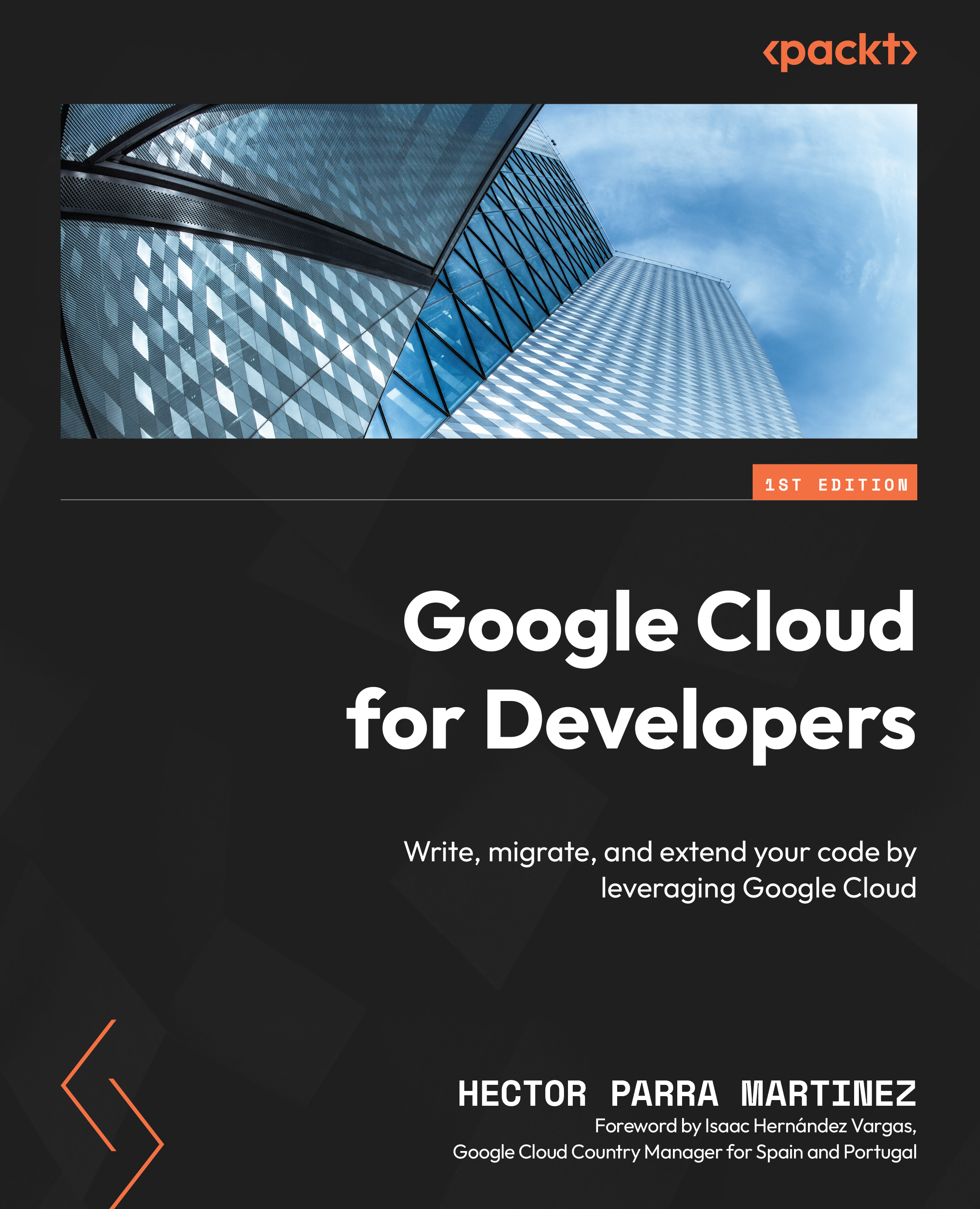
As more organizations embrace cloud computing, developers new to the cloud often feel overwhelmed by cloud migration and code running directly on the cloud. Google Cloud for Developers comes packed with practical tips and expert advice to accelerate your application development journey and help you unlock the full potential of cloud computing.
You’ll begin by understanding and comparing all the available options to run your code. You’ll write, deploy, monitor, and troubleshoot your code without leaving the Google Cloud IDE while selecting the best option – serverless or GKE containers – for each use case. After that, you’ll get to grips with the basic Google Cloud infrastructure services and connect your code with public APIs. This will help you add features to your application, such as language translation and object detection in images or videos. Furthermore, you’ll explore a comprehensive list of tips and best practices to make your migration smooth. You’ll also gain the necessary knowledge to write code from scratch, by employing the basics of hybrid cloud applications and build services that can run virtually anywhere.
By the end of this book, you’ll be well equipped to carry out the application development process and successfully move your code to Google Cloud.
Table of Contents (20 chapters)
Preface


Part 1: Foundations of Developing for Google Cloud
 Free Chapter
Chapter 1: Choosing Google Cloud
Chapter 2: Modern Software Development in Google Cloud
Chapter 3: Starting to Develop on Google Cloud
Part 2: Basic Google Cloud Services for Developers
Chapter 4: Running Serverless Code on Google Cloud – Part 1
Chapter 5: Running Serverless Code on Google Cloud – Part 2
Chapter 6: Running Containerized Applications with Google Kubernetes Engine
Chapter 7: Managing the Hybrid Cloud with Anthos
Part 3: Extending Your Code – Using Google Cloud Services and Public APIs
Chapter 8: Making the Best of Google Cloud Networking
Chapter 9: Time-Saving Google Cloud Services
Chapter 10: Extending Applications with Google Cloud Machine Learning APIs
Part 4: Connecting the Dots –Building Hybrid Cloud Solutions That Can Run Anywhere
Chapter 11: Architecture Patterns for Hybrid and Multi-Cloud Solutions

Chapter 12: Practical Use Cases of Google Cloud in Real-World Scenarios
Chapter 13: Migration Pitfalls, Best Practices, and Useful Tips
Index



