Sign In Start Free Trial
Account

Add to playlist

Create a Playlist

Modal Close icon
You need to login to use this feature.
  • Book Overview & Buying Java for Data Science
  • Table Of Contents Toc
Java for Data Science

Java for Data Science

By : Richard M. Reese , Jennifer L. Reese, Shilpi Saxena
close
close
Java for Data Science

Java for Data Science

By: Richard M. Reese , Jennifer L. Reese, Shilpi Saxena

Overview of this book

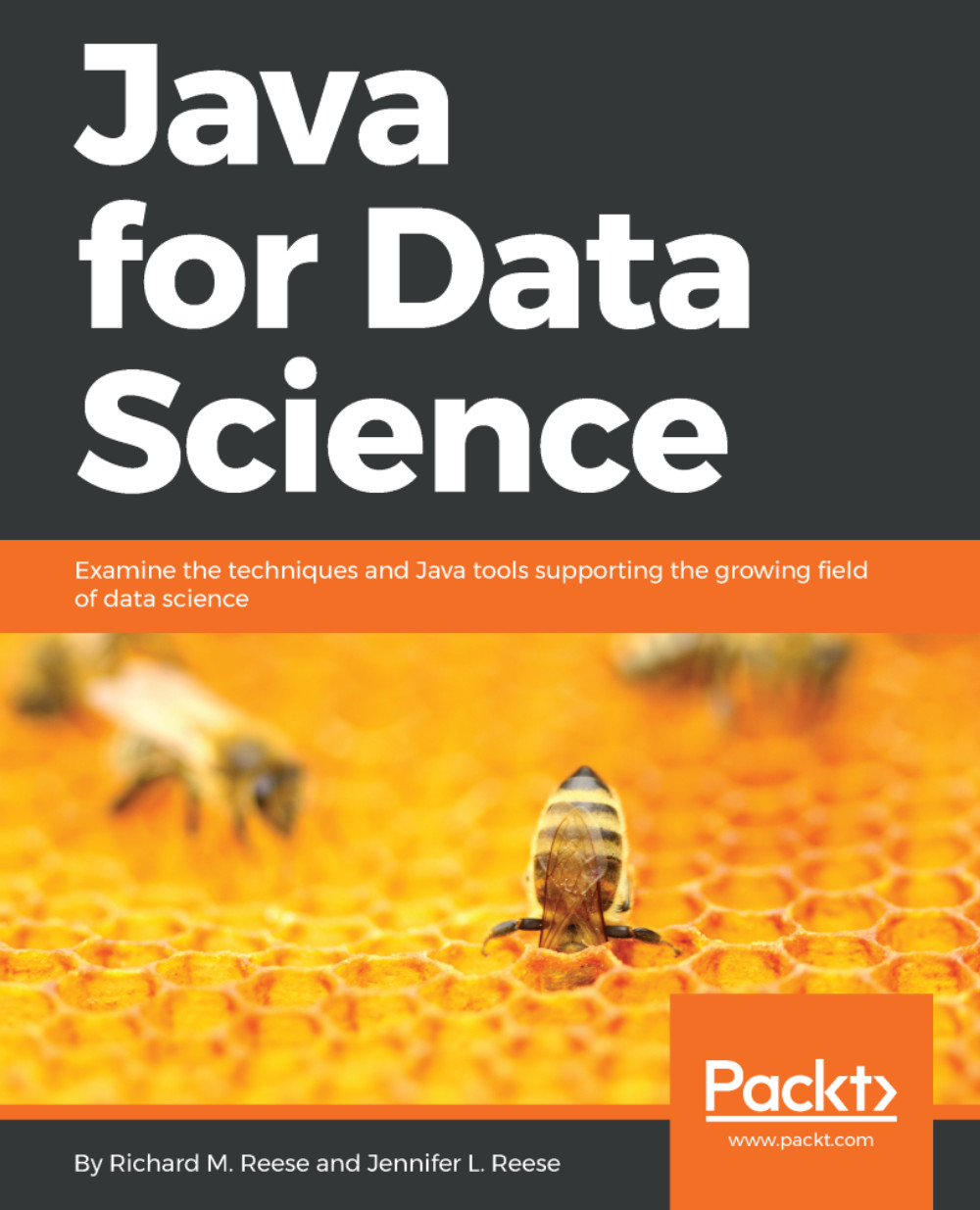
para 1: Get the lowdown on Java and explore big data analytics with Java for Data Science. Packed with examples and data science principles, this book uncovers the techniques & Java tools supporting data science and machine learning. Para 2: The stability and power of Java combines with key data science concepts for effective exploration of data. By working with Java APIs and techniques, this data science book allows you to build applications and use analysis techniques centred on machine learning. Para 3: Java for Data Science gives you the understanding you need to examine the techniques and Java tools supporting big data analytics. These Java-based approaches allow you to tackle data mining and statistical analysis in detail. Deep learning and Java data mining are also featured, so you can explore and analyse data effectively, and build intelligent applications using machine learning. para 4: What?s Inside ? Understand data science principles with Java support ? Discover machine learning and deep learning essentials ? Explore data science problems with Java-based solutions
Table of Contents (13 chapters)
close
close

Sample size determination

Sample size determination involves identifying the quantity of data required to conduct accurate statistical analysis. When working with large datasets it is not always necessary to use the entire set. We use sample size determination to ensure we choose a sample small enough to manipulate and analyze easily, but large enough to represent our population of data accurately.

It is not uncommon to use a subset of data to train a model and another subset is used to test the model. This can be helpful for verifying accuracy and reliability of data. Some common consequences for a poorly determined sample size include false-positive results, false-negative results, identifying statistical significance where none exists, or suggesting a lack of significance where it is actually present. Many tools exist online for determining appropriate sample sizes, each with varying levels of complexity. One simple example is available at https://www.surveymonkey.com/mp/sample-size-calculator...

CONTINUE READING
83
Tech Concepts
36
Programming languages
73
Tech Tools
Icon Unlimited access to the largest independent learning library in tech of over 8,000 expert-authored tech books and videos.
Icon Innovative learning tools, including AI book assistants, code context explainers, and text-to-speech.
Icon 50+ new titles added per month and exclusive early access to books as they are being written.
Java for Data Science
notes
bookmark Notes and Bookmarks search Search in title playlist Add to playlist download Download options font-size Font size

Change the font size

margin-width Margin width

Change margin width

day-mode Day/Sepia/Night Modes

Change background colour

Close icon Search
Country selected

Close icon Your notes and bookmarks

Confirmation

Modal Close icon
claim successful

Buy this book with your credits?

Modal Close icon
Are you sure you want to buy this book with one of your credits?
Close
YES, BUY

Submit Your Feedback

Modal Close icon
Modal Close icon
Modal Close icon