


-
Book Overview & Buying
-
Table Of Contents

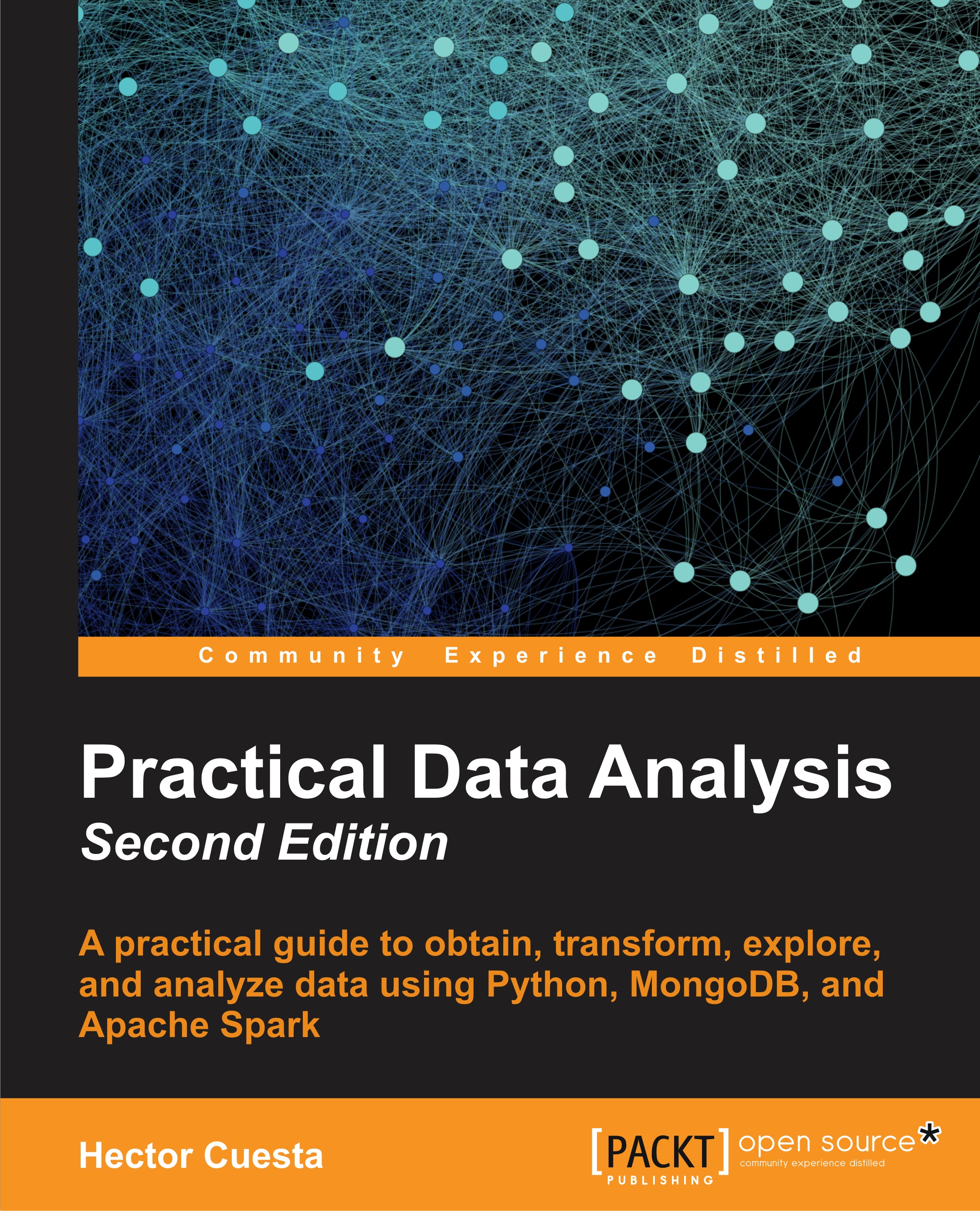
Practical Data Analysis - Second Edition
By :


Practical Data Analysis
By:
Overview of this book
Beyond buzzwords like Big Data or Data Science, there are a great opportunities to innovate in many businesses using data analysis to get data-driven products. Data analysis involves asking many questions about data in order to discover insights and generate value for a product or a service.
This book explains the basic data algorithms without the theoretical jargon, and you’ll get hands-on turning data into insights using machine learning techniques. We will perform data-driven innovation processing for several types of data such as text, Images, social network graphs, documents, and time series, showing you how to implement large data processing with MongoDB and Apache Spark.
Table of Contents (16 chapters)
Preface


 Free Chapter
1. Getting Started
2. Preprocessing Data
3. Getting to Grips with Visualization
4. Text Classification
5. Similarity-Based Image Retrieval
6. Simulation of Stock Prices

7. Predicting Gold Prices
8. Working with Support Vector Machines
9. Modeling Infectious Diseases with Cellular Automata
10. Working with Social Graphs
11. Working with Twitter Data
12. Data Processing and Aggregation with MongoDB
13. Working with MapReduce
14. Online Data Analysis with Jupyter and Wakari
15. Understanding Data Processing using Apache Spark


