Sign In Start Free Trial
Account

Add to playlist

Create a Playlist

Modal Close icon
You need to login to use this feature.
  • Book Overview & Buying Mastering Elasticsearch 5.x
  • Table Of Contents Toc
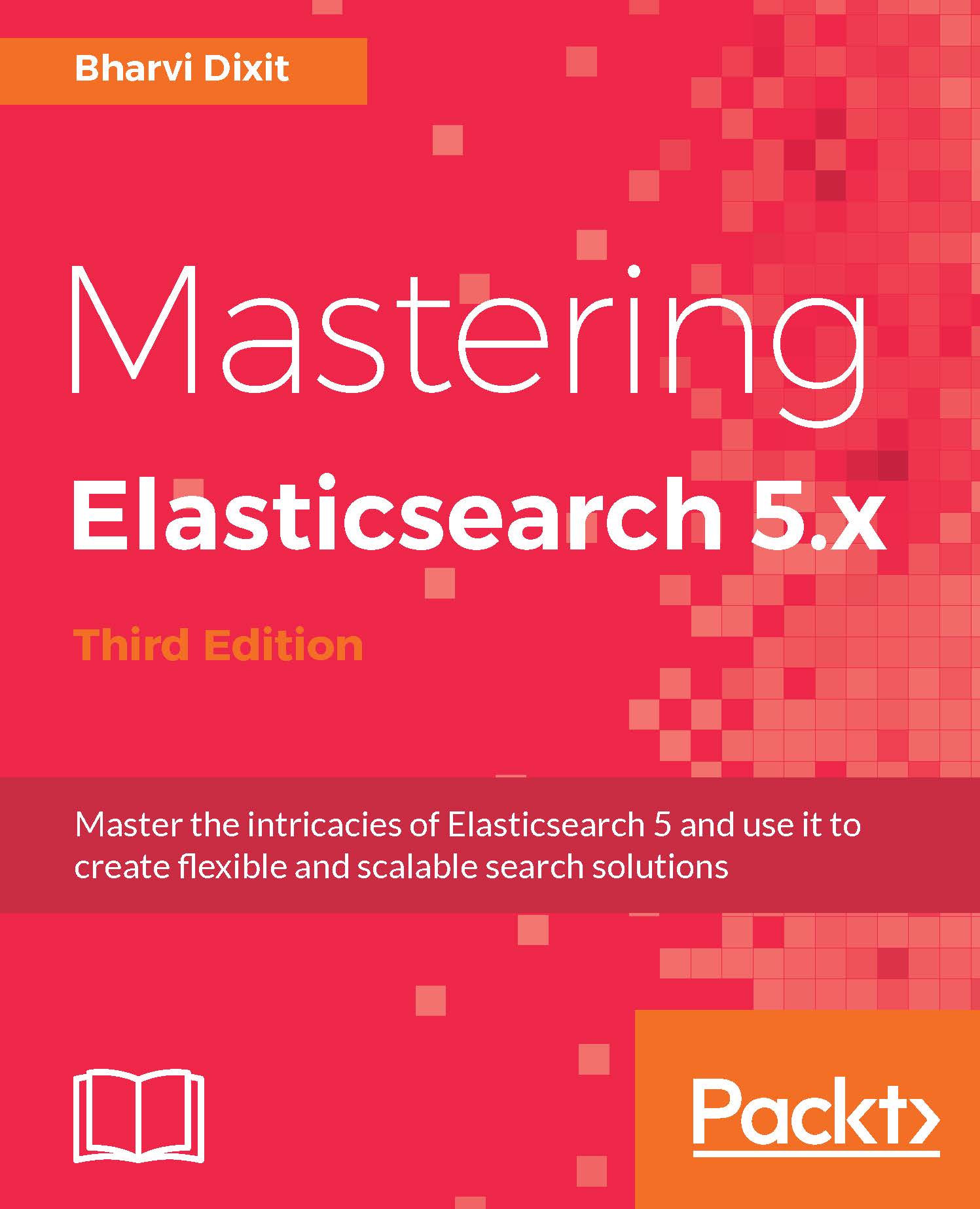
Mastering Elasticsearch 5.x

Mastering Elasticsearch 5.x - Third Edition

By : Bharvi Dixit
1 (1)
close
close
Mastering Elasticsearch 5.x

Mastering Elasticsearch 5.x

1 (1)
By: Bharvi Dixit

Overview of this book

Elasticsearch is a modern, fast, distributed, scalable, fault tolerant, and open source search and analytics engine. Elasticsearch leverages the capabilities of Apache Lucene, and provides a new level of control over how you can index and search even huge sets of data. This book will give you a brief recap of the basics and also introduce you to the new features of Elasticsearch 5. We will guide you through the intermediate and advanced functionalities of Elasticsearch, such as querying, indexing, searching, and modifying data. We’ll also explore advanced concepts, including aggregation, index control, sharding, replication, and clustering. We’ll show you the modules of monitoring and administration available in Elasticsearch, and will also cover backup and recovery. You will get an understanding of how you can scale your Elasticsearch cluster to contextualize it and improve its performance. We’ll also show you how you can create your own analysis plugin in Elasticsearch. By the end of the book, you will have all the knowledge necessary to master Elasticsearch and put it to efficient use.
Table of Contents (13 chapters)
close
close

Query rewrite explained

We have already talked about scoring, which is valuable knowledge, especially when trying to improve the relevance of our queries. We also think that when debugging your queries, it is valuable to know how all the queries are executed; therefore, it is because of this that we decided to include this section on how query rewrite works in Elasticsearch, why it is used, and how to control it.

If you have ever used queries, such as the prefix query and the wildcard query, basically any query that is said to be multiterm, you've probably heard about query rewriting. Elasticsearch does that because of performance reasons. The rewrite process is about changing the original, expensive query to a set of queries that are far less expensive from Lucene's point of view, and thus speed up the query execution. The rewrite process is not visible to the client, but it is good to know that we can alter the rewrite process behavior. For example, let's look at what Elasticsearch...

CONTINUE READING
83
Tech Concepts
36
Programming languages
73
Tech Tools
Icon Unlimited access to the largest independent learning library in tech of over 8,000 expert-authored tech books and videos.
Icon Innovative learning tools, including AI book assistants, code context explainers, and text-to-speech.
Icon 50+ new titles added per month and exclusive early access to books as they are being written.
Mastering Elasticsearch 5.x
notes
bookmark Notes and Bookmarks search Search in title playlist Add to playlist font-size Font size

Change the font size

margin-width Margin width

Change margin width

day-mode Day/Sepia/Night Modes

Change background colour

Close icon Search
Country selected

Close icon Your notes and bookmarks

Confirmation

Modal Close icon
claim successful

Buy this book with your credits?

Modal Close icon
Are you sure you want to buy this book with one of your credits?
Close
YES, BUY

Submit Your Feedback

Modal Close icon
Modal Close icon
Modal Close icon