-
Book Overview & Buying
-
Table Of Contents

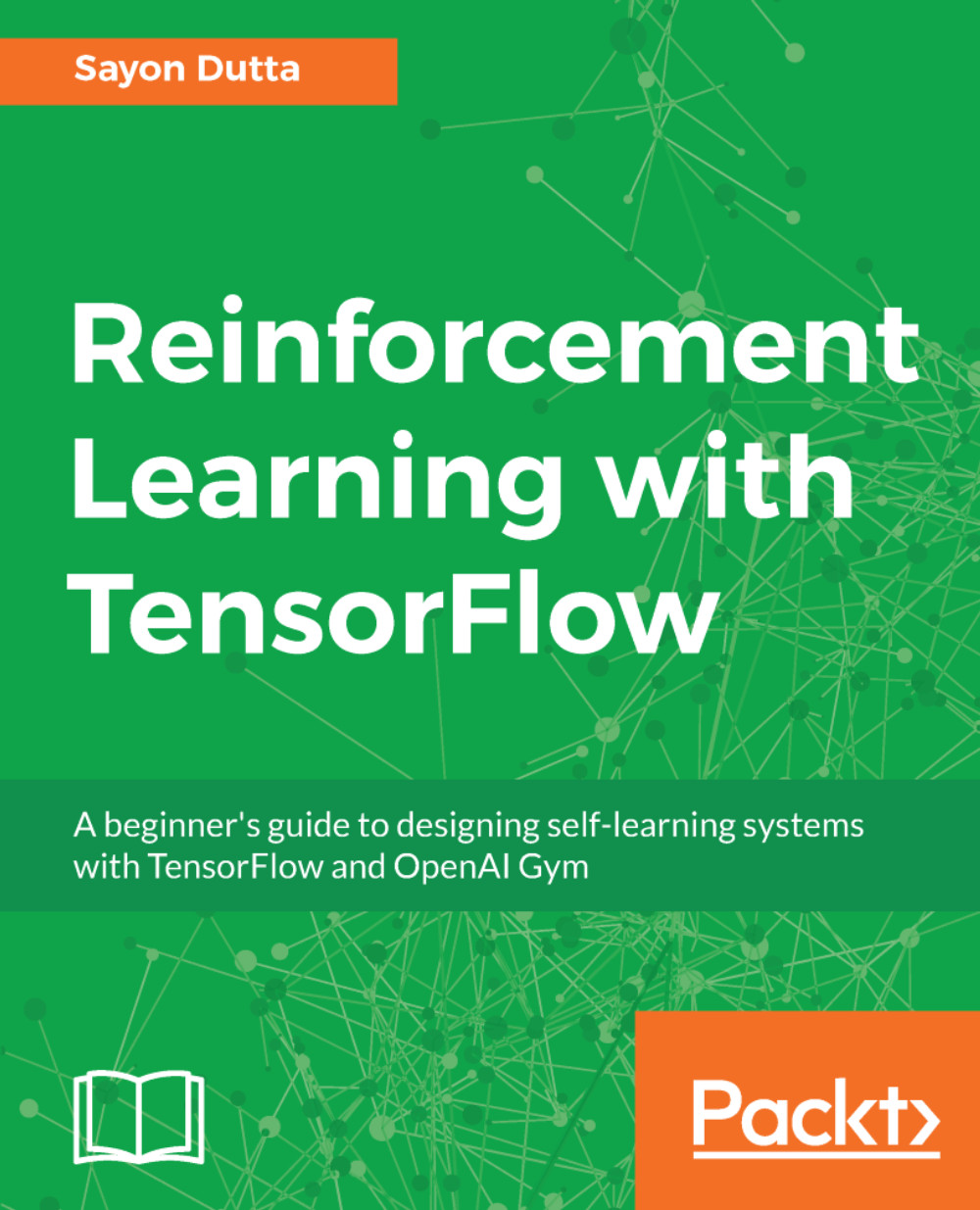
Reinforcement Learning with TensorFlow
By :


Reinforcement Learning with TensorFlow
By:
Overview of this book
Reinforcement learning (RL) allows you to develop smart, quick and self-learning systems in your business surroundings. It's an effective method for training learning agents and solving a variety of problems in Artificial Intelligence - from games, self-driving cars and robots, to enterprise applications such as data center energy saving (cooling data centers) and smart warehousing solutions.
The book covers major advancements and successes achieved in deep reinforcement learning by synergizing deep neural network architectures with reinforcement learning. You'll also be introduced to the concept of reinforcement learning, its advantages and the reasons why it's gaining so much popularity. You'll explore MDPs, Monte Carlo tree searches, dynamic programming such as policy and value iteration, and temporal difference learning such as Q-learning and SARSA. You will use TensorFlow and OpenAI Gym to build simple neural network models that learn from their own actions. You will also see how reinforcement learning algorithms play a role in games, image processing and NLP.
By the end of this book, you will have gained a firm understanding of what reinforcement learning is and understand how to put your knowledge to practical use by leveraging the power of TensorFlow and OpenAI Gym.
Table of Contents (17 chapters)
Preface


 Free Chapter
Deep Learning – Architectures and Frameworks
Training Reinforcement Learning Agents Using OpenAI Gym
Markov Decision Process
Policy Gradients
Q-Learning and Deep Q-Networks
Asynchronous Methods

Robo Everything – Real Strategy Gaming
AlphaGo – Reinforcement Learning at Its Best
Reinforcement Learning in Autonomous Driving
Financial Portfolio Management
Reinforcement Learning in Robotics
Deep Reinforcement Learning in Ad Tech
Reinforcement Learning in Image Processing
Deep Reinforcement Learning in NLP
Further topics in Reinforcement Learning
Other Books You May Enjoy