


-
Book Overview & Buying
-
Table Of Contents

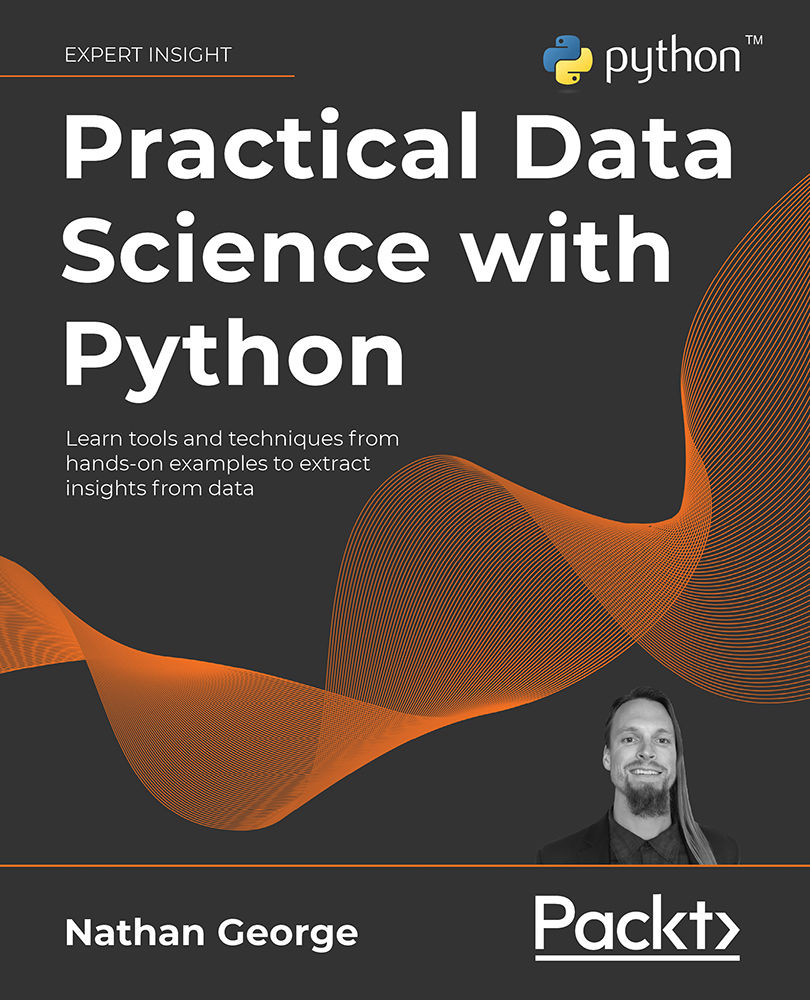
Practical Data Science with Python
By :


Practical Data Science with Python
By:
Overview of this book
Practical Data Science with Python teaches you core data science concepts, with real-world and realistic examples, and strengthens your grip on the basic as well as advanced principles of data preparation and storage, statistics, probability theory, machine learning, and Python programming, helping you build a solid foundation to gain proficiency in data science.
The book starts with an overview of basic Python skills and then introduces foundational data science techniques, followed by a thorough explanation of the Python code needed to execute the techniques. You'll understand the code by working through the examples. The code has been broken down into small chunks (a few lines or a function at a time) to enable thorough discussion.
As you progress, you will learn how to perform data analysis while exploring the functionalities of key data science Python packages, including pandas, SciPy, and scikit-learn. Finally, the book covers ethics and privacy concerns in data science and suggests resources for improving data science skills, as well as ways to stay up to date on new data science developments.
By the end of the book, you should be able to comfortably use Python for basic data science projects and should have the skills to execute the data science process on any data source.
Table of Contents (30 chapters)
Preface


Part I - An Introduction and the Basics
 Free Chapter
Introduction to Data Science
Getting Started with Python

Part II - Dealing with Data
SQL and Built-in File Handling Modules in Python
Loading and Wrangling Data with Pandas and NumPy
Exploratory Data Analysis and Visualization
Data Wrangling Documents and Spreadsheets
Web Scraping
Part III - Statistics for Data Science
Probability, Distributions, and Sampling
Statistical Testing for Data Science
Part IV - Machine Learning
Preparing Data for Machine Learning: Feature Selection, Feature Engineering, and Dimensionality Reduction
Machine Learning for Classification
Evaluating Machine Learning Classification Models and Sampling for Classification
Machine Learning with Regression
Optimizing Models and Using AutoML
Tree-Based Machine Learning Models
Support Vector Machine (SVM) Machine Learning Models
Part V - Text Analysis and Reporting
Clustering with Machine Learning
Working with Text
Part VI - Wrapping Up
Data Storytelling and Automated Reporting/Dashboarding
Ethics and Privacy
Staying Up to Date and the Future of Data Science
Other Books You May Enjoy
Index


