


-
Book Overview & Buying
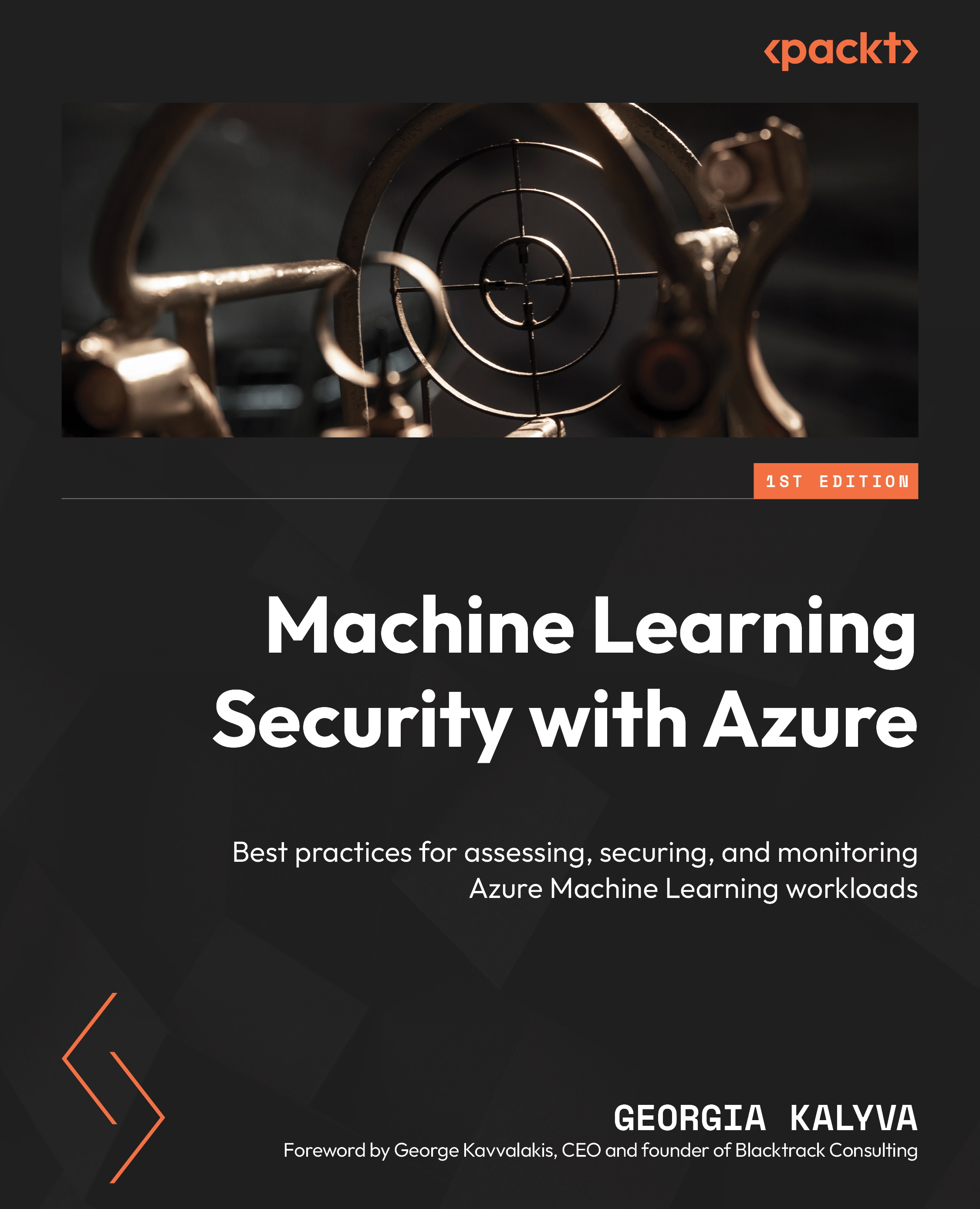
-
Table Of Contents

Machine Learning Security with Azure
By :


Machine Learning Security with Azure
By:
Overview of this book
With AI and machine learning (ML) models gaining popularity and integrating into more and more applications, it is more important than ever to ensure that models perform accurately and are not vulnerable to cyberattacks. However, attacks can target your data or environment as well. This book will help you identify security risks and apply the best practices to protect your assets on multiple levels, from data and models to applications and infrastructure.
This book begins by introducing what some common ML attacks are, how to identify your risks, and the industry standards and responsible AI principles you need to follow to gain an understanding of what you need to protect. Next, you will learn about the best practices to secure your assets. Starting with data protection and governance and then moving on to protect your infrastructure, you will gain insights into managing and securing your Azure ML workspace. This book introduces DevOps practices to automate your tasks securely and explains how to recover from ML attacks. Finally, you will learn how to set a security benchmark for your scenario and best practices to maintain and monitor your security posture.
By the end of this book, you’ll be able to implement best practices to assess and secure your ML assets throughout the Azure Machine Learning life cycle.
Table of Contents (17 chapters)
Preface


 Free Chapter
Part 1: Planning for Azure Machine Learning Security
Chapter 1: Assessing the Vulnerability of Your Algorithms, Models, and AI Environments
Chapter 2: Understanding the Most Common Machine Learning Attacks
Chapter 3: Planning for Regulatory Compliance
Part 2: Securing Your Data
Chapter 4: Data Protection and Governance
Chapter 5: Data Privacy and Responsible AI Best Practices
Part 3: Securing and Monitoring Your AI Environment
Chapter 6: Managing and Securing Access

Chapter 7: Managing and Securing Your Azure Machine Learning Workspace
Chapter 8: Managing and Securing the MLOps Life Cycle
Chapter 9: Logging, Monitoring, and Threat Detection
Part 4: Best Practices for Enterprise Security in Azure Machine Learning
Chapter 10: Setting a Security Baseline for Your Azure Machine Learning Workloads
Index


