


-
Book Overview & Buying
-
Table Of Contents

Azure Data Engineer Associate Certification Guide - Second Edition
By :


Azure Data Engineer Associate Certification Guide
By:
Overview of this book
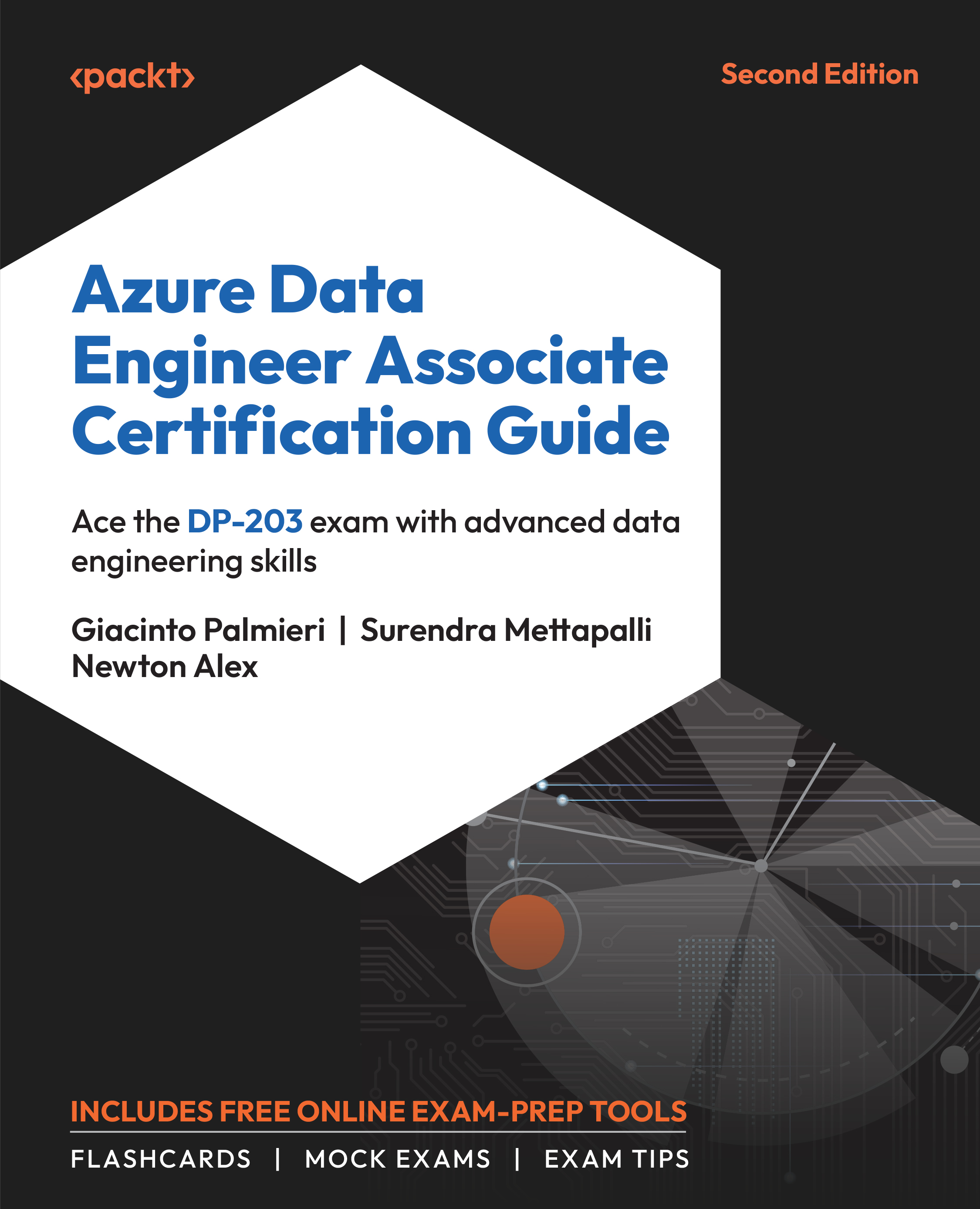
One of the top global cloud providers, Azure offers extensive data hosting and processing services, driving widespread cloud adoption and creating a high demand for skilled data engineers. The Azure Data Engineer Associate (DP-203) certification is a vital credential, demonstrating your proficiency as an Azure data engineer to prospective employers. This comprehensive exam guide is designed for both beginners and seasoned professionals, aligned with the latest DP-203 certification exam, to help you pass the exam on your first try.
The book provides a foundational understanding of IaaS, PaaS, and SaaS, starting with core concepts like virtual machines (VMs), VNETS, and App Services and progressing to advanced topics such as data storage, processing, and security. What sets this exam guide apart is its hands-on approach, seamlessly integrating theory with practice through real-world examples, practical exercises, and insights into Azure's evolving ecosystem. Additionally, you'll unlock lifetime access to supplementary practice material on an online platform, including mock exams, interactive flashcards, and exam tips, ensuring a comprehensive exam prep experience.
By the end of this book, you’ll not only be ready to excel in the DP-203 exam, but also be equipped to tackle complex challenges as an Azure data engineer.
Table of Contents (17 chapters)
Preface


Chapter 1: Introducing Azure Basics
Part 2: Data Storage
Chapter 2: Implementing a Partition Strategy
Chapter 3: Designing and Implementing the Data Exploration Layer
Part 3:Data Processing
Chapter 4: Ingesting and Transforming Data

Chapter 5: Developing a Batch Processing Solution
Chapter 6: Developing a Stream Processing Solution
Chapter 7: Managing Batches and Pipelines
Part 4:Secure, Monitor, and Optimize Data Storage and Processing
Chapter 8: Implementing Data Security
Chapter 9: Monitoring Data Storage and Data Processing
Chapter 10: Optimizing and Troubleshooting Data Storage and Data Processing
Chapter 11: Accessing the Online Practice Resources
Other Books You May Enjoy


