


-
Book Overview & Buying
-
Table Of Contents

Data Engineering with Google Cloud Platform - Second Edition
By :


Data Engineering with Google Cloud Platform
By:
Overview of this book
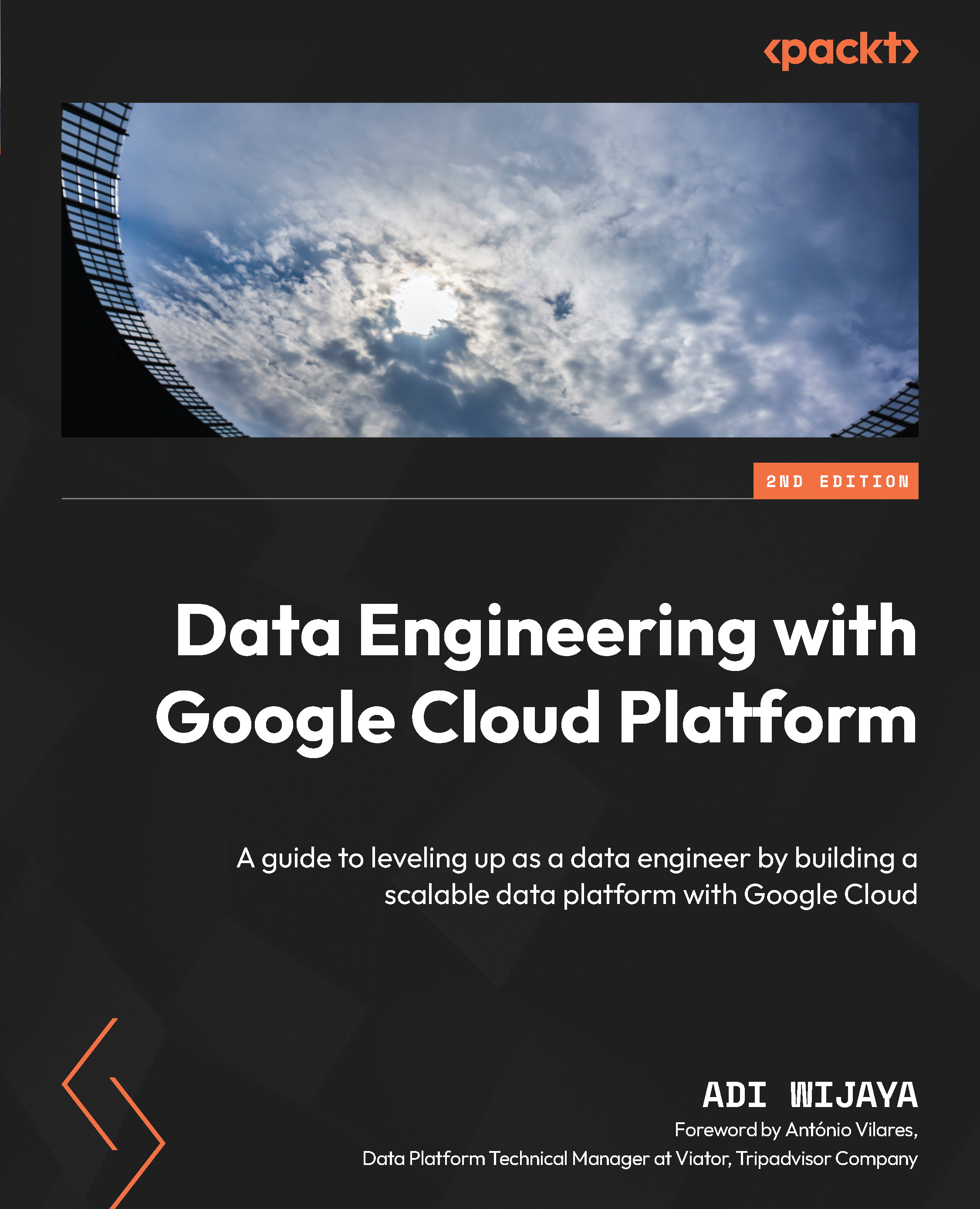
The second edition of Data Engineering with Google Cloud builds upon the success of the first edition by offering enhanced clarity and depth to data professionals navigating the intricate landscape of data engineering.
Beyond its foundational lessons, this new edition delves into the essential realm of data governance within Google Cloud, providing you with invaluable insights into managing and optimizing data resources effectively. Written by a Data Strategic Cloud Engineer at Google, this book helps you stay ahead of the curve by guiding you through the latest technological advancements in the Google Cloud ecosystem. You’ll cover essential aspects, from exploring Cloud Composer 2 to the evolution of Airflow 2.5. Additionally, you’ll explore how to work with cutting-edge tools like Dataform, DLP, Dataplex, Dataproc Serverless, and Datastream to perform data governance on datasets.
By the end of this book, you'll be equipped to navigate the ever-evolving world of data engineering on Google Cloud, from foundational principles to cutting-edge practices.
Table of Contents (19 chapters)
Preface


 Free Chapter
Part 1: Getting Started with Data Engineering with GCP
Chapter 1: Fundamentals of Data Engineering
Chapter 2: Big Data Capabilities on GCP
Part 2: Build Solutions with GCP Components
Chapter 3: Building a Data Warehouse in BigQuery
Chapter 4: Building Workflows for Batch Data Loading Using Cloud Composer
Chapter 5: Building a Data Lake Using Dataproc
Chapter 6: Processing Streaming Data with Pub/Sub and Dataflow
Chapter 7: Visualizing Data to Make Data-Driven Decisions with Looker Studio
Chapter 8: Building Machine Learning Solutions on GCP

Part 3: Key Strategies for Architecting Top-Notch Solutions
Chapter 9: User and Project Management in GCP
Chapter 10: Data Governance in GCP
Chapter 11: Cost Strategy in GCP
Chapter 12: CI/CD on GCP for Data Engineers
Chapter 13: Boosting Your Confidence as a Data Engineer
Index


