


-
Book Overview & Buying
-
Table Of Contents

Decoding Large Language Models
By :


Decoding Large Language Models
By:
Overview of this book
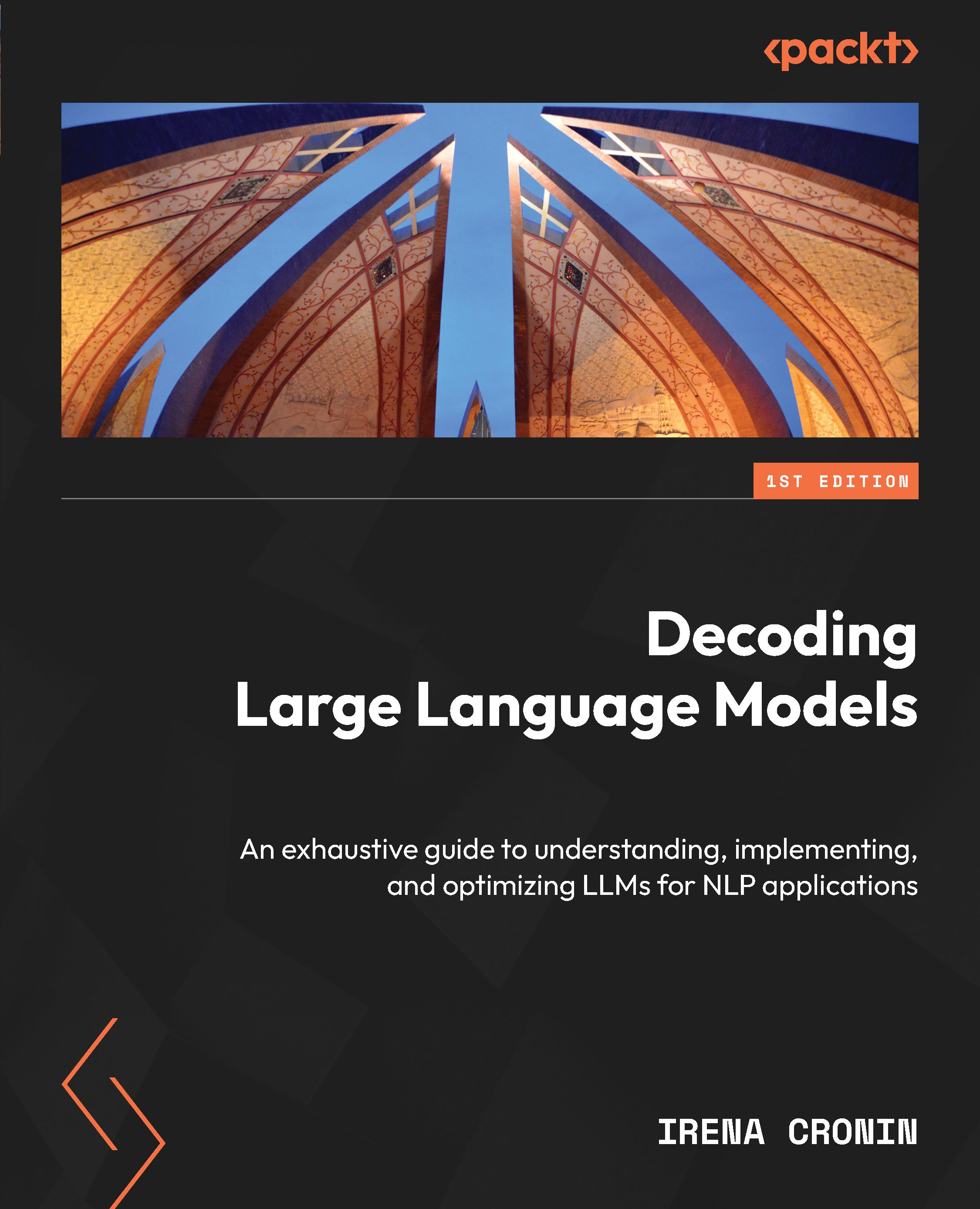
Ever wondered how large language models (LLMs) work and how they're shaping the future of artificial intelligence? Written by a renowned author and AI, AR, and data expert, Decoding Large Language Models is a combination of deep technical insights and practical use cases that not only demystifies complex AI concepts, but also guides you through the implementation and optimization of LLMs for real-world applications.
You’ll learn about the structure of LLMs, how they're developed, and how to utilize them in various ways. The chapters will help you explore strategies for improving these models and testing them to ensure effective deployment. Packed with real-life examples, this book covers ethical considerations, offering a balanced perspective on their societal impact. You’ll be able to leverage and fine-tune LLMs for optimal performance with the help of detailed explanations. You’ll also master techniques for training, deploying, and scaling models to be able to overcome complex data challenges with confidence and precision. This book will prepare you for future challenges in the ever-evolving fields of AI and NLP.
By the end of this book, you’ll have gained a solid understanding of the architecture, development, applications, and ethical use of LLMs and be up to date with emerging trends, such as GPT-5.
Table of Contents (22 chapters)
Preface


 Free Chapter
Part 1: The Foundations of Large Language Models (LLMs)
Chapter 1: LLM Architecture

Chapter 2: How LLMs Make Decisions
Part 2: Mastering LLM Development
Chapter 3: The Mechanics of Training LLMs
Chapter 4: Advanced Training Strategies
Chapter 5: Fine-Tuning LLMs for Specific Applications
Chapter 6: Testing and Evaluating LLMs
Part 3: Deployment and Enhancing LLM Performance
Chapter 7: Deploying LLMs in Production
Chapter 8: Strategies for Integrating LLMs
Chapter 9: Optimization Techniques for Performance
Chapter 10: Advanced Optimization and Efficiency
Part 4: Issues, Practical Insights, and Preparing for the Future
Chapter 11: LLM Vulnerabilities, Biases, and Legal Implications
Chapter 12: Case Studies – Business Applications and ROI
Chapter 13: The Ecosystem of LLM Tools and Frameworks
Chapter 14: Preparing for GPT-5 and Beyond
Chapter 15: Conclusion and Looking Forward
Index


