Sign In Start Free Trial
Account

Add to playlist

Create a Playlist

Modal Close icon
You need to login to use this feature.
  • Book Overview & Buying Mastering Transformers
  • Table Of Contents Toc
Mastering Transformers

Mastering Transformers - Second Edition

By : Savaş Yıldırım, Meysam Asgari- Chenaghlu
5 (5)
close
close
Mastering Transformers

Mastering Transformers

5 (5)
By: Savaş Yıldırım, Meysam Asgari- Chenaghlu

Overview of this book

Transformer-based language models such as BERT, T5, GPT, DALL-E, and ChatGPT have dominated NLP studies and become a new paradigm. Thanks to their accurate and fast fine-tuning capabilities, transformer-based language models have been able to outperform traditional machine learning-based approaches for many challenging natural language understanding (NLU) problems. Aside from NLP, a fast-growing area in multimodal learning and generative AI has recently been established, showing promising results. Mastering Transformers will help you understand and implement multimodal solutions, including text-to-image. Computer vision solutions that are based on transformers are also explained in the book. You’ll get started by understanding various transformer models before learning how to train different autoregressive language models such as GPT and XLNet. The book will also get you up to speed with boosting model performance, as well as tracking model training using the TensorBoard toolkit. In the later chapters, you’ll focus on using vision transformers to solve computer vision problems. Finally, you’ll discover how to harness the power of transformers to model time series data and for predicting. By the end of this transformers book, you’ll have an understanding of transformer models and how to use them to solve challenges in NLP and CV.
Table of Contents (25 chapters)
close
close
1
Part 1: Recent Developments in the Field, Installations, and Hello World Applications
4
Part 2: Transformer Models: From Autoencoders to Autoregressive Models
12
Part 3: Advanced Topics
19
Part 4: Transformers beyond NLP

From Bag-of-Words to the Transformers

Over the past two decades, there have been significant advancements in the field of natural language processing (NLP). We have gone through various paradigms and have now arrived at the era of the Transformer architecture. These advancements have helped us represent words or sentences more effectively in order to solve NLP tasks. On the other hand, different use cases of merging textual inputs to other modalities, such as images, have emerged as well. Conversational artificial intelligence (AI) has seen the dawn of a new era. Chatbots were developed that act like humans by answering questions, describing concepts, and even solving mathematical equations step by step. All of these advancements happened in a very short period. One of the enablers of this huge advancement, without a doubt, was Transformer models.

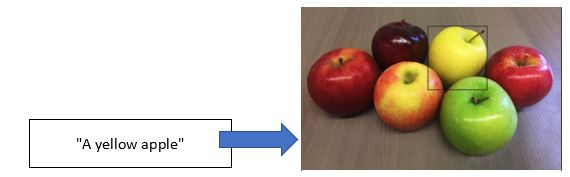
Finding a cross-semantic understanding of different natural languages, natural languages and images, natural languages, and programming languages, and even in a broader sense, natural languages and almost any other modality, has opened a new gate for us to be able to use natural language as our primary input to perform many complex tasks in the field of AI. The easiest imaginable way is to just describe what we are looking for in a picture so the model will give us what we want (https://huggingface.co/spaces/CVPR/regionclip-demo):

Figure 1.1 – Zero-shot object detection with the prompt “A yellow apple”

Figure 1.1 – Zero-shot object detection with the prompt “A yellow apple”

The models have developed this skill through a process of ongoing learning and improvement. At first, distributional semantics and n-gram language models were traditionally utilized to understand the meanings of words and documents for years. It has been seen that these approaches had several limitations. On the other hand, with the rise of newer approaches for diffusing different modalities, modern approaches for training language models, especially large language models (LLMs), enabled many different use cases to come to life.

Classical deep learning (DL) architectures have significantly enhanced the performance of NLP tasks and have overcome the limitations of traditional approaches. Recurrent neural networks (RNNs), feed-forward neural networks (FFNNs), and convolutional neural networks (CNNs) are some of the widely used DL architectures for the solution. However, these models have also faced their own challenges. Recently, the Transformer model became standard, eliminating all the shortcomings of other models. It differed not only in solving a single monolingual task but also in the performance of multilingual, multitasking tasks. These contributions have made transfer learning (TL) more viable in NLP, which aims to make models reusable for different tasks or languages.

In this chapter, we will begin by examining the attention mechanism and provide a brief overview of the Transformer architecture. We will also highlight the distinctions between Transformer models and previous NLP models.

In this chapter, we will cover the following topics:

  • Evolution of NLP approaches
  • Recalling traditional NLP approaches
  • Leveraging DL
  • Overview of the Transformer architecture
  • Using TL with Transformers
  • Multimodal learning
CONTINUE READING
83
Tech Concepts
36
Programming languages
73
Tech Tools
Icon Unlimited access to the largest independent learning library in tech of over 8,000 expert-authored tech books and videos.
Icon Innovative learning tools, including AI book assistants, code context explainers, and text-to-speech.
Icon 50+ new titles added per month and exclusive early access to books as they are being written.
Mastering Transformers
notes
bookmark Notes and Bookmarks search Search in title playlist Add to playlist download Download options font-size Font size

Change the font size

margin-width Margin width

Change margin width

day-mode Day/Sepia/Night Modes

Change background colour

Close icon Search
Country selected

Close icon Your notes and bookmarks

Confirmation

Modal Close icon
claim successful

Buy this book with your credits?

Modal Close icon
Are you sure you want to buy this book with one of your credits?
Close
YES, BUY

Submit Your Feedback

Modal Close icon
Modal Close icon
Modal Close icon