Sign In Start Free Trial
Account

Add to playlist

Create a Playlist

Modal Close icon
You need to login to use this feature.
  • Book Overview & Buying Getting Started with Python and Raspberry Pi (Redirected from Learning Python By Developing Raspberry Pi Applications)
  • Table Of Contents Toc
Getting Started with Python and Raspberry Pi (Redirected from Learning Python By Developing Raspberry Pi Applications)

Getting Started with Python and Raspberry Pi (Redirected from Learning Python By Developing Raspberry Pi Applications)

By : Nixon
3 (1)
close
close
Getting Started with Python and Raspberry Pi (Redirected from Learning Python By Developing Raspberry Pi Applications)

Getting Started with Python and Raspberry Pi (Redirected from Learning Python By Developing Raspberry Pi Applications)

3 (1)
By: Nixon

Overview of this book

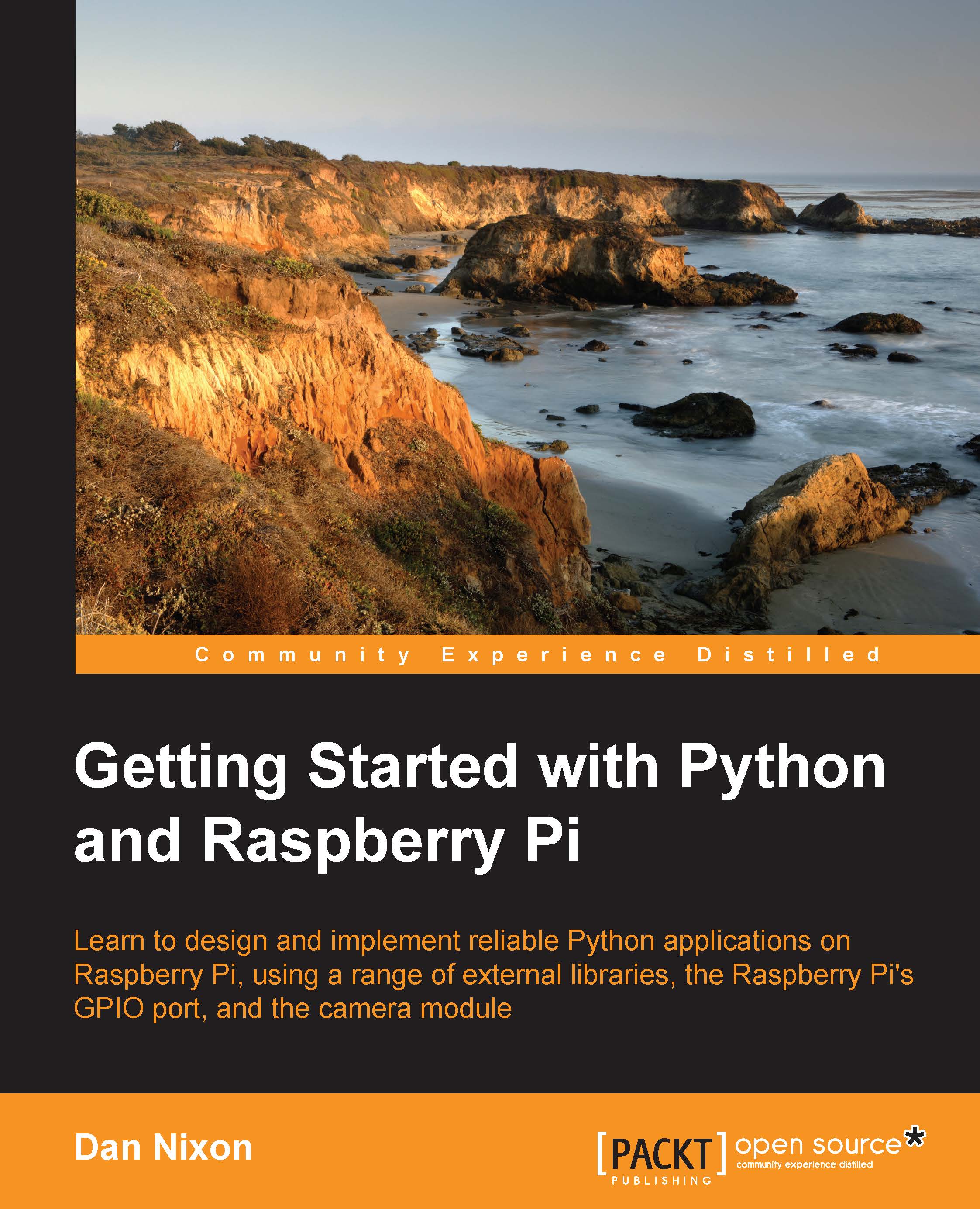
The Raspberry Pi is one of the smallest and most affordable single board computers that has taken over the world of hobby electronics and programming, and the Python programming language makes this the perfect platform to start coding with. The book will start with a brief introduction to Raspberry Pi and Python. We will direct you to the official documentation that helps you set up your Raspberry Pi with the necessary equipment such as the monitor, keyboard, mouse, power supply, and so on. It will then dive right into the basics of Python programming. Later, it will focus on other Python tasks, for instance, interfacing with hardware, GUI programming, and more. Once you get well versed with the basic programming, the book will then teach you to develop Python/Raspberry Pi applications. By the end of this book, you will be able to develop Raspberry Pi applications with Python and will have good understanding of Python programming for Raspberry Pi.
Table of Contents (13 chapters)
close
close
12
Index

Installing and testing the Python library


Now that we have the camera module installed and working, we can install and start using the picamera library.

  1. First, we need to install the pip package manager in order to install the latest version of the picamera library. This can be done using the following command:

    sudo apt-get install python-pip
    
  2. Next, we will update the installed version of the picamera library using the following command:

    sudo pip install --upgrade picamera
    

Now that the library is installed, we can test it out with a basic example to ensure that both the camera and the library are working correctly. This also gives us a chance to look at the basic usage of the picamera library.

We will do this from an interactive Python shell. First, we will import the required libraries:

import time
from picamera import PiCamera

Next, we will use the with statement to manage opening and closing the camera:

with PiCamera() as cam:

Now, we will set the resolution the camera will capture at and start...

CONTINUE READING
83
Tech Concepts
36
Programming languages
73
Tech Tools
Icon Unlimited access to the largest independent learning library in tech of over 8,000 expert-authored tech books and videos.
Icon Innovative learning tools, including AI book assistants, code context explainers, and text-to-speech.
Icon 50+ new titles added per month and exclusive early access to books as they are being written.
Getting Started with Python and Raspberry Pi (Redirected from Learning Python By Developing Raspberry Pi Applications)
notes
bookmark Notes and Bookmarks search Search in title playlist Add to playlist font-size Font size

Change the font size

margin-width Margin width

Change margin width

day-mode Day/Sepia/Night Modes

Change background colour

Close icon Search
Country selected

Close icon Your notes and bookmarks

Confirmation

Modal Close icon
claim successful

Buy this book with your credits?

Modal Close icon
Are you sure you want to buy this book with one of your credits?
Close
YES, BUY

Submit Your Feedback

Modal Close icon
Modal Close icon
Modal Close icon