Sign In Start Free Trial
Account

Add to playlist

Create a Playlist

Modal Close icon
You need to login to use this feature.
  • Book Overview & Buying Linux Bible
  • Table Of Contents Toc
Linux Bible

Linux Bible

By : Christopher Negus
close
close
Linux Bible

Linux Bible

By: Christopher Negus

Overview of this book

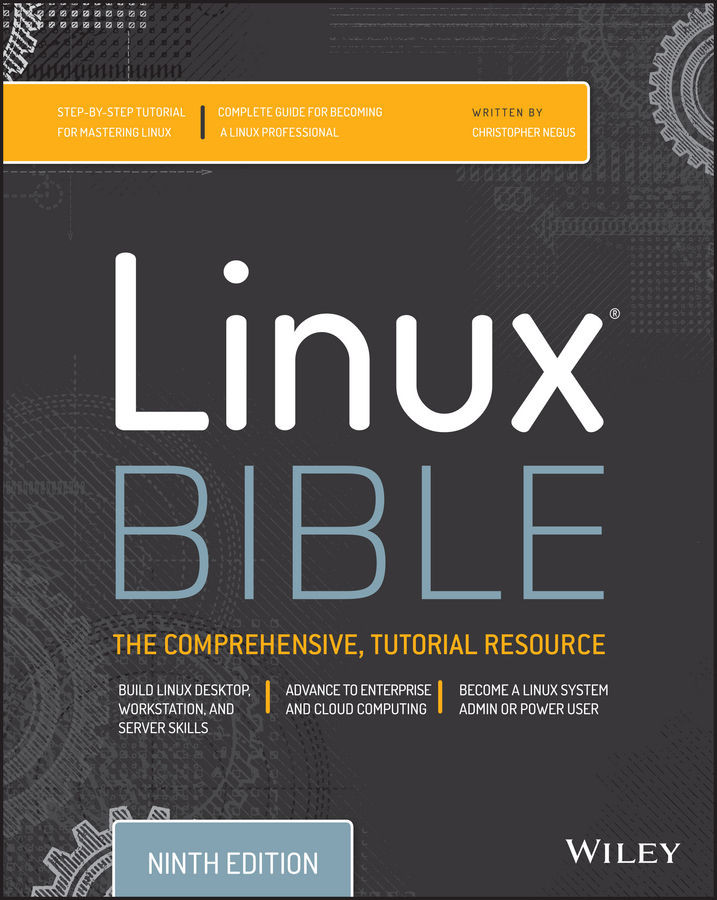
Linux Bible, 9th Edition is the ultimate hands-on Linux user guide, whether you’re a true beginner or a more advanced user navigating recent changes. This updated ninth edition covers the latest versions of Red Hat Enterprise Linux 7 (RHEL 7), Fedora 21, and Ubuntu 14.04 LTS, and includes new information on cloud computing and development with guidance on Openstack and Cloudforms. With a focus on RHEL 7, this practical guide gets you up to speed quickly on the new enhancements for enterprise-quality file systems, the new boot process and services management, firewall, and the GNOME 3 desktop. Written by a Red Hat expert, this book provides clear explanations and step-by-step instructions that demystify Linux and bring the new features seamlessly into your workflow. This useful guide assumes a base of little or no Linux knowledge and takes you step-by-step through what you need to know to get the job done.
Table of Contents (12 chapters)
close
close
8
Part VII: Appendixes
9
GNU General Public License
10
End User License Agreement

Introduction

You can't learn Linux without using it.

I've come to that conclusion over more than a decade of teaching people to learn Linux. You can't just read a book; you can't just listen to a lecture. You need someone to guide you and you need to jump in and do it.

In 1999, Wiley published my Red Hat Linux Bible. The book's huge success gave me the opportunity to become a full-time, independent Linux author. For about a decade, I wrote dozens of Linux books and explored the best ways to explain Linux from the quiet of my small home office.

In 2008, I hit the road. I was hired by Red Hat, Inc., as a full-time instructor, teaching Linux to professional system administrators seeking Red Hat Certified Engineer (RHCE) certification. In my three years as a Linux instructor, I honed my teaching skills in front of live people whose Linux experience ranged from none to experienced professional.

In the previous edition, I turned my teaching experience into text to take a reader from someone who has never used Linux to someone with the skills to become a Linux professional. In this edition, I set out to extend those skills into the cloud. The focus of this ninth edition of the Linux Bible can be summed up in these ways:

  • Beginner to certified professional: As long as you have used a computer, mouse, and keyboard, you can start with this book. I tell you how to get Linux, begin using it, step through critical topics, and ultimately excel at administering and securing it.
  • System administrator–focused: When you are finished with this book, you will know how to use Linux and how to modify and maintain it. All the topics needed to become a Red Hat Certified Engineer are covered in this book. That said, many software developers have also used this book to understand how to work on a Linux system as a development platform or target for their applications.
  • Emphasis on command-line tools: Although point-and-click interfaces for managing Linux have improved greatly in recent years, many advanced features can only be utilized by typing commands and editing configuration files manually. I teach you how to become proficient with the Linux command-line shell and occasionally compare shell features with graphical tools for accomplishing the same tasks.
  • Aimed at fewer Linux distributions: In previous editions, I described about 18 different Linux distributions. With only a few notable exceptions, most popular Linux distributions are either Red Hat–based (Red Hat Enterprise Linux, Fedora, CentOS, and so on) or Debian-based (Ubuntu, Linux Mint, KNOPPIX, and so on). Although this book most thoroughly covers Red Hat distributions, I have increased coverage of Ubuntu throughout in this edition (because that's what many of the biggest Linux fans start with).
  • Many, many demos and exercises: Instead of just telling you what Linux does, I actually show you what it does. Then, to make sure you got it, you have the opportunity to try exercises yourself. Every procedure and exercise has been tested to work in Fedora or Red Hat Enterprise Linux. Most work in Ubuntu as well.
  • Lead into cloud technologies: Linux is at the heart of most technological advances in cloud computing today. That means you need a solid understanding of Linux to work effectively in tomorrow's data centers. Learn Linux basics in the front of this book. Then in the last few chapters, I demonstrate how you can try out Linux systems as hypervisors, cloud controllers, and virtual machines, as well as manage virtual networks and networked storage.
CONTINUE READING
83
Tech Concepts
36
Programming languages
73
Tech Tools
Icon Unlimited access to the largest independent learning library in tech of over 8,000 expert-authored tech books and videos.
Icon Innovative learning tools, including AI book assistants, code context explainers, and text-to-speech.
Icon 50+ new titles added per month and exclusive early access to books as they are being written.
Linux Bible
notes
bookmark Notes and Bookmarks search Search in title playlist Add to playlist font-size Font size

Change the font size

margin-width Margin width

Change margin width

day-mode Day/Sepia/Night Modes

Change background colour

Close icon Search
Country selected

Close icon Your notes and bookmarks

Confirmation

Modal Close icon
claim successful

Buy this book with your credits?

Modal Close icon
Are you sure you want to buy this book with one of your credits?
Close
YES, BUY

Submit Your Feedback

Modal Close icon
Modal Close icon
Modal Close icon