Sign In Start Free Trial
Account

Add to playlist

Create a Playlist

Modal Close icon
You need to login to use this feature.
  • Book Overview & Buying R Data Structures and Algorithms
  • Table Of Contents Toc
  • Feedback & Rating feedback
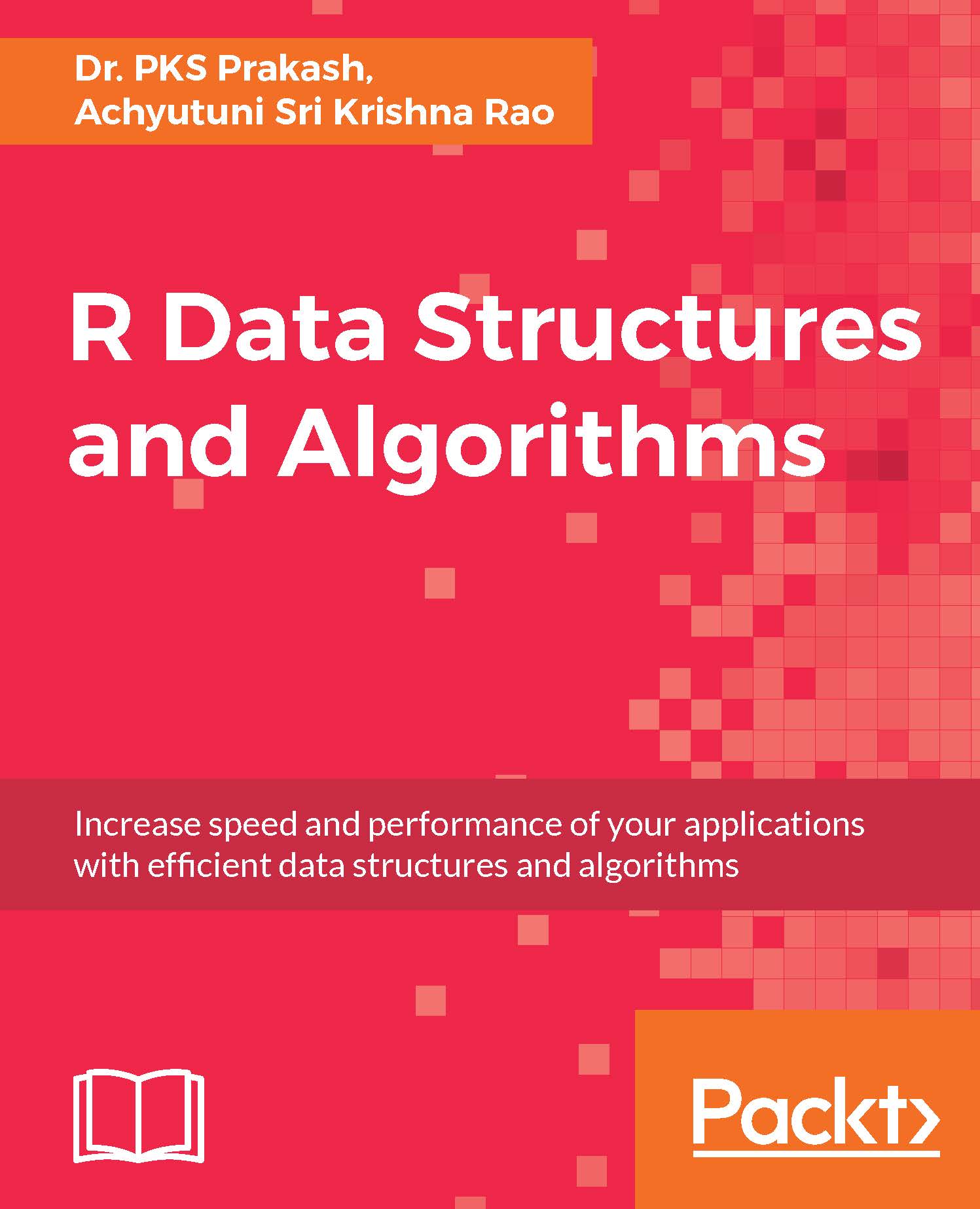
R Data Structures and Algorithms

R Data Structures and Algorithms

By : PKS Prakash, Sri Krishna Rao
4.5 (2)
close
close
R Data Structures and Algorithms

R Data Structures and Algorithms

4.5 (2)
By: PKS Prakash, Sri Krishna Rao

Overview of this book

In this book, we cover not only classical data structures, but also functional data structures. We begin by answering the fundamental question: why data structures? We then move on to cover the relationship between data structures and algorithms, followed by an analysis and evaluation of algorithms. We introduce the fundamentals of data structures, such as lists, stacks, queues, and dictionaries, using real-world examples. We also cover topics such as indexing, sorting, and searching in depth. Later on, you will be exposed to advanced topics such as graph data structures, dynamic programming, and randomized algorithms. You will come to appreciate the intricacies of high performance and scalable programming using R. We also cover special R data structures such as vectors, data frames, and atomic vectors. With this easy-to-read book, you will be able to understand the power of linked lists, double linked lists, and circular linked lists. We will also explore the application of binary search and will go in depth into sorting algorithms such as bubble sort, selection sort, insertion sort, and merge sort.
Table of Contents (11 chapters)
close
close

Relationship between problem and algorithm

Problem can be defined as the task to be performed. The execution of the task to be performed can be divided primarily into two components:

  • Data
  • Algorithm

However, there could be other controlling factors which could affect your approach development, such as problem constraints, resource constraints, computation time allowed, and so on.

The data component of the problem represents the information we are dealing with, such as numbers, text, files, and so on. For example, let's assume we want to maintain the company employee records, which include the employee name and their associated work details. This data needs to be maintained and updated regularly.

The algorithm part of a problem represents more of implementation details. It entails how we are going to manage the current data. Depending on the data and problem requirements, we select the data structure. Depending on the data structure, we have to define the algorithm to manage the dataset. For example, we can store the company employees dataset into a linked list or dictionary. Based on the defined data structure to store data approach for searching, insertion, and deletion and so on operations performed on data structure changes which is control by algorithms and implemented as program. Thus, we could state that a program is the step-by-step instructions given to a computer to do some operations:

Program = f(Algorithm, Data Structure)

To summarize, we could state that a program is the group of step-by-step instructions to solve a defined problem using the algorithm selected considering all problems and resource constraints. This book will use program representations using R to demonstrate the implementation of different data structures and algorithms.

Visually different images
CONTINUE READING
83
Tech Concepts
36
Programming languages
73
Tech Tools
Icon Unlimited access to the largest independent learning library in tech of over 8,000 expert-authored tech books and videos.
Icon Innovative learning tools, including AI book assistants, code context explainers, and text-to-speech.
Icon 50+ new titles added per month and exclusive early access to books as they are being written.
R Data Structures and Algorithms
notes
bookmark Notes and Bookmarks search Search in title playlist Add to playlist download Download options font-size Font size

Change the font size

margin-width Margin width

Change margin width

day-mode Day/Sepia/Night Modes

Change background colour

Close icon Search
Country selected

Close icon Your notes and bookmarks

Confirmation

Modal Close icon
claim successful

Buy this book with your credits?

Modal Close icon
Are you sure you want to buy this book with one of your credits?
Close
YES, BUY

Submit Your Feedback

Modal Close icon
Modal Close icon
Modal Close icon