Sign In Start Free Trial
Account

Add to playlist

Create a Playlist

Modal Close icon
You need to login to use this feature.
  • Book Overview & Buying Software Architecture with Python
  • Table Of Contents Toc
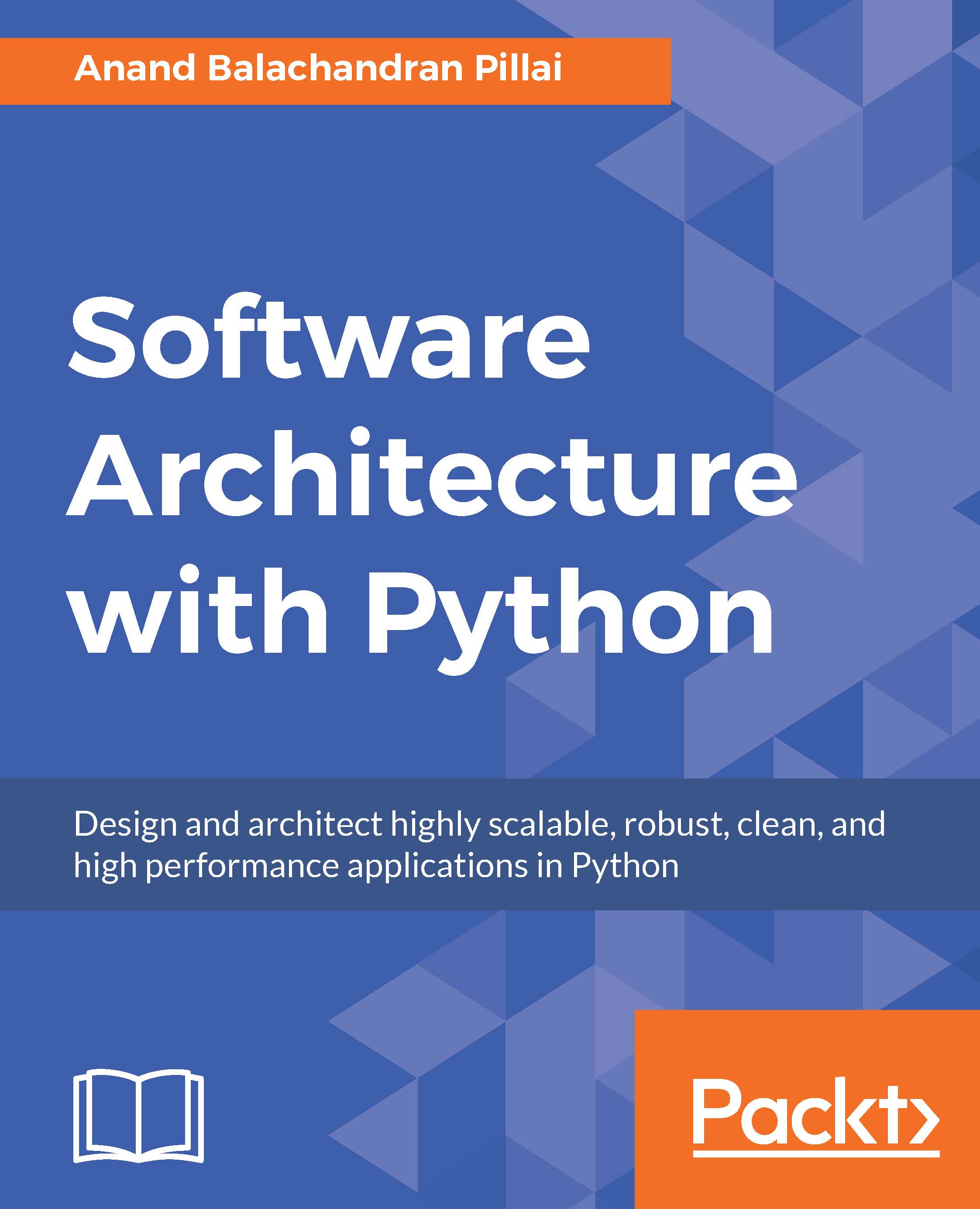
Software Architecture with Python

Software Architecture with Python

By : Balachandran Pillai
3.5 (6)
close
close
Software Architecture with Python

Software Architecture with Python

3.5 (6)
By: Balachandran Pillai

Overview of this book

This book starts by explaining how Python fits into an application's architecture. As you move along, you will get to grips with architecturally significant demands and how to determine them. Later, you’ll gain a complete understanding of the different architectural quality requirements for building a product that satisfies business needs, such as maintainability/reusability, testability, scalability, performance, usability, and security. You will also use various techniques such as incorporating DevOps, continuous integration, and more to make your application robust. You will discover when and when not to use object orientation in your applications, and design scalable applications. The focus is on building the business logic based on the business process documentation, and understanding which frameworks to use and when to use them. The book also covers some important patterns that should be taken into account while solving design problems, as well as those in relatively new domains such as the Cloud. By the end of this book, you will have understood the ins and outs of Python so that you can make critical design decisions that not just live up to but also surpassyour clients’ expectations.
Table of Contents (12 chapters)
close
close
11
Index

Logging as a debugging technique


Python comes with standard library support for logging via the aptly named logging module. Though print statements can be used as a quick and rudimentary tool for debugging, real-life debugging mostly requires that the system or application generate some logs. Logging is useful because of the following reasons:

  • Logs are usually saved to specific log files, typically, with timestamps, and remain at the server for a while until they are rotated out. This makes debugging easy even if the programmer is debugging the issue some time after it happened.

  • Logging can be done at different levels—from the basic INFO to the verbose DEBUG levels—changing the amount of information output by the application. This allows the programmer to debug at different levels of logging to extract the information they want, and figure out the problem.

  • Custom loggers can be written, which can perform logging to various outputs. At its most basic, logging is done to log files, but one can...

Visually different images
CONTINUE READING
83
Tech Concepts
36
Programming languages
73
Tech Tools
Icon Unlimited access to the largest independent learning library in tech of over 8,000 expert-authored tech books and videos.
Icon Innovative learning tools, including AI book assistants, code context explainers, and text-to-speech.
Icon 50+ new titles added per month and exclusive early access to books as they are being written.
Software Architecture with Python
notes
bookmark Notes and Bookmarks search Search in title playlist Add to playlist download Download options font-size Font size

Change the font size

margin-width Margin width

Change margin width

day-mode Day/Sepia/Night Modes

Change background colour

Close icon Search
Country selected

Close icon Your notes and bookmarks

Confirmation

Modal Close icon
claim successful

Buy this book with your credits?

Modal Close icon
Are you sure you want to buy this book with one of your credits?
Close
YES, BUY

Submit Your Feedback

Modal Close icon
Modal Close icon
Modal Close icon