Sign In Start Free Trial
Account

Add to playlist

Create a Playlist

Modal Close icon
You need to login to use this feature.
  • Book Overview & Buying Learning Salesforce Lightning Application Development
  • Table Of Contents Toc
  • Feedback & Rating feedback
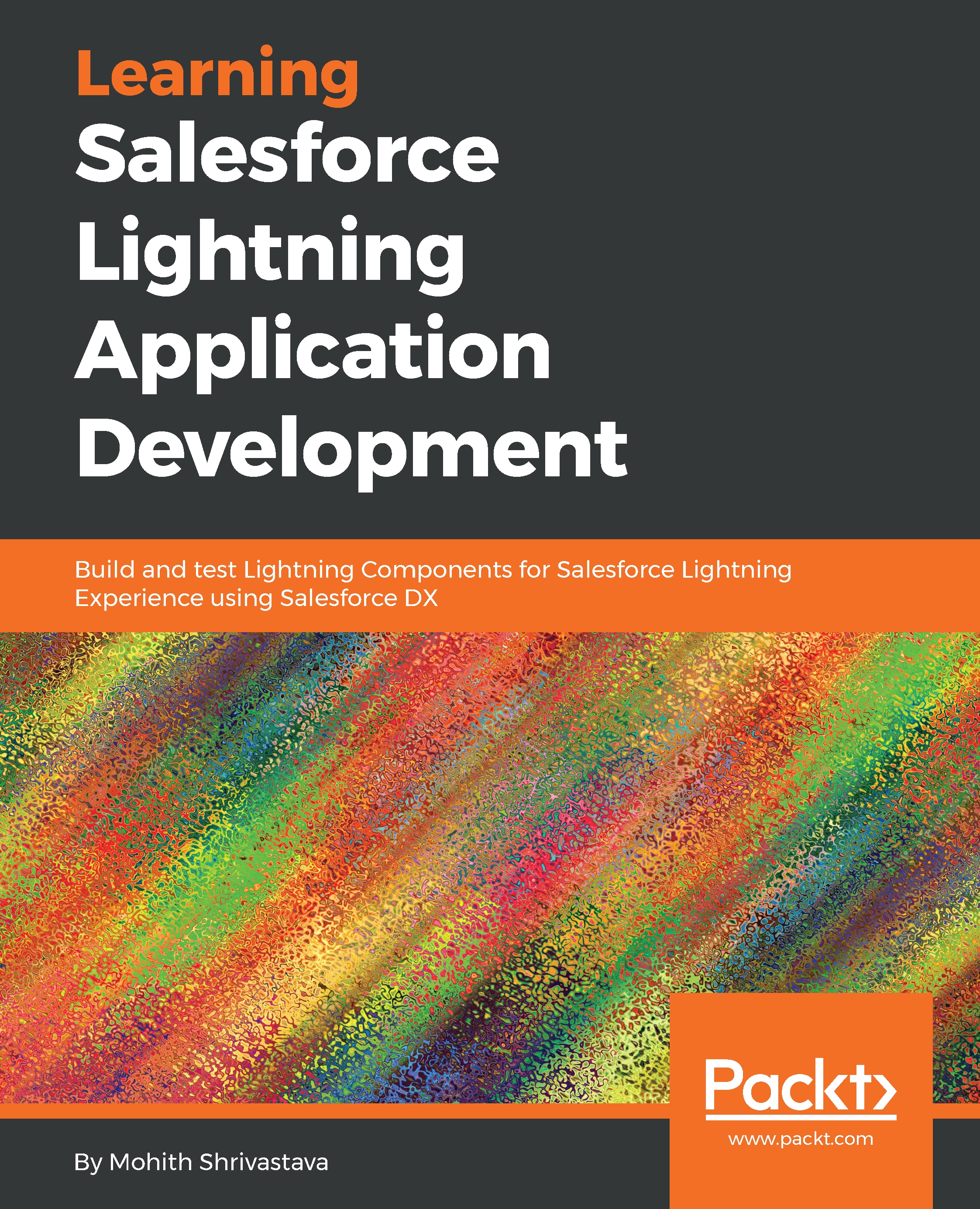
Learning Salesforce Lightning Application Development

Learning Salesforce Lightning Application Development

By : Mohit Shrivatsava
4.1 (13)
close
close
Learning Salesforce Lightning Application Development

Learning Salesforce Lightning Application Development

4.1 (13)
By: Mohit Shrivatsava

Overview of this book

Built on the Salesforce App Cloud, the new Salesforce Lightning Experience combines three major components: Lightning Design System, Lightning App Builder, and Lightning Components, to provide an enhanced user experience. This book will enable you to quickly create modern, enterprise apps with Lightning Component Framework. You will start by building simple Lightning Components and understanding the Lightning Components architecture. The chapters cover the basics of Lightning Component Framework semantics and syntax, the security features provided by Locker Service, and use of third-party libraries inside Lightning Components. The later chapters focus on debugging, performance tuning, testing using Lightning Testing Services, and how to publish Lightning Components on Salesforce AppExchange.
Table of Contents (17 chapters)
close
close

Lightning Out for unauthenticated users


In the last section, we required a connected app and authentication from  Salesforce to render the Lightning Component. Authentication is needed if you want the application to securely fetch data from Salesforce using the user credentials.

However, let's say you want a non-secure component to be hosted on your site. An example could be a simple web to read form or a contact information collection form, and you do not want your users to log in.

For this scenario, the Lightning Out application will implement a special interface named ltng:allowGuestAccess and you will also need to create a Salesforce community that is published for the public.

Let's take a step-by-step walkthrough of how to take components outside Salesforce for unauthenticated users:

  1. Create a  Lightning Out dependency app that implements ltng:allowGuestAccess. The simple code modification to our YouTube Lightning Out application will be as follows. The name of the app is youtubesearchOutApp...
Visually different images
CONTINUE READING
83
Tech Concepts
36
Programming languages
73
Tech Tools
Icon Unlimited access to the largest independent learning library in tech of over 8,000 expert-authored tech books and videos.
Icon Innovative learning tools, including AI book assistants, code context explainers, and text-to-speech.
Icon 50+ new titles added per month and exclusive early access to books as they are being written.
Learning Salesforce Lightning Application Development
notes
bookmark Notes and Bookmarks search Search in title playlist Add to playlist download Download options font-size Font size

Change the font size

margin-width Margin width

Change margin width

day-mode Day/Sepia/Night Modes

Change background colour

Close icon Search
Country selected

Close icon Your notes and bookmarks

Confirmation

Modal Close icon
claim successful

Buy this book with your credits?

Modal Close icon
Are you sure you want to buy this book with one of your credits?
Close
YES, BUY

Submit Your Feedback

Modal Close icon
Modal Close icon
Modal Close icon