


-
Book Overview & Buying
-
Table Of Contents

Edge Computing Systems with Kubernetes
By :


Edge Computing Systems with Kubernetes
By:
Overview of this book
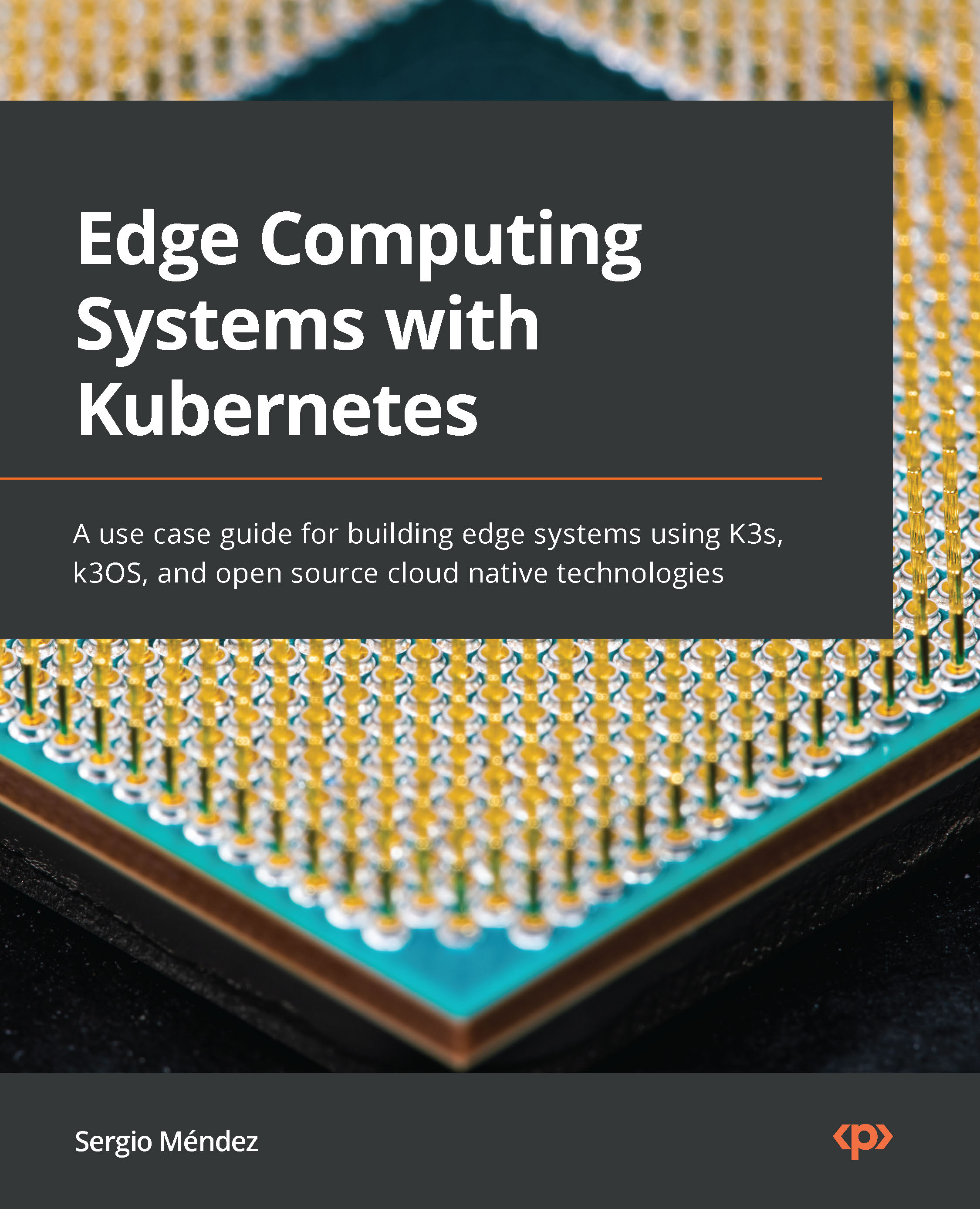
Edge computing is a way of processing information near the source of data instead of processing it on data centers in the cloud. In this way, edge computing can reduce latency when data is processed, improving the user experience on real-time data visualization for your applications. Using K3s, a light-weight Kubernetes and k3OS, a K3s-based Linux distribution along with other open source cloud native technologies, you can build reliable edge computing systems without spending a lot of money.
In this book, you will learn how to design edge computing systems with containers and edge devices using sensors, GPS modules, WiFi, LoRa communication and so on. You will also get to grips with different use cases and examples covered in this book, how to solve common use cases for edge computing such as updating your applications using GitOps, reading data from sensors and storing it on SQL and NoSQL databases. Later chapters will show you how to connect hardware to your edge clusters, predict using machine learning, and analyze images with computer vision. All the examples and use cases in this book are designed to run on devices using 64-bit ARM processors, using Raspberry Pi devices as an example.
By the end of this book, you will be able to use the content of these chapters as small pieces to create your own edge computing system.
Table of Contents (21 chapters)
Preface


Part 1: Edge Computing Basics
 Free Chapter
Chapter 1: Edge Computing with Kubernetes
Chapter 2: K3s Installation and Configuration
Chapter 3: K3s Advanced Configurations and Management
Chapter 4: k3OS Installation and Configurations
Chapter 5: K3s Homelab for Edge Computing Experiments
Part 2: Cloud Native Applications at the Edge
Chapter 6: Exposing Your Applications Using Ingress Controllers and Certificates
Chapter 7: GitOps with Flux for Edge Applications

Chapter 8: Observability and Traffic Splitting Using Linkerd
Chapter 9: Edge Serverless and Event-Driven Architectures with Knative and Cloud Events
Chapter 10: SQL and NoSQL Databases at the Edge
Part 3: Edge Computing Use Cases in Practice
Chapter 11: Monitoring the Edge with Prometheus and Grafana
Chapter 12: Communicating with Edge Devices across Long Distances Using LoRa
Chapter 13: Geolocalization Applications Using GPS, NoSQL, and K3s Clusters
Chapter 14: Computer Vision with Python and K3s Clusters
Chapter 15: Designing Your Own Edge Computing System
Index
Other Books You May Enjoy


