


-
Book Overview & Buying
-
Table Of Contents

Microsoft Power Platform Solutions Architect's Handbook - Second Edition
By :


Microsoft Power Platform Solutions Architect's Handbook
By:
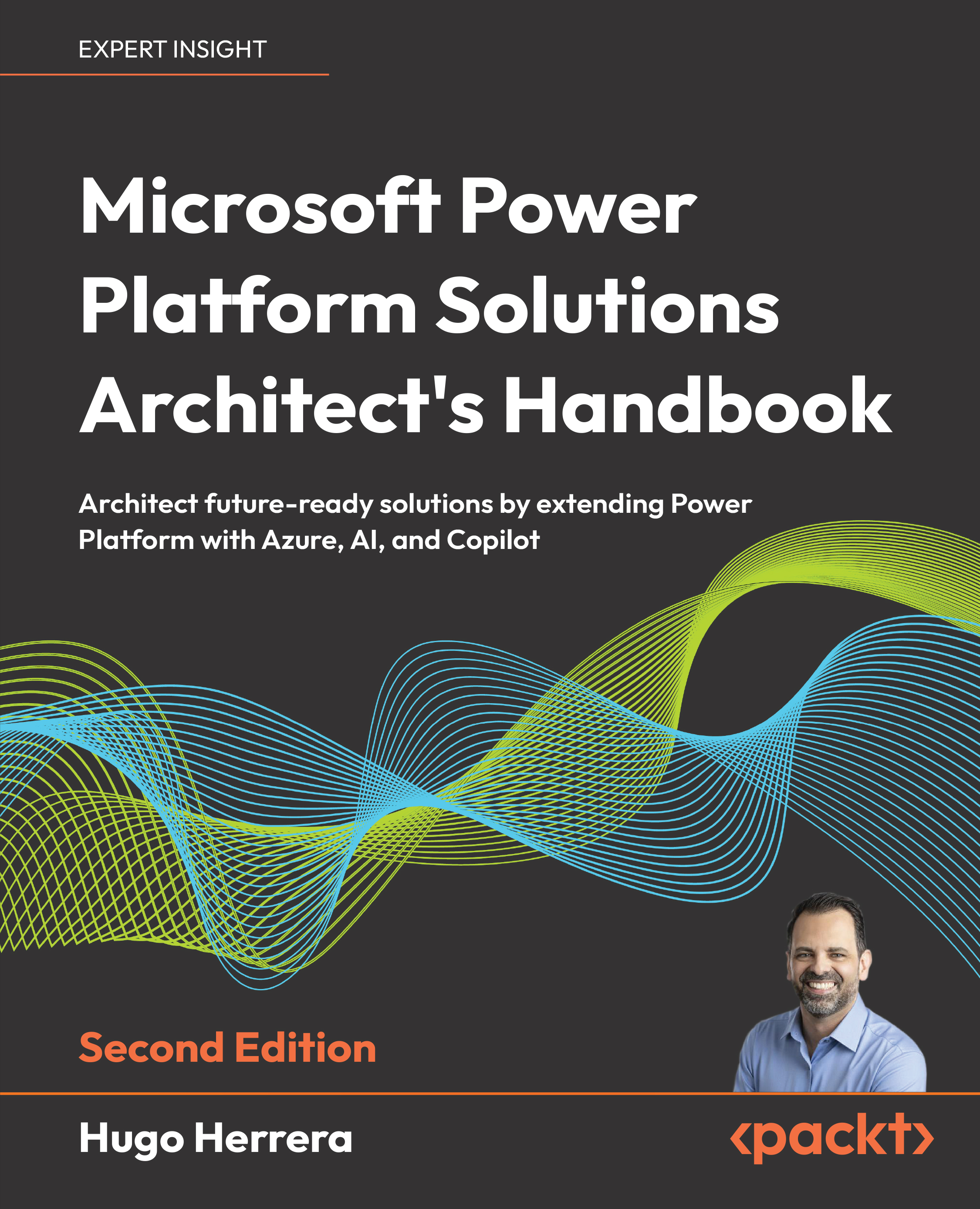
Overview of this book
Struggling to architect secure, scalable Power Platform solutions that keep up with AI and enterprise demands? Microsoft Power Platform Solutions Architect's Handbook is your expert guide to building intelligent, future-ready applications with Microsoft's low-code platform. This updated second edition brings you the latest on Copilot, Azure OpenAI, AI Builder, and Power Platform AI patterns.
Through a hands-on enterprise case study, you'll work through every stage of solution architecture, from requirements analysis and envisioning to secure data modeling, integration, governance, and DevOps implementation. You'll tackle real-world challenges such as licensing constraints, ALM pipeline design, multi-cloud integration, and establishing a Center of Excellence. A refreshed PL-600 certification prep chapter with current questions and exam tips will help you gear up for the exam.
By the end of this book, you'll have the mindset, tools, and strategies to design scalable, AI-enhanced Power Platform solutions while using the latest in LLM and GPT technologies. Whether modernizing legacy systems or architecting cloud-native applications, this book equips you to lead digital transformation initiatives with enterprise-grade excellence.
*Email sign-up and proof of purchase required
Table of Contents (29 chapters)
Preface


Chapter 1: Introduction to Power Platform Solution Architecture
Chapter 2: The Digital Transformation Case Study
Part 2: Requirements Analysis, Solution Envisioning, and the Implementation Roadmap
Chapter 3: Discovery and Initial Solution Planning
Chapter 4: Identifying Business Processes, Risk Factors, and Success Criteria
Chapter 5: Understanding the Existing Architectural Landscape
Chapter 6: Requirements Analysis and Engineering for Solution Architecture
Chapter 7: Conducting Effective Fit Gap Analysis in Power Platform
Part 3: Architecting the Power Platform Solution
Chapter 8: Designing a Power Platform Solution
Chapter 9: Effective Power Platform Data Modeling

Chapter 10: Power Platform Integration Strategies
Chapter 11: Defining Power Platform Security Concepts
Part 4: Harnessing the Power of Artificial Intelligence
Chapter 12: Power Platform and AI
Chapter 13: Copilot
Part 5: Implementing Solid Power Platform Solutions
Chapter 14: Validating the Solution’s Design and Implementation
Chapter 15: Power Platform Implementation Strategies
Chapter 16: Power Platform ALM
Chapter 17: Go-Live Strategies and Support
Chapter 18: Setting Up a Power Platform Center of Excellence
Part 6: Power Platform Solution Architect Certification Prep
Chapter 19: Microsoft Certified: Power Platform Solution Architect Expert Certification Prep
Chapter 20: Unlock Your Exclusive Benefits
Index
Other Books You May Enjoy


