


-
Book Overview & Buying
-
Table Of Contents

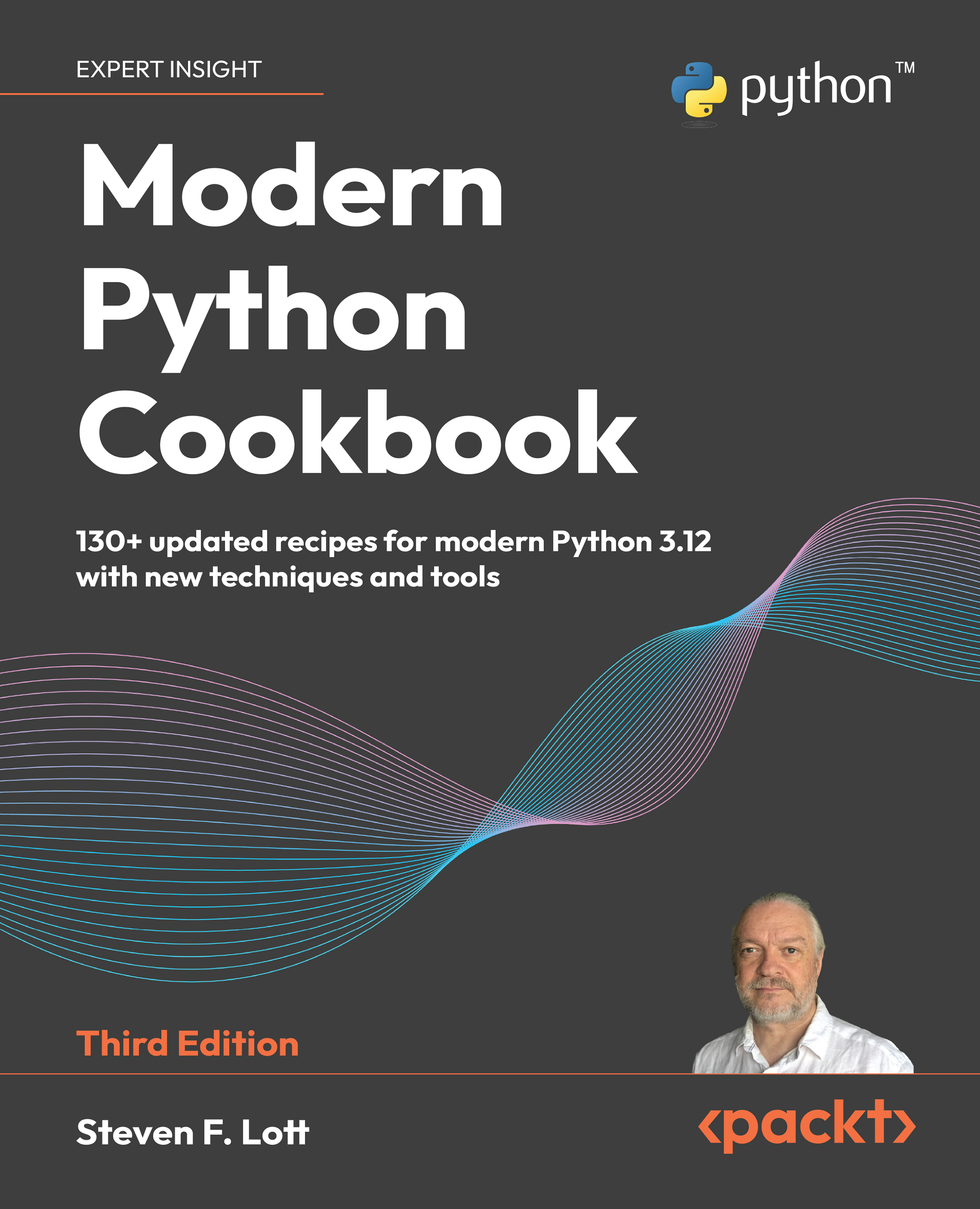
Modern Python Cookbook - Third Edition
By :


Modern Python Cookbook
By:
Overview of this book
Python is the go-to language for developers, engineers, data scientists, and hobbyists worldwide. Known for its versatility, Python can efficiently power applications, offering remarkable speed, safety, and scalability. This book distills Python into a collection of straightforward recipes, providing insights into specific language features within various contexts, making it an indispensable resource for mastering Python and using it to handle real-world use cases.
The third edition of Modern Python Cookbook provides an in-depth look into Python 3.12, offering more than 140 new and updated recipes that cater to both beginners and experienced developers. This edition introduces new chapters on documentation and style, data visualization with Matplotlib and Pyplot, and advanced dependency management techniques using tools like Poetry and Anaconda. With practical examples and detailed explanations, this cookbook helps developers solve real-world problems, optimize their code, and get up to date with the latest Python features.
Table of Contents (20 chapters)
Preface


 Free Chapter
Chapter 1 Numbers, Strings, and Tuples
Chapter 2 Statements and Syntax
Chapter 3 Function Definitions
Chapter 4 Built-In Data Structures Part 1: Lists and Sets
Chapter 5 Built-In Data Structures Part 2: Dictionaries
Chapter 6 User Inputs and Outputs
Chapter 7 Basics of Classes and Objects

Chapter 8 More Advanced Class Design
Chapter 9 Functional Programming Features
Chapter 10 Working with Type Matching and Annotations
Chapter 11 Input/Output, Physical Format, and Logical Layout
Chapter 12 Graphics and Visualization with Jupyter Lab
Chapter 13 Application Integration: Configuration
Chapter 14 Application Integration: Combination
Chapter 15 Testing
Chapter 16 Dependencies and Virtual Environments
Chapter 17 Documentation and Style
Other Books You May Enjoy
Index


