


-
Book Overview & Buying
-
Table Of Contents

Learn Python Programming - Fourth Edition
By :


Learn Python Programming
By:
Overview of this book
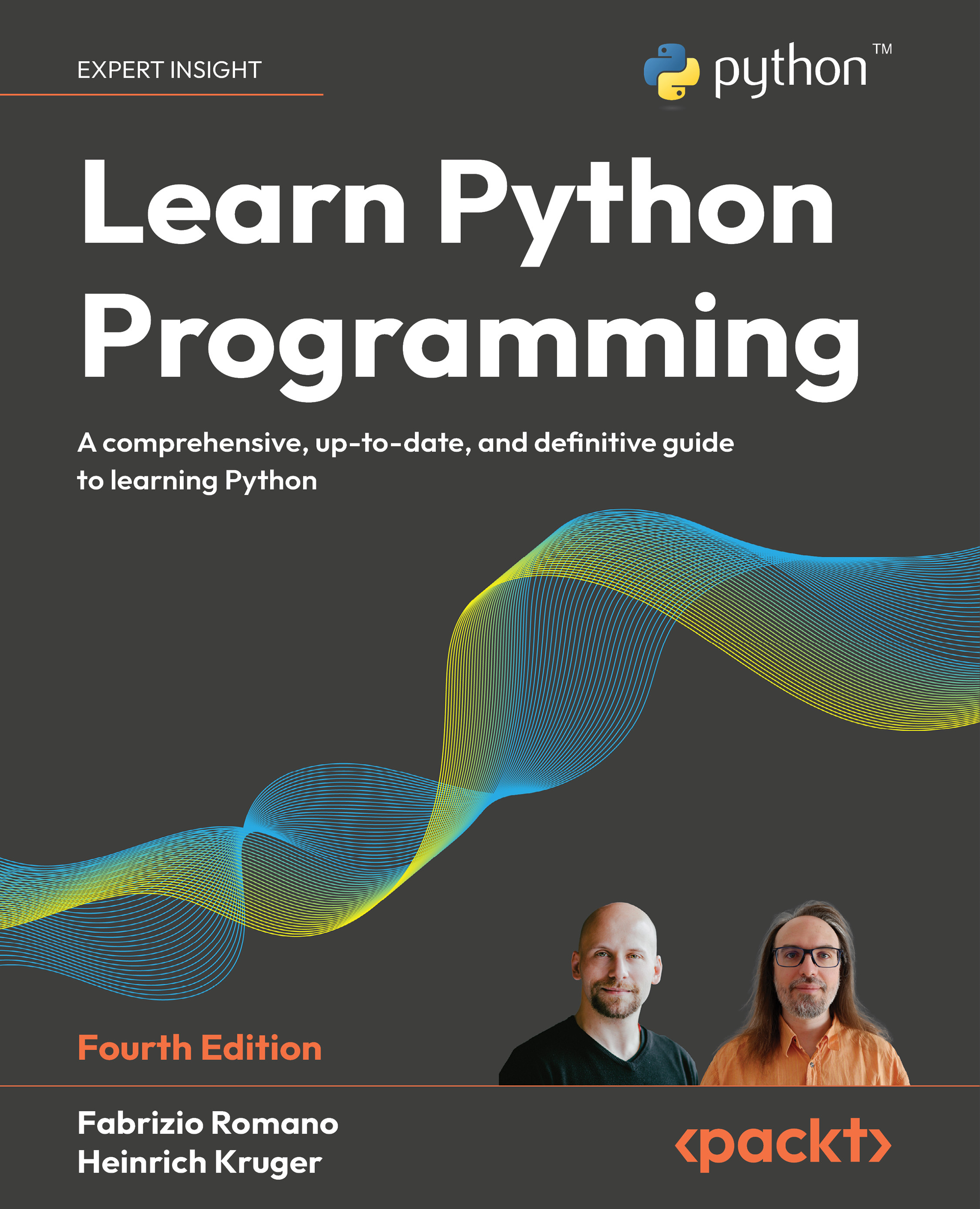
Learn Python Programming, Fourth Edition, provides a comprehensive, up-to-date introduction to Python programming, covering fundamental concepts and practical applications. This edition has been meticulously updated to include the latest features from Python versions 3.9 to 3.12, new chapters on type hinting and CLI applications, and updated examples reflecting modern Python web development practices. This Python book empowers you to take ownership of writing your software and become independent in fetching the resources you need. By the end of this book, you will have a clear idea of where to go and how to build on what you have learned from the book.
Through examples, the book explores a wide range of applications and concludes by building real-world Python projects based on the concepts you have learned. This Python book offers a clear and practical guide to mastering Python and applying it effectively in various domains, such as data science, web development, and automation.
Table of Contents (21 chapters)
Preface


 Free Chapter
A Gentle Introduction to Python
Built-In Data Types

Conditionals and Iteration
Functions, the Building Blocks of Code
Comprehensions and Generators
OOP, Decorators, and Iterators
Exceptions and Context Managers
Files and Data Persistence
Cryptography and Tokens
Debugging and Profiling
Introduction to Type Hinting
Data Science in Brief
Introduction to API Development
CLI Applications
Packaging Python Applications
Programming Challenges
Unlock Your Exclusive Benefits
Other Books You May Enjoy
Index


