


-
Book Overview & Buying
-
Table Of Contents

C++ STL Cookbook - Second Edition
By :


C++ STL Cookbook
By:
Overview of this book
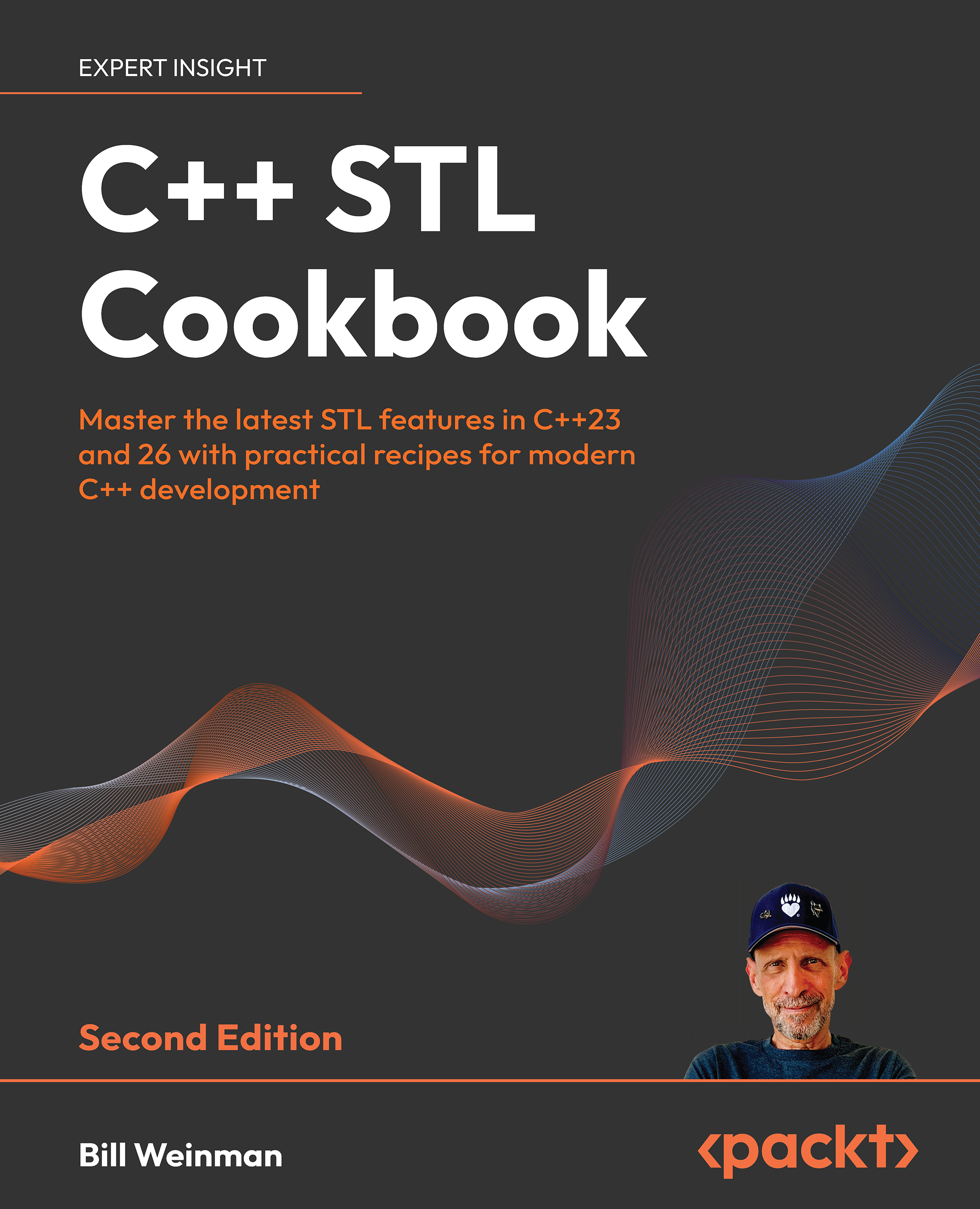
C++ STL Cookbook is a comprehensive guide that provides practical solutions for mastering the latest features of the C++23 Standard Template Library (STL) through hands-on recipes.
Beginning with new features in C++23, this book will help you understand the language's updated mechanics and library features, and offer insights into how they work. Unlike other books, this cookbook takes an implementation-specific, problem-solution approach that will help you overcome hurdles quickly. You'll learn core STL concepts, such as containers, algorithms, utility classes, lambda expressions, iterators, and more, through specific real-world recipes.
Building on the success of the first edition, this updated guide includes a new chapter dedicated to the latest features introduced in C++23, such as improved modules, refined ranges, and coroutine-based generators. It also covers essential best practices for writing cleaner and more efficient code, including the use of coroutines, structured bindings, and std::span.
Whether you're looking to deepen your understanding of the C++ STL or implement the latest features in your projects, this book provides valuable insights, clear and concise explanations and practical solutions to enhance your C++ programming skills.
Table of Contents (15 chapters)

 Free Chapter
Chapter 1: Introduction to New C++23 Features

Chapter 2: Best Practices
Chapter 3: STL Containers
Chapter 4: STL Compatible Iterators
Chapter 5: Lambda Expressions
Chapter 6: STL Algorithms
Chapter 7: Strings and Formatting
Chapter 8: Utility Classes
Chapter 9: Concurrency and Parallelism
Chapter 10: Using the File System

Chapter 11: More Practical Ideas
Chapter 12: C++26 and the Future
Chapter 13: Unlock Your Exclusive Benefits
Index


