


-
Book Overview & Buying
-
Table Of Contents

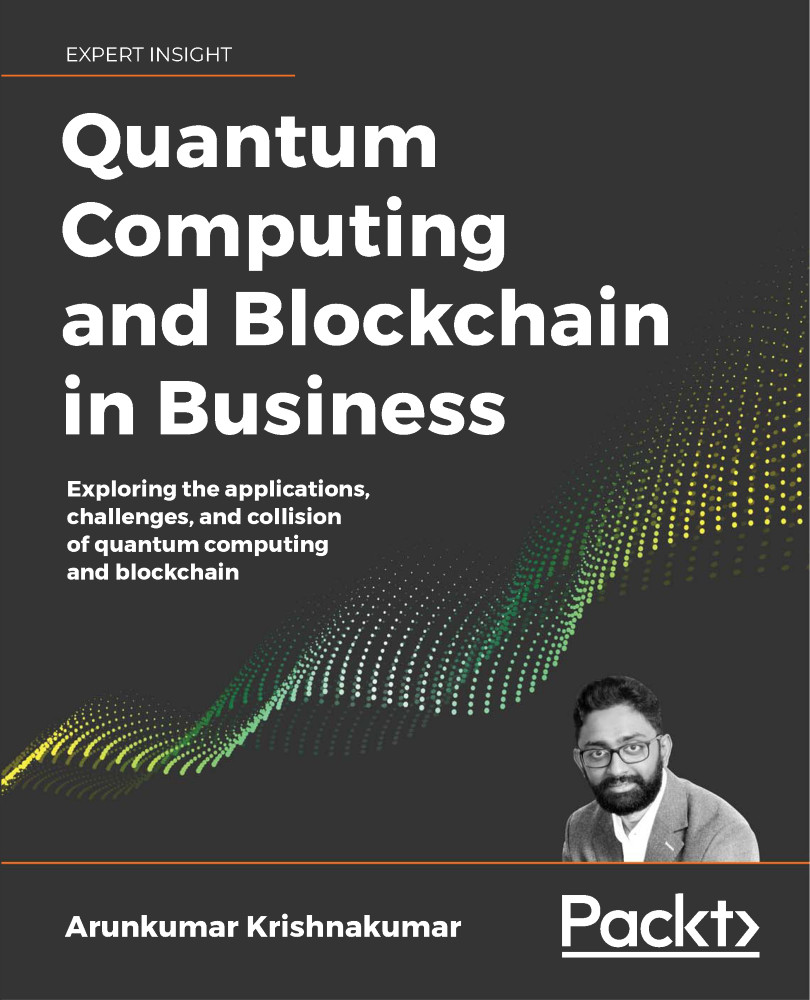
Quantum Computing and Blockchain in Business
By :


Quantum Computing and Blockchain in Business
By:
Overview of this book
Are quantum computing and Blockchain on a collision course or will they be the most important trends of this decade to disrupt industries and life as we know it?
Fintech veteran and venture capitalist Arunkumar Krishnakumar cuts through the hype to bring us a first-hand look into how quantum computing and Blockchain together are redefining industries, including fintech, healthcare, and research. Through a series of interviews with domain experts, he also explores these technologies’ potential to transform national and global governance and policies – from how elections are conducted and how smart cities can be designed and optimized for the environment, to what cyberwarfare enabled by quantum cryptography might look like. In doing so, he also highlights challenges that these technologies have to overcome to go mainstream.
Quantum Computing and Blockchain in Business explores the potential changes that quantum computing and Blockchain might bring about in the real world. After expanding on the key concepts and techniques, such as applied cryptography, qubits, and digital annealing, that underpin quantum computing and Blockchain, the book dives into how major industries will be impacted by these technologies. Lastly, we consider how the two technologies may come together in a complimentary way.
Table of Contents (20 chapters)

Introduction to Quantum Computing and Blockchain

 Free Chapter
Quantum Computing – Key Discussion Points

The Data Economy
The Impact on Financial Services
Interview with Dr. Dave Snelling, Fujitsu Fellow
The Impact on Healthcare and Pharma
Interview with Dr. B. Rajathilagam, Head of AI Research, Amrita Vishwa Vidyapeetham
The Impact on Governance
Interview with Max Henderson, Senior Data Scientist, Rigetti and QxBranch
The Impact on Smart Cities and Environment
Interview with Sam McArdle, Quantum Computing Researcher at the University of Oxford
The Impact on Chemistry
The Impact on Logistics
Interview with Dinesh Nagarajan, Partner, IBM
Quantum-Safe Blockchain
Nation States and Cyberwars
Conclusion – Blue Skies
Other Books You May Enjoy
Index


