
Sign In Start Free Trial
Account

Add to playlist

Create a Playlist

Modal Close icon
You need to login to use this feature.
  • Book Overview & Buying Learning Malware Analysis
  • Table Of Contents Toc
Learning Malware Analysis

Learning Malware Analysis

By : Monnappa K A
4.7 (30)
close
close
Learning Malware Analysis

Learning Malware Analysis

4.7 (30)
By: Monnappa K A

Overview of this book

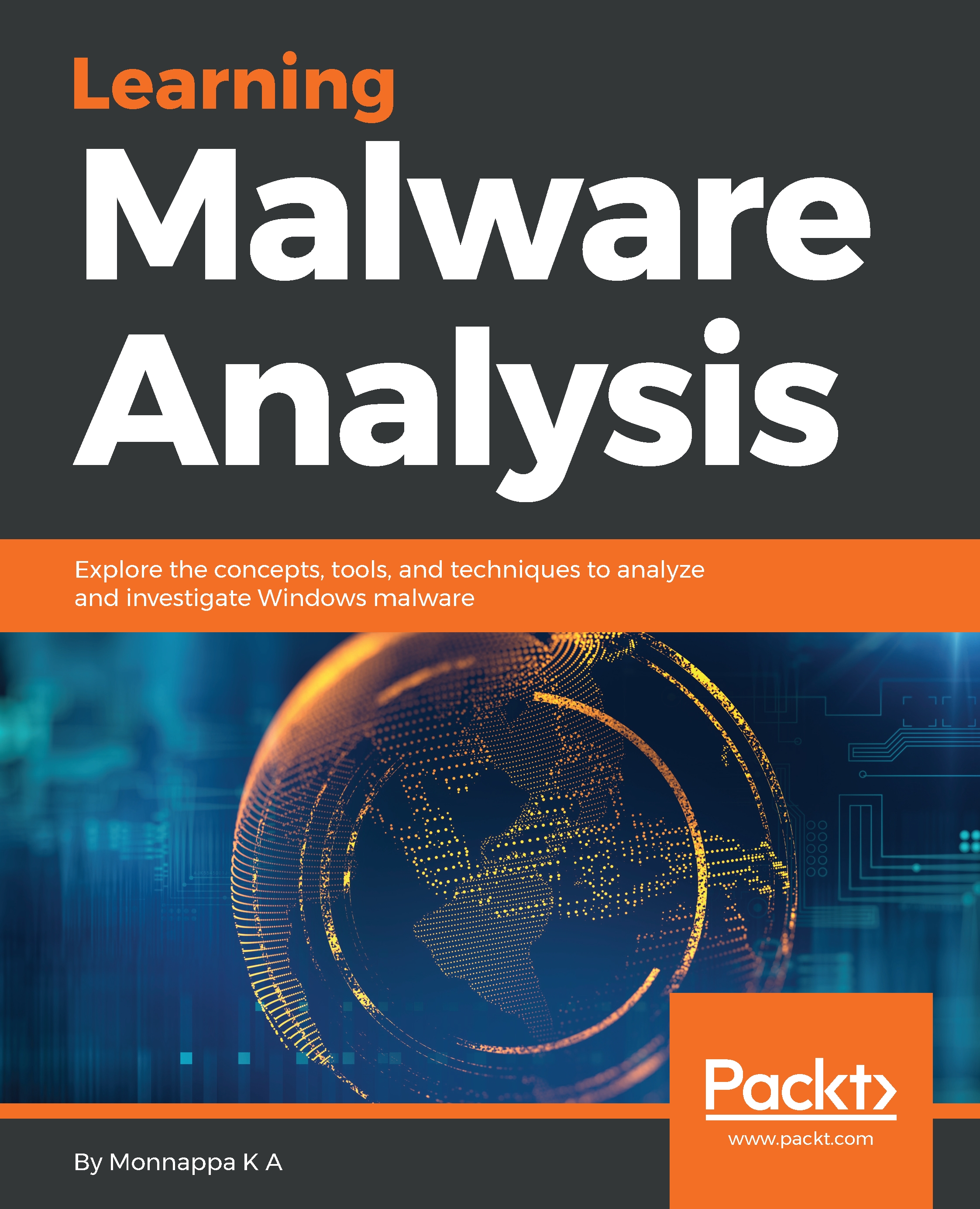
Malware analysis and memory forensics are powerful analysis and investigation techniques used in reverse engineering, digital forensics, and incident response. With adversaries becoming sophisticated and carrying out advanced malware attacks on critical infrastructures, data centers, and private and public organizations, detecting, responding to, and investigating such intrusions is critical to information security professionals. Malware analysis and memory forensics have become must-have skills to fight advanced malware, targeted attacks, and security breaches. This book teaches you the concepts, techniques, and tools to understand the behavior and characteristics of malware through malware analysis. It also teaches you techniques to investigate and hunt malware using memory forensics. This book introduces you to the basics of malware analysis, and then gradually progresses into the more advanced concepts of code analysis and memory forensics. It uses real-world malware samples, infected memory images, and visual diagrams to help you gain a better understanding of the subject and to equip you with the skills required to analyze, investigate, and respond to malware-related incidents.
Table of Contents (13 chapters)
close
close

Assembly Language and Disassembly Primer

Static analysis and dynamic analysis are great techniques to understand the basic functionality of malware, but these techniques do not provide all the required information regarding the malware's functionality. Malware authors write their malicious code in a high-level language, such as C or C++, which is compiled to an executable using a compiler. During your investigation, you will only have the malicious executable, without its source code. To gain a deeper understanding of a malware's inner workings and to understand the critical aspects of a malicious binary, code analysis needs to be performed.

This chapter will cover the concepts and skills required to perform code analysis. For a better understanding of the subject, this chapter will make use of relevant concepts from both C programming and assembly language programming...

CONTINUE READING
83
Tech Concepts
36
Programming languages
73
Tech Tools
Icon Unlimited access to the largest independent learning library in tech of over 8,000 expert-authored tech books and videos.
Icon Innovative learning tools, including AI book assistants, code context explainers, and text-to-speech.
Icon 50+ new titles added per month and exclusive early access to books as they are being written.
Learning Malware Analysis
notes
bookmark Notes and Bookmarks search Search in title playlist Add to playlist font-size Font size

Change the font size

margin-width Margin width

Change margin width

day-mode Day/Sepia/Night Modes

Change background colour

Close icon Search
Country selected

Close icon Your notes and bookmarks

Confirmation

Modal Close icon
claim successful

Buy this book with your credits?

Modal Close icon
Are you sure you want to buy this book with one of your credits?
Close
YES, BUY

Submit Your Feedback

Modal Close icon
Modal Close icon
Modal Close icon