Sign In Start Free Trial
Account

Add to playlist

Create a Playlist

Modal Close icon
You need to login to use this feature.
  • Book Overview & Buying Learning Malware Analysis
  • Table Of Contents Toc
Learning Malware Analysis

Learning Malware Analysis

By : Monnappa K A
4.7 (30)
close
close
Learning Malware Analysis

Learning Malware Analysis

4.7 (30)
By: Monnappa K A

Overview of this book

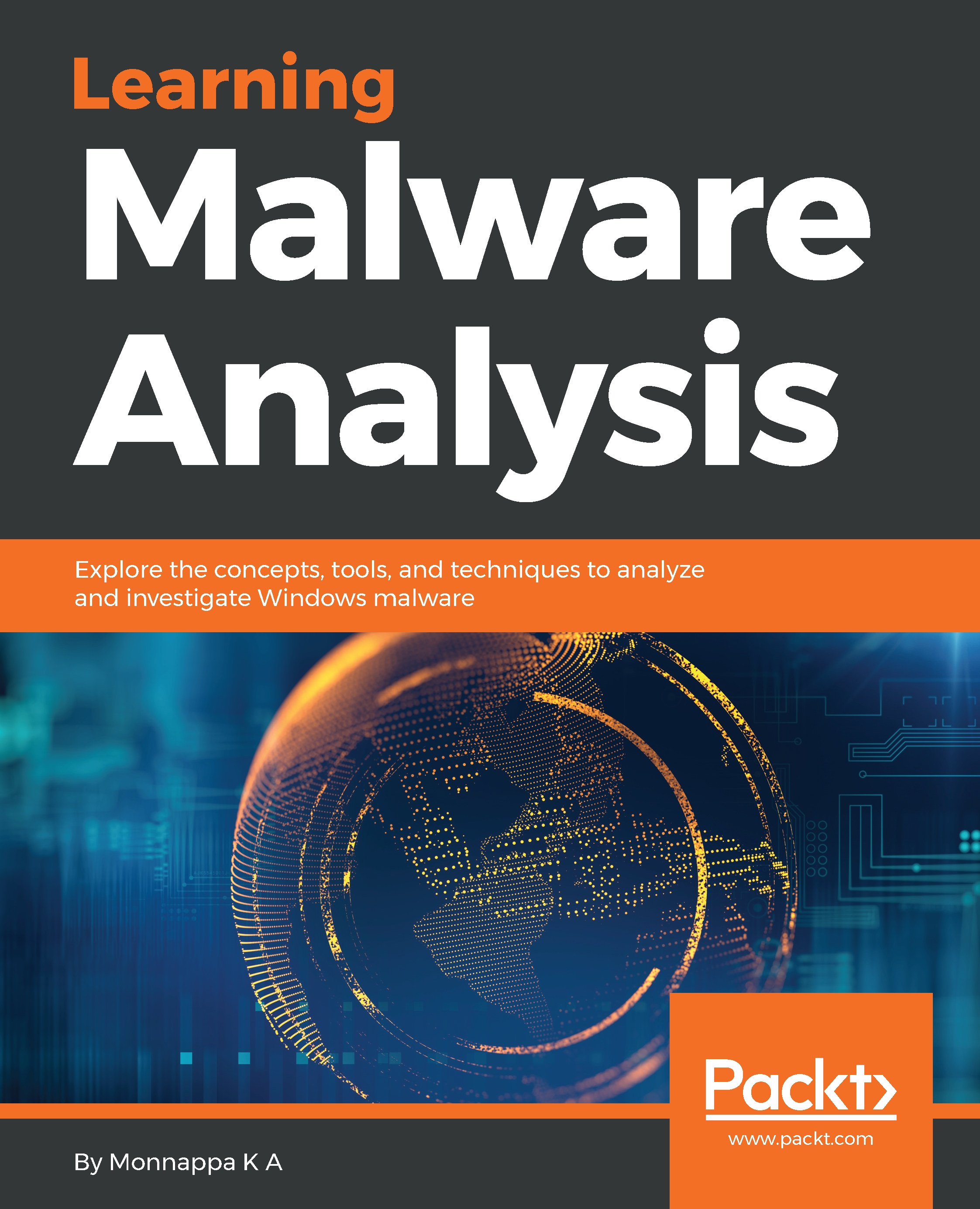
Malware analysis and memory forensics are powerful analysis and investigation techniques used in reverse engineering, digital forensics, and incident response. With adversaries becoming sophisticated and carrying out advanced malware attacks on critical infrastructures, data centers, and private and public organizations, detecting, responding to, and investigating such intrusions is critical to information security professionals. Malware analysis and memory forensics have become must-have skills to fight advanced malware, targeted attacks, and security breaches. This book teaches you the concepts, techniques, and tools to understand the behavior and characteristics of malware through malware analysis. It also teaches you techniques to investigate and hunt malware using memory forensics. This book introduces you to the basics of malware analysis, and then gradually progresses into the more advanced concepts of code analysis and memory forensics. It uses real-world malware samples, infected memory images, and visual diagrams to help you gain a better understanding of the subject and to equip you with the skills required to analyze, investigate, and respond to malware-related incidents.
Table of Contents (13 chapters)
close
close

1. Simple Encoding


Most of the time, attackers use very simple encoding algorithms such as Base64 encoding or xor encryption to obscure the data. The reason why attackers use simple algorithms is because they are easy to implement, takes fewer system resources, and are just enough to obscure the content from the security products and the security analyst.

1.1 Caesar Cipher

Ceaser cipher, also known as shift cipher, is a traditional cipher and is one of the simplest encoding techniques. It encodes the message by shifting each letter in the plaintext with some fixed number of positions down the alphabet. For example, if you shift character 'A' down 3 positions, then you will get 'D', and 'B' will be 'E' and so on,  wrapping back to 'A' when the shift reaches 'X'.

1.1.1 Working Of Caesar Cipher

The best way to understand Caesar cipher is to write down the letters from A to Z and assign an index, from 0 to 25, to these letters, as follows In other words, 'A' corresponds to index 0, 'B' corresponds...

CONTINUE READING
83
Tech Concepts
36
Programming languages
73
Tech Tools
Icon Unlimited access to the largest independent learning library in tech of over 8,000 expert-authored tech books and videos.
Icon Innovative learning tools, including AI book assistants, code context explainers, and text-to-speech.
Icon 50+ new titles added per month and exclusive early access to books as they are being written.
Learning Malware Analysis
notes
bookmark Notes and Bookmarks search Search in title playlist Add to playlist font-size Font size

Change the font size

margin-width Margin width

Change margin width

day-mode Day/Sepia/Night Modes

Change background colour

Close icon Search
Country selected

Close icon Your notes and bookmarks

Confirmation

Modal Close icon
claim successful

Buy this book with your credits?

Modal Close icon
Are you sure you want to buy this book with one of your credits?
Close
YES, BUY

Submit Your Feedback

Modal Close icon
Modal Close icon
Modal Close icon