


Serialization is a mechanism provided in various languages that allows the saving of an object's state in binary format. It is used for speed and obfuscation. The turning of an object back from binary into an object is deserialization. In cases where user input is used within an object and that object is later serialized, it creates an attack vector for arbitrary code-injection and possible remote code-execution. We will look at a Burp extension that will assist web-penetration testers in assessing applications for Java Deserialization vulnerabilities.
-
Book Overview & Buying
-
Table Of Contents

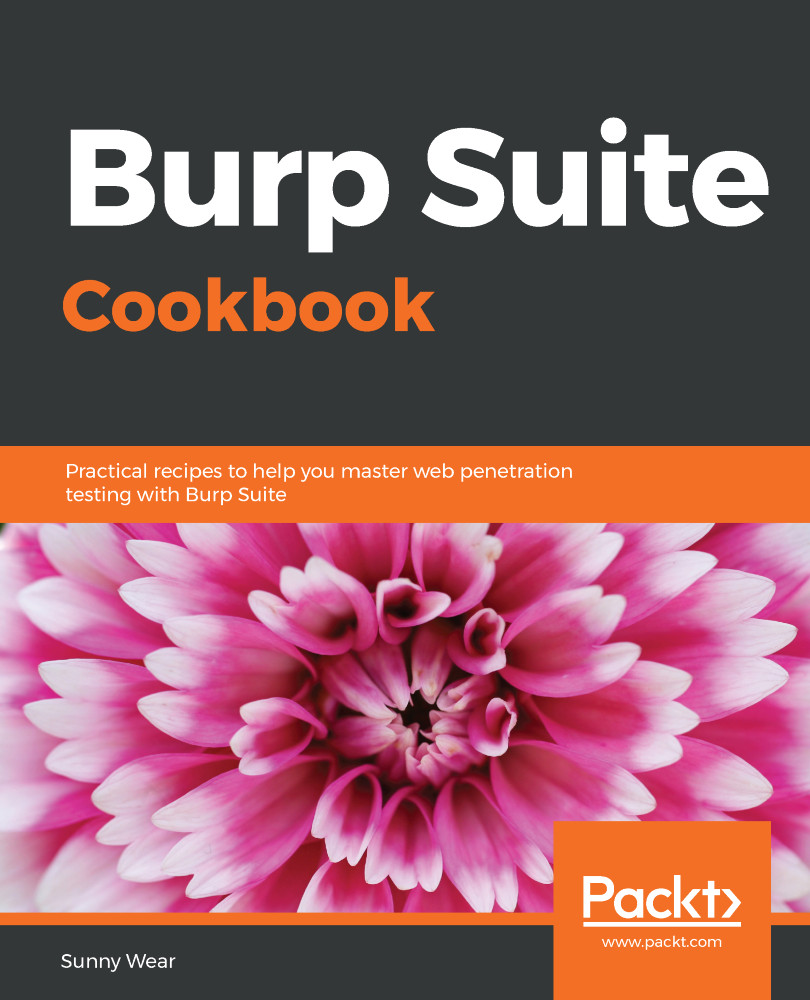
Burp Suite Cookbook
By :


Burp Suite Cookbook
By:
Overview of this book
Burp Suite is a Java-based platform for testing the security of your web applications, and has been adopted widely by professional enterprise testers.
The Burp Suite Cookbook contains recipes to tackle challenges in determining and exploring vulnerabilities in web applications. You will learn how to uncover security flaws with various test cases for complex environments. After you have configured Burp for your environment, you will use Burp tools such as Spider, Scanner, Intruder, Repeater, and Decoder, among others, to resolve specific problems faced by pentesters. You will also explore working with various modes of Burp and then perform operations on the web. Toward the end, you will cover recipes that target specific test scenarios and resolve them using best practices.
By the end of the book, you will be up and running with deploying Burp for securing web applications.
Table of Contents (13 chapters)
Preface

 Free Chapter
Getting Started with Burp Suite
Getting to Know the Burp Suite of Tools
Configuring, Spidering, Scanning, and Reporting with Burp
Assessing Authentication Schemes
Assessing Authorization Checks
Assessing Session Management Mechanisms
Assessing Business Logic
Evaluating Input Validation Checks
Attacking the Client
Working with Burp Macros and Extensions
Implementing Advanced Topic Attacks

Other Books You May Enjoy


