Sign In Start Free Trial
Account

Add to playlist

Create a Playlist

Modal Close icon
You need to login to use this feature.
  • Book Overview & Buying Linux for Networking Professionals
  • Table Of Contents Toc
Linux for Networking Professionals

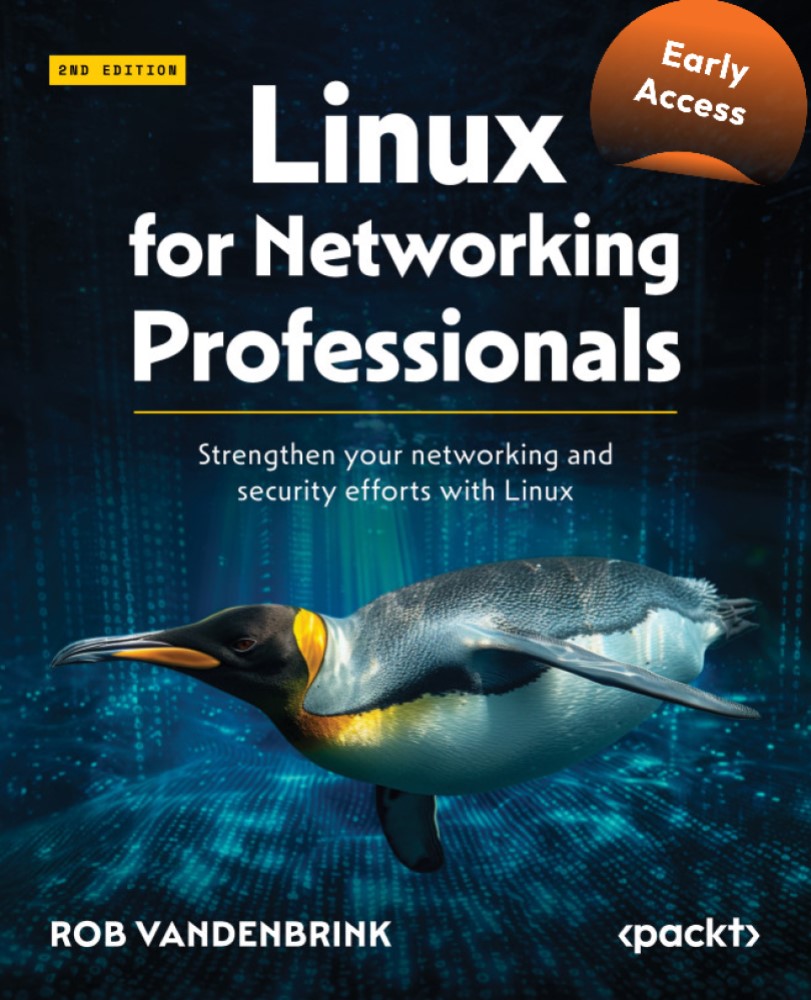
Linux for Networking Professionals - Second Edition

By : Rob VandenBrink
close
close
Linux for Networking Professionals

Linux for Networking Professionals

By: Rob VandenBrink

Overview of this book

With Linux gaining popularity, more network services are being deployed on it due to its cost-effectiveness and flexibility. If you are a networking professional or an infrastructure engineer involved with networks, in-depth knowledge of Linux networking is paramount. Linux for Networking Professionals, Second Edition, is a comprehensive guide to building a strong foundation of Linux networking concepts. From basic Linux network configurations to major distributions and picking the right distro for your specific needs – this book covers it all. As you progress through the chapters, you’ll also find insights into diagnosing network issues, setting up robust firewall protection, and using Linux as a host for network services. The book takes you through a wide range of network services, explains why they're important, and how to configure them in an enterprise environment. With real-world examples, you'll learn how to securely configure various services and safeguard them against common attacks. As you advance to the final chapters, you’ll be well on your way towards building the foundation for an all-Linux data center. By the end of this book, you'll be able to not only configure common Linux network services confidently, but also use tried-and-tested methodologies for future Linux installations.
Table of Contents (4 chapters)
close
close

Summary

With this chapter behind us, you should have a good understanding of the hierarchal organization of the various networking and application protocols, as described in the OSI model. You should have a solid understanding of TCP and UDP, in particular how both protocols use ports, and how TCP sessions are set up and torn down. Using netstat or ss to see how your host is connecting to various remote services, or what services your host is listening for, is a skill you can use going forward. Expanding on this, using port scanners to see what hosts and network services are running in your organization should be a skill that you should find useful. Finally, our discussion of Linux wireless tools should help in troubleshooting, configuration, and wireless site surveys. All of these skills will be things we build on as we move forward in our journey in this book, but more importantly, they'll be useful in troubleshooting application and networking problems in your organization.This...

CONTINUE READING
83
Tech Concepts
36
Programming languages
73
Tech Tools
Icon Unlimited access to the largest independent learning library in tech of over 8,000 expert-authored tech books and videos.
Icon Innovative learning tools, including AI book assistants, code context explainers, and text-to-speech.
Icon 50+ new titles added per month and exclusive early access to books as they are being written.
Linux for Networking Professionals
notes
bookmark Notes and Bookmarks search Search in title playlist Add to playlist download Download options font-size Font size

Change the font size

margin-width Margin width

Change margin width

day-mode Day/Sepia/Night Modes

Change background colour

Close icon Search
Country selected

Close icon Your notes and bookmarks

Confirmation

Modal Close icon
claim successful

Buy this book with your credits?

Modal Close icon
Are you sure you want to buy this book with one of your credits?
Close
YES, BUY

Submit Your Feedback

Modal Close icon
Modal Close icon
Modal Close icon