
Sign In Start Free Trial
Account

Add to playlist

Create a Playlist

Modal Close icon
You need to login to use this feature.
  • Book Overview & Buying Microservices Development Cookbook
  • Table Of Contents Toc
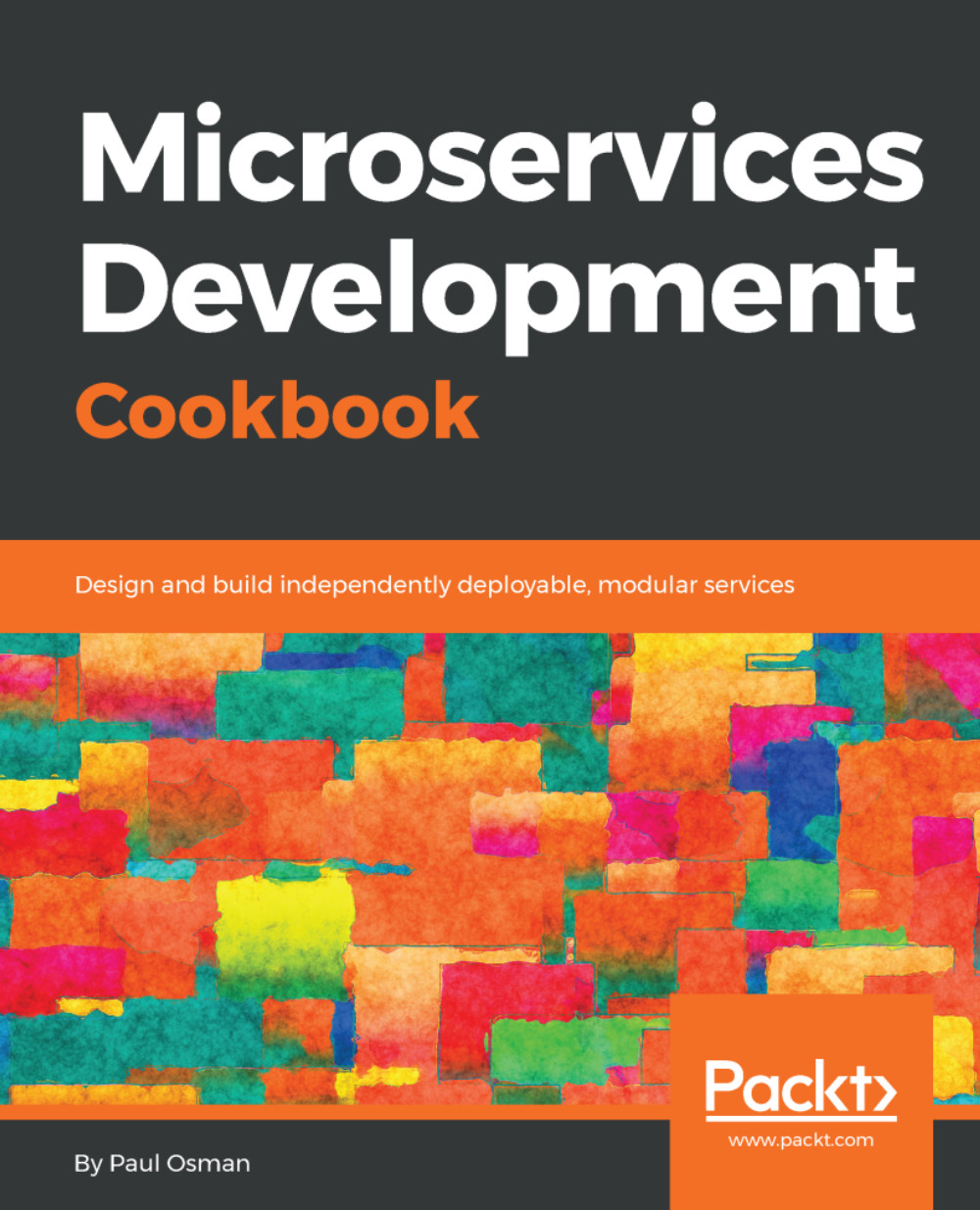
Microservices Development Cookbook

Microservices Development Cookbook

By : Osman
5 (1)
close
close
Microservices Development Cookbook

Microservices Development Cookbook

5 (1)
By: Osman

Overview of this book

Microservices have become a popular choice for building distributed systems that power modern web and mobile apps. They enable you to deploy apps as a suite of independently deployable, modular, and scalable services. With over 70 practical, self-contained tutorials, the book examines common pain points during development and best practices for creating distributed microservices. Each recipe addresses a specific problem and offers a proven, best-practice solution with insights into how it works, so you can copy the code and configuration files and modify them for your own needs. You’ll start by understanding microservice architecture. Next, you'll learn to transition from a traditional monolithic app to a suite of small services that interact to ensure your client apps are running seamlessly. The book will then guide you through the patterns you can use to organize services, so you can optimize request handling and processing. In addition this, you’ll understand how to handle service-to-service interactions. As you progress, you’ll get up to speed with securing microservices and adding monitoring to debug problems. Finally, you’ll cover fault-tolerance and reliability patterns that help you use microservices to isolate failures in your apps. By the end of this book, you’ll have the skills you need to work with a team to break a large, monolithic codebase into independently deployable and scalable microservices.
Table of Contents (11 chapters)
close
close

Asynchronous requests

In the previous recipe, we were making a single service invocation per request, from the message service to the social service. This has the benefit of being incredibly simple to implement and, when using single-threaded languages, such as Python, Ruby, or JavaScript, is often the only choice. Performing a network call synchronously in this manner is acceptable when you're only doing it once per requestit doesn't matter that the call blocks the thread since you can't respond to the user until the invocation is complete anyway. When you're making multiple requests, however, blocking network calls will severely impact the performance and scalability of your application. What we need is an easy way to make use of Java's concurrency features.

If you're writing your microservices in Scala, you can take advantage of the Future...

CONTINUE READING
83
Tech Concepts
36
Programming languages
73
Tech Tools
Icon Unlimited access to the largest independent learning library in tech of over 8,000 expert-authored tech books and videos.
Icon Innovative learning tools, including AI book assistants, code context explainers, and text-to-speech.
Icon 50+ new titles added per month and exclusive early access to books as they are being written.
Microservices Development Cookbook
notes
bookmark Notes and Bookmarks search Search in title playlist Add to playlist download Download options font-size Font size

Change the font size

margin-width Margin width

Change margin width

day-mode Day/Sepia/Night Modes

Change background colour

Close icon Search
Country selected

Close icon Your notes and bookmarks

Confirmation

Modal Close icon
claim successful

Buy this book with your credits?

Modal Close icon
Are you sure you want to buy this book with one of your credits?
Close
YES, BUY

Submit Your Feedback

Modal Close icon
Modal Close icon
Modal Close icon