


-
Book Overview & Buying
-
Table Of Contents

A Frontend Web Developer's Guide to Testing
By :


A Frontend Web Developer's Guide to Testing
By:
Overview of this book
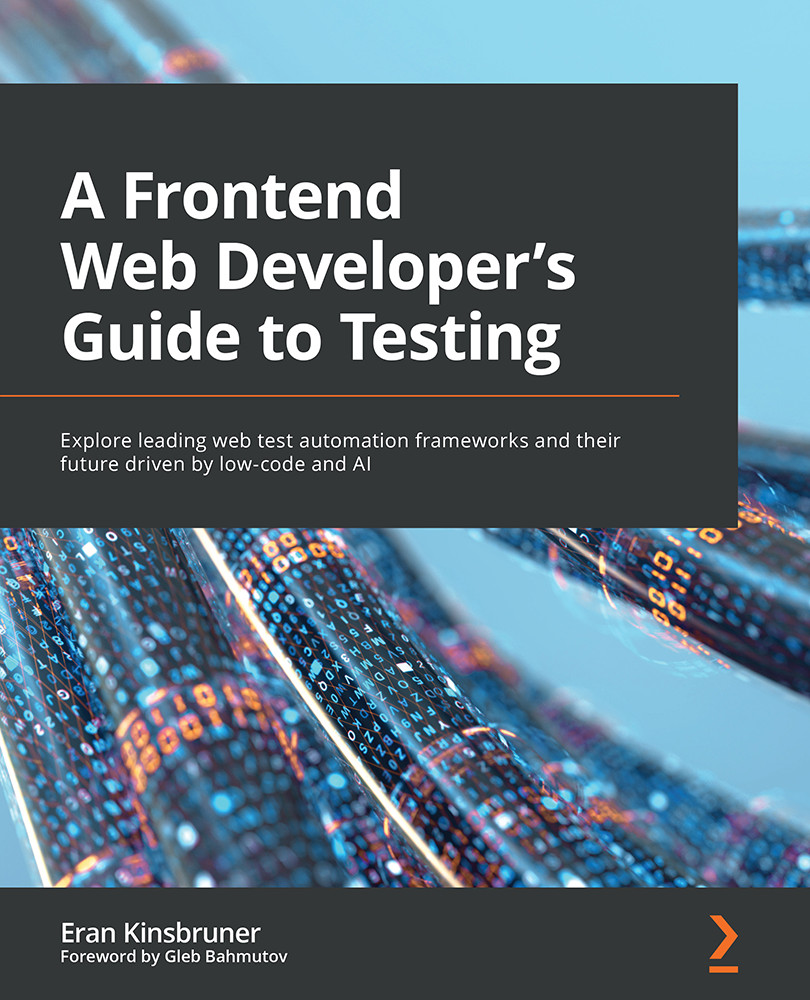
Testing web applications during a sprint poses a challenge for frontend web app developers, which can be overcome by harnessing the power of new, open source cross-browser test automation frameworks. This book will introduce you to a range of leading, powerful frameworks, such as Selenium, Cypress, Puppeteer, and Playwright, and serve as a guide to leveraging their test coverage capability. You’ll learn essential concepts of web testing and get an overview of the different web automation frameworks in order to integrate them into your frontend development workflow. Throughout the book, you'll explore the unique features of top open source test automation frameworks, as well as their trade-offs, and learn how to set up each of them to create tests that don't break with changes in the app.
By the end of this book, you'll not only be able to choose the framework that best suits your project needs but also create your initial JavaScript-based test automation suite. This will enable fast feedback upon code changes and increase test automation reliability. As the open source market for these frameworks evolves, this guide will help you to continuously validate your project needs and adapt to the changes.
Table of Contents (19 chapters)
Preface


Part 1 – Frontend Web Testing Overview
 Free Chapter
Chapter 1: Cross-Browser Testing Methodologies

Chapter 2: Challenges Faced by Frontend Web Application Developers
Chapter 3: Top Web Test Automation Frameworks
Chapter 4: Matching Personas and Use Cases to Testing Frameworks
Chapter 5: Introducing the Leading Frontend Web Development Frameworks
Part 2 – Continuous Testing Strategy for Web Application Developers
Chapter 6: Map the Pillars of a Dev Testing Strategy for Web Applications
Chapter 7: Core Capabilities of the Leading JavaScript Test Automation Frameworks
Chapter 8: Measuring Test Coverage of the Web Application
Part 3 – Frontend JavaScript Web Test Automation Framework Guides
Chapter 9: Working with the Selenium Framework
Chapter 10: Working with the Cypress Framework
Chapter 11: Working with the Playwright Framework
Chapter 12: Working with the Puppeteer Framework
Chapter 13: Complementing Code-Based Testing with Low-Code Test Automation
Chapter 14: Wrapping Up
Other Books You May Enjoy


