


-
Book Overview & Buying
-
Table Of Contents

Responsive Web Design with HTML5 and CSS - Fourth Edition
By :


Responsive Web Design with HTML5 and CSS
By:
Overview of this book
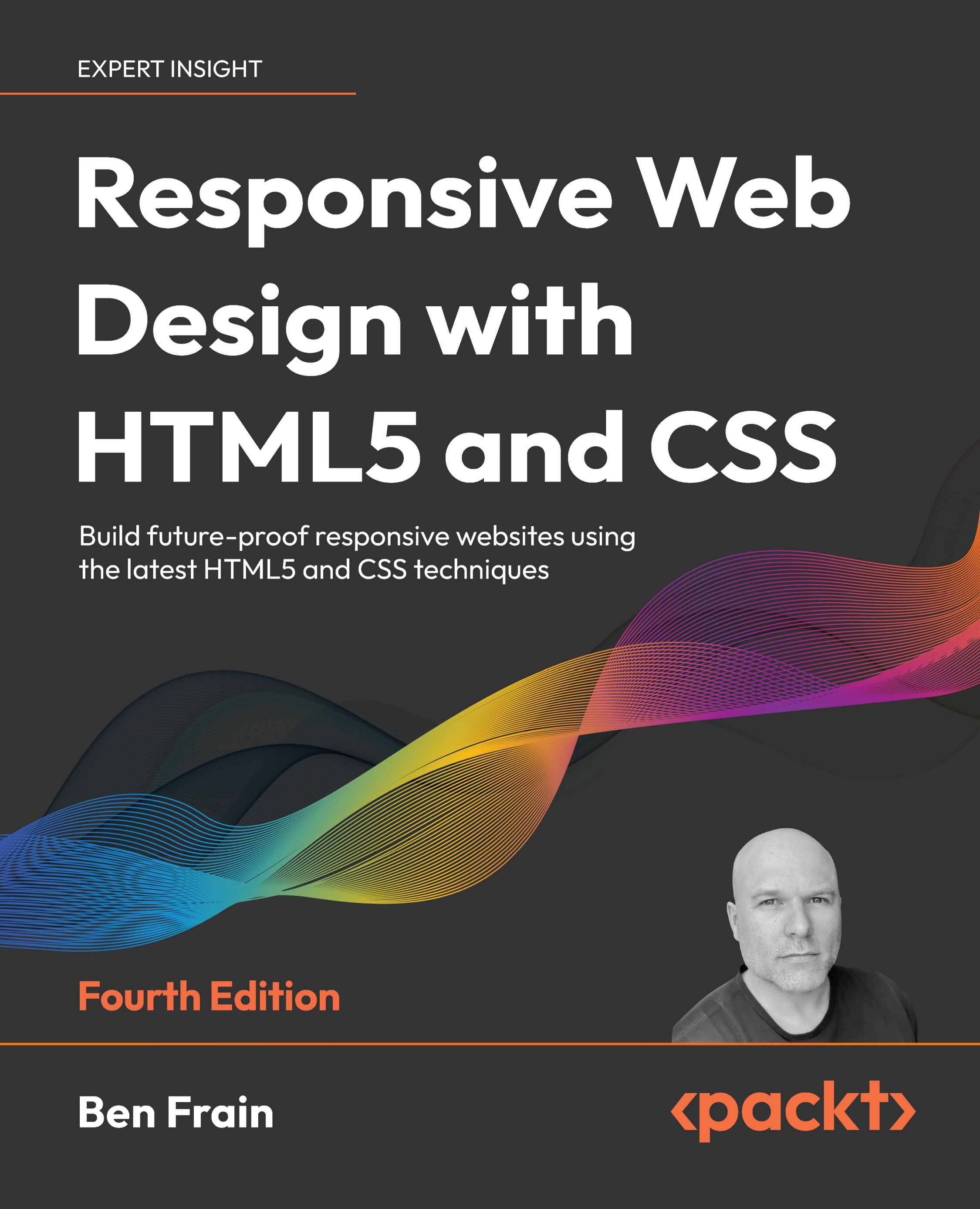
Responsive Web Design with HTML5 and CSS, Fourth Edition, is a fully revamped and extended version of one of the most comprehensive and bestselling books on the latest HTML5 and CSS techniques for responsive web design. It emphasizes pragmatic application, teaching you the approaches needed to build most real-life websites, with downloadable examples in every chapter.
Written in the author's friendly and easy-to-follow style, this edition covers all the newest developments and improvements in responsive web design, including approaches for better accessibility, variable fonts and font loading, and the latest color manipulation tools making their way to browsers. You can enjoy coverage of bleeding-edge features such as CSS layers, container queries, nesting, and subgrid.
The book concludes by exploring some exclusive tips and approaches for front-end development from the author.
By the end of the book, you will not only have a comprehensive understanding of responsive web design and what is possible with the latest HTML5 and CSS, but also the knowledge of how to best implement each technique. Read through as a complete guide or dip in as a reference for each topic-focused chapter.
Table of Contents (22 chapters)
Preface


 Free Chapter
Section 1: The Fundamentals of Responsive Web Design
The Essentials of Responsive Web Design
Writing HTML Markup
Media Queries and Container Queries
Fluid Layout and Flexbox
Layout with CSS Grid
Section 2: Core Skills for Effective Front-End Web Development
CSS Selectors, Typography, and More
CSS Color
Stunning Aesthetics with CSS
Responsive Images
SVG
Transitions, Transformations, and Animations
Custom Properties and CSS Functions

Section 3: Latest Platform Features and Parting Advice
Cutting-Edge CSS Features
Bonus Techniques and Parting Advice
Unlock Your Book’s Exclusive Benefits
Other Books You May Enjoy
Index


